February 2026 in “Psychoneuroendocrinology” Lower family income is linked to more stress in parents and more behavior problems in children.
February 2026 in “Psychoneuroendocrinology” Hair cortisol concentration partly reflects HPA axis regulation but doesn't capture all its complexities.
January 2026 in “Psychoneuroendocrinology” Self-collected hair samples can measure stress but may need adjustments for accuracy.
January 2026 in “Psychoneuroendocrinology” Lye relaxers don't significantly change hair cortisol levels.
January 2026 in “Neuroscience Applied” Hair cortisol levels decrease as children age, stabilizing around age 4.
January 2026 in “Open Science Framework” Standardized procedures are needed for accurate hair cortisol analysis.
 December 2025 in “Biology Bulletin Reviews”
 Hair cortisol can indicate animal stress but varies with many factors.
November 2025 in “Anxiety Stress & Coping” Higher anxiety symptoms and social behavior affect stress levels in hair.
November 2025 in “Contraception” COC use doesn't increase hair stress hormone levels, but hair treatments may affect results.
 October 2025 in “Journal of Veterinary Diagnostic Investigation”
 Black hair in cats has higher cortisol levels than white hair.
May 2025 in “OSF Preprints (OSF Preprints)” Machine learning can help identify stress indicators in mothers and infants.
 February 2024 in “Psychoneuroendocrinology”
 Mothers with lower stress during pregnancy but higher stress after birth had infants with lower development scores.
 May 2023 in “General and comparative endocrinology”
 Monkey hair cortisol levels are not affected by how fast their hair grows.
April 2020 in “Journal of the Endocrine Society” Hair cortisol measurement can help diagnose and monitor Cushing’s disease.
December 2019 in “Case Medical Research” Hair cortisol content can indicate cortisol exposure and varies with age, puberty, and BMI in youth.
January 2018 in “Belarusian State Pedagogical University repository (Belarusian State Pedagogical University)” Stress might trigger hair loss in alopecia areata, but more research is needed.
Distal hair cortisol is not a reliable measure of early pregnancy cortisol levels.
February 2017 in “Faculty Opinions – Post-Publication Peer Review of the Biomedical Literature” Hair cortisol measurement is a promising, non-invasive tool for monitoring cortisol exposure over time.
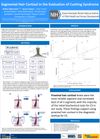 May 2016 in “Endocrine Abstracts”
 Proximal hair cortisol is a reliable tool for diagnosing Cushing's Syndrome.
High-stress mothers had lower hair cortisol than low-stress mothers, and daughters' cortisol was linked to their stress response.
July 2011 in “Neurotoxicology and Teratology” October 2008 in “Experimental and Clinical Endocrinology & Diabetes” Long-term unemployment leads to higher stress levels.
August 2021 in “Asian Journal of Pharmaceutical and Clinical Research” Plant extracts in shampoo improved hair thickness and density in men with hair loss.
217 citations
,
July 2009 in “Experimental and Clinical Endocrinology & Diabetes” Hair analysis can track past cortisol levels in Cushing's Syndrome patients.
22 citations
,
January 2010 in “Clinical Medicine Insights Endocrinology and Diabetes” Forearm hair has more cortisol than lower leg hair.
12 citations
,
December 2020 in “Comprehensive psychoneuroendocrinology” Hormone levels in hair change during pregnancy, with progesterone increasing significantly compared to non-pregnant women.
 8 citations
,
October 2020 in “Infant behavior & development”
8 citations
,
October 2020 in “Infant behavior & development” Collecting hair for cortisol analysis is possible in low-income mother-toddler pairs.
May 2025 in “Psychoneuroendocrinology” Discrimination during pregnancy affects newborn stress hormone levels.
 February 2024 in “Psychoneuroendocrinology”
 Higher anxiety during pregnancy is linked to lower cortisol levels in newborns' hair.