
Lnc056 helps hair follicle stem cells grow by increasing TRIP6 expression.
 May 2025 in “Quality in Sport”
 Hair loss is caused by genetics, hormones, stress, and environment, and can be managed with good nutrition, stress control, and treatments.
January 2025 in “Regenerative Biomaterials” Curcumin-primed milk vesicles may help treat hair loss by promoting hair growth.
August 2024 in “Journal of Photochemistry and Photobiology B Biology” Combining light therapy with certain substances improves hair growth in people with hair loss.
 February 2024 in “Journal of Cosmetic Dermatology”
 White hair patch repigmented and hair regrew in a balding patient after treatment with exosomes and laser.
 October 2023 in “Recent Trends in Pharmaceutical Sciences and Research”
 The paper concludes that animal models help in understanding hair loss causes and developing new treatments.
October 2022 in “Hair Transplantation” Hair disorders are caused by genetics, environment, hormones, or inflammation, and treatments focus on normalizing hair growth and density.
January 2022 in “International journal of advanced engineering research and sciences” Hair extensions can improve self-esteem but may cause hair loss if used improperly.
January 2021 in “Springer eBooks” PRP might help with hair growth, but its effectiveness in hair transplants is unclear.
 January 2021 in “Journal of Allergy and Therapy”
 Electric Follicle Stimulation may promote hair growth and density with no known side effects.
February 2020 in “Research Square (Research Square)” The research identified key genes that control the growth cycle of cashmere in goats, which could help improve cashmere goat breeding.
October 2018 in “Archivio Istituzionale della Ricerca (Universita Degli Studi Di Milano)” A balanced diet rich in fruits, vegetables, and healthy fats is crucial for maintaining healthy hair and preventing hair loss.
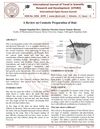 June 2018 in “International journal of trend in scientific research and development”
 The review explains how hair products work and the science of different hair types to help improve hair care research.

Baldness is often hereditary and linked to male hormones, becoming noticeable when half the hair is lost.
 April 2018 in “Journal of Investigative Dermatology”
 A new peptide, FOL-005, may help treat excessive hair growth by reducing a hair growth promoter, FGF7.

Some treatments like minoxidil, finasteride, and surgery can help with hereditary hair loss.
September 2016 in “Journal of dermatological science” The conclusion is that the variation in hair thinness in patients is mostly due to the amount of underdeveloped hairs, and treatments that thicken fine hairs might work for those with mild to severe conditions.
April 2016 in “The journal of investigative dermatology/Journal of investigative dermatology” Neoplasms hide in hair follicles to avoid the immune system.
November 2015 in “Chemical & engineering news” Certain topical drugs can regrow hair in mice.
STAT5 and Sox18 are crucial for hair growth and wound healing.
January 2015 in “OhioLink ETD Center (Ohio Library and Information Network)” Balanced vitamin A is essential for healthy hair, as too much or too little can cause hair loss.
 August 2012 in “Nature Cell Biology”
 Hair grows when stem cell offspring in the follicle base proliferate, influenced by the dermal papilla.
Melatonin shortens the hair growth cycle by increasing PDGFA gene expression.

K15 and Id3 are important in hair follicle regeneration, with K15 increasing in early stages and Id3 responding later.
Finasteride and minoxidil help regrow hair by improving hair thickness and length.
 January 1998 in “KAGAKU TO SEIBUTSU”
 The document suggests that male hormones likely affect hair growth and baldness, and future treatments might involve stem cells and androgen-independent cells.
 January 2024 in “Indian Journal of Pharmaceutical Sciences”
 Peach kernel extract may promote hair growth by boosting cell growth in hair follicles.
August 2022 in “International Journal of Molecular Sciences” DNA methylation controls lncRNA2919, which negatively affects hair growth.
 December 2016 in “Paleontological Journal”
 Hair growth can be induced by transplanting certain cells, but these cells lose their properties during culturing. The best cell interaction happens in a liquid medium under gravity, and using collagen doesn't help. Future research could focus on using growth factors to stimulate these cells.
89 citations
,
December 1998 in “The Journal of Steroid Biochemistry and Molecular Biology” Human hair can be used to measure reproductive hormones.