1 citations
,
October 2022 in “Iet Nanobiotechnology” The dutasteride nanoemulsion could improve hair loss treatment by enhancing drug penetration and retention in hair follicles.
 25 citations
,
March 2017 in “Experimental Dermatology”
25 citations
,
March 2017 in “Experimental Dermatology” The document concludes that understanding hair follicles requires more research using computational methods and an integrative approach, considering the current limitations in hair treatment products.
 13 citations
,
January 2007 in “International journal of pharmaceutics”
13 citations
,
January 2007 in “International journal of pharmaceutics” Papain cream removes hair better than papain gel, causing hair follicles to widen and skin to thicken.
 10 citations
,
January 2001 in “ACTA HISTOCHEMICA ET CYTOCHEMICA”
10 citations
,
January 2001 in “ACTA HISTOCHEMICA ET CYTOCHEMICA” Lysosomal proteases and cytoplasmic enzymes help hair follicle cells develop and differentiate.
232 citations
,
January 2002 in “Mechanisms of development” Different enzymes are active in different parts of developing mouse organs.
124 citations
,
November 2000 in “The journal of investigative dermatology/Journal of investigative dermatology” PAD3 plays a key role in hair and skin protein structure and may be linked to skin diseases.
86 citations
,
August 2000 in “Pigment cell research” Melanocyte activity in hair follicles is linked to the hair growth cycle, being active in growth phases and inactive in rest phases.
71 citations
,
June 2005 in “Journal of Investigative Dermatology” PAD enzymes play a key role in hair growth and structure.
 46 citations
,
August 2003 in “The journal of investigative dermatology/Journal of investigative dermatology”
46 citations
,
August 2003 in “The journal of investigative dermatology/Journal of investigative dermatology” Phosphatidic acid may help hair grow by affecting cell growth pathways.
31 citations
,
August 2001 in “PubMed” Hair follicles convert androgens, affecting hair loss patterns.
 30 citations
,
December 1999 in “Journal of Investigative Dermatology Symposium Proceedings”
30 citations
,
December 1999 in “Journal of Investigative Dermatology Symposium Proceedings” Steroids, particularly estrogens and 5α-reductase inhibitors, affect blood vessel-related hair growth processes in hair follicle cells.
 13 citations
,
January 2007 in “Epilepsia”
13 citations
,
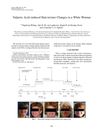
January 2007 in “Epilepsia” Valproic acid can cause reversible hair curling and persistent hair thinning.
 10 citations
,
January 2004 in “Dermatologic Surgery”
10 citations
,
January 2004 in “Dermatologic Surgery” Storing hair follicles in special buffers with added protective substances can increase hair growth and reduce cell death.
5 citations
,
May 2024 in “Journal of Cosmetic Dermatology” Engineered nanovesicles from hair follicle stem cells can effectively treat UVB-induced skin aging.
 3 citations
,
October 2020 in “Internatuinal Journal of Radiation Research”
3 citations
,
October 2020 in “Internatuinal Journal of Radiation Research” Gamma irradiation can stimulate hair growth by promoting new blood vessel formation.
3 citations
,
May 2020 in “Acta pharmaceutica” Protocatechuic acid can reduce melanin production and boost antioxidant activity in hair follicles.
3 citations
,
February 1983 in “Journal of Investigative Dermatology” Hair plucking quickly increases antizyme, reducing a specific enzyme activity in rats.
3 citations
,
November 2019 in “Clinical psychopharmacology and neuroscience/Clinical Psychopharmacology and Neuroscience” Valproate can cause both hair loss and curly hair in bipolar disorder patients.
May 2026 in “Journal of Medicinal Food” Hydrolyzed keratin peptide improves hair growth and health.
 April 2026 in “Inflammation and Regeneration”
 AKR1C enzymes in scalp glands decrease with age, possibly affecting hair loss.
 April 2024 in “Journal of cosmetic dermatology”
 Minoxidil is less effective on eyebrows and eyelashes than scalp hair because these areas have lower enzyme activity needed to activate the drug.
 January 2024 in “Archives of Biological Sciences (Beograd)”
 AP collagen peptides may help hair grow better and become stronger.
October 2023 in “Nutrients” Millet and wheat extracts may improve hair health and promote growth.
Using enzymes to link proteins makes hair repair treatments more effective and long-lasting.
 April 2023 in “Tikrit Journal of Pharmaceutical Sciences”
 Deferasirox effectively reduces iron overload in ß-thalassemia patients but may cause some manageable side effects.
 April 2023 in “The journal of investigative dermatology/Journal of investigative dermatology”
 Tet2 and Tet3 enzymes are important for controlling hair growth and shape by affecting gene activity and DNA structure in hair follicles.
April 2021 in “The journal of investigative dermatology/Journal of investigative dermatology” TET enzymes are important for skin and hair development by controlling gene activity in specific areas.
 April 2026 in “BMC Biotechnology”
 A new peptide, DualPep-ALO, may help hair growth by reducing inflammation and boosting growth factors.
August 2025 in “Regenerative Therapy” Exosomes from platelet-rich plasma can help regrow hair by reducing oxidative stress.
 May 2025 in “International Journal of Molecular Sciences”
 DHHB from Platycladus orientalis L. promotes hair growth and could be a natural alternative to current treatments.