33 citations
,
December 2015 in “International Journal of Molecular Sciences” Melanocyte stem cells are crucial for skin pigmentation and have potential in disease modeling and regenerative medicine.
87 citations
,
March 2017 in “Journal of Clinical Investigation” PSENEN gene mutations can cause both Dowling-Degos disease and acne inversa.
 67 citations
,
July 2016 in “Reviews in Endocrine and Metabolic Disorders”
67 citations
,
July 2016 in “Reviews in Endocrine and Metabolic Disorders” Stress can worsen skin conditions by affecting hormone levels and immune response.
18 citations
,
July 2020 in “Journal of Drug Delivery Science and Technology” Excess sebum reduces the effectiveness of nanosystems for treating hair follicle conditions.
 4 citations
,
March 2015 in “Skin Research and Technology”
4 citations
,
March 2015 in “Skin Research and Technology” Trichotillometry is a reliable method to measure hair strength and assess hair loss treatments.
 21 citations
,
November 2022 in “Frontiers in immunology”
21 citations
,
November 2022 in “Frontiers in immunology” Sebaceous glands play a key role in skin health, immunity, and various skin diseases.
 June 2023 in “Research Square (Research Square)”
 Different immune responses cause hair loss in scalp diseases, with unique patterns in scalp psoriasis possibly protecting against hair loss.
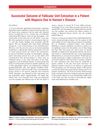 January 2021 in “Journal of Cutaneous and Aesthetic Surgery”
 Follicular unit extraction successfully restored hair growth in a leprosy patient without disease relapse.
 16 citations
,
September 2018 in “Scientific reports”
16 citations
,
September 2018 in “Scientific reports” Scientists created keratinocyte cell lines from human hair that can differentiate similarly to normal skin cells, offering a new way to study skin biology and diseases.
 37 citations
,
March 2010 in “British Journal of Dermatology”
37 citations
,
March 2010 in “British Journal of Dermatology” Oestrogen and thyrotropin-releasing hormone affect prolactin and its receptor in human skin and hair, suggesting new treatment options for related conditions.
 February 2024 in “International Journal of Molecular Sciences”
 Hair loss in Androgenetic Alopecia is caused by genetics, aging, and lifestyle, leading to hair follicle shrinkage and related health risks.
2 citations
,
June 2013 in “In Vitro Cellular & Developmental Biology - Animal” Melanocytes from human fetal hair follicles were successfully cultured, showing potential for hair disease research and clinical use.
November 2025 in “Figshare” SQSTM1 is linked to increased risk of alopecia areata.
665 citations
,
April 2016 in “Nature communications” Blocking specific proteins can help remove aging cells and might treat age-related diseases and promote hair growth.
 March 2025 in “International Journal of Pharmaceutical Research and Applications”
 A multidisciplinary approach is key to delaying aging and preventing age-related diseases.
27 citations
,
August 2003 in “Anais Brasileiros de Dermatologia” Neuropeptides affect skin inflammation, repair, and hair growth, with potential for therapy.
62 citations
,
January 2015 in “Journal of Dermatological Science” New genetic discoveries may lead to better treatments for alopecia areata.
45 citations
,
February 2013 in “The Journal of Dermatology” Keratoacanthoma and some squamous cell carcinomas are linked to hair follicles, while others are not.
 77 citations
,
July 2012 in “Journal of Investigative Dermatology”
77 citations
,
July 2012 in “Journal of Investigative Dermatology” Wnt10b overexpression can regenerate hair follicles, possibly helping treat hair loss and alopecia.
 34 citations
,
October 2017 in “Archivos Argentinos De Pediatria”
34 citations
,
October 2017 in “Archivos Argentinos De Pediatria” Alopecia Areata is a complex, unpredictable autoimmune hair loss condition with limited treatment options and a significant psychological impact.
1 citations
,
August 2016 in “Journal of Investigative Dermatology” Vδ1+ T-cells in the skin contribute to hair loss in alopecia areata and could be targeted for treatment.
 May 2026 in “Institutional Repository of the University of Granada (University of Granada)”
 New treatments for alopecia areata show promise, but their real-world effectiveness and impact on life and sexual health need more study.
New treatments for alopecia areata, like JAK inhibitors and immunomodulators, are promising.
 26 citations
,
June 2012 in “The Journal of Obstetrics and Gynecology of India”
26 citations
,
June 2012 in “The Journal of Obstetrics and Gynecology of India” Most skin changes during pregnancy are harmless and temporary, but some can risk the fetus and need careful treatment.
23 citations
,
October 1996 in “Dermatologic clinics” Genes affect cytokine production, which can influence chronic diseases, and certain interventions may help prevent related molecular damage.
19 citations
,
September 2013 in “Molecular Medicine Reports” Human hair follicle stem cells can become smooth muscle cells using specific growth factors.
169 citations
,
June 2013 in “Medicine” Understanding skin's structure and function is crucial for grasping skin health and diseases.
 90 citations
,
October 1996 in “Dermatologic Clinics”
90 citations
,
October 1996 in “Dermatologic Clinics” Growth factors are crucial for hair development and could help treat hair diseases.
 3 citations
,
July 2015 in “European Journal of Dermatology”
3 citations
,
July 2015 in “European Journal of Dermatology” AGEs may cause hair loss by increasing inflammation in hair follicles.
 165 citations
,
January 2008 in “Journal of biomaterials science. Polymer ed.”
165 citations
,
January 2008 in “Journal of biomaterials science. Polymer ed.” The peptide GHK-Cu helps heal and remodel tissue, improves skin and hair health, and has potential for treating age-related inflammatory diseases.