 3 citations
,
June 2006 in “Expert Review of Dermatology”
3 citations
,
June 2006 in “Expert Review of Dermatology” The document concludes that hair loss is complex, affects many people, has limited treatments, and requires more research on its causes and psychological impact.
 2 citations
,
January 2023 in “International journal of biological sciences”
2 citations
,
January 2023 in “International journal of biological sciences” Gray hair can potentially be reversed, leading to new treatments.
 2 citations
,
July 2020 in “Journal of Applied Pharmaceutical Science”
2 citations
,
July 2020 in “Journal of Applied Pharmaceutical Science” Natural ingredients can improve skin and hair, but more research is needed.
 1 citations
,
August 2023 in “Nature communications”
1 citations
,
August 2023 in “Nature communications” Hdac1 and Hdac2 help maintain and protect the cells that control hair growth.
 1 citations
,
January 2018 in “Acta dermatovenerologica Alpina, Pannonica et Adriatica (Tiskana izd.)”
1 citations
,
January 2018 in “Acta dermatovenerologica Alpina, Pannonica et Adriatica (Tiskana izd.)” The herbal extract was found to effectively reduce and prevent hair loss without any side effects.
 1 citations
,
January 2017 in “Springer eBooks”
1 citations
,
January 2017 in “Springer eBooks” Hair follicles are important for drug delivery through the skin, but better methods are needed to understand and improve this process.
 1 citations
,
January 2001 in “Cosmetics and toiletries”
1 citations
,
January 2001 in “Cosmetics and toiletries” Procyanidin B-2 from apple juice significantly increases hair growth and may be more effective than minoxidil without side effects.
 July 2026 in “Functional Foods in Health and Disease”
 Strawberry guava extract helps hair grow by improving blood flow and certain growth factors.
 May 2026 in “Frontiers in Cell and Developmental Biology”
 Collagen networks play a key role in hair loss and follicle miniaturization.
 May 2026 in “Clinical Cosmetic and Investigational Dermatology”
 White hair can make the scalp look more visible, which may be mistaken for hair loss.

Hair follicle-derived sheets can effectively treat vitiligo by repigmenting skin.
 February 2026 in “Chinese Medicine”
 Natural products might help treat hair greying.
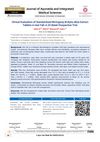 January 2026 in “Journal of Ayurveda and Integrated Medical Sciences”
 Bhringaraj extract tablets significantly reduce hair fall and are well-tolerated.
 January 2026 in “Nature Communications”
 A wearable device using NIR light may help treat hair loss non-invasively.
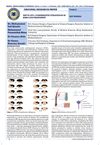 November 2025 in “PARIPEX-INDIAN JOURNAL OF RESEARCH”
 GFC is more effective than PRP for treating hair loss.
 August 2024 in “Journal of the Korean Society of Cosmetology”
 Wild peach leaf extract improves hair strength, thickness, and shine after dyeing.
 February 2024 in “International Journal of Health and Pharmaceutical”
 Black rice extract ointment significantly promotes hair growth in Wistar rats.
 November 2023 in “Frontiers in veterinary science”
 The study provides insights into hair growth mechanisms in yaks.
 October 2023 in “Scientific reports”
 Dexamethasone affects hair growth by altering levels of proteins that either promote or inhibit hair follicle growth.
 September 2023 in “Stem cell reviews and reports”
 Scientists found a new, less invasive way to get stem cells from horse hair for veterinary medicine.
 March 2023 in “bioRxiv (Cold Spring Harbor Laboratory)”
 Scientists can now create skin with hair by reprogramming cells in wounds.
 January 2023 in “Advances in pharmacology and clinical trials”
 Human hair is a significant sample for various tests in clinical, nutritional, archaeological, and forensic studies.
 May 2022 in “Journal of advances in medicine and medical research”
 Adding PRP to hair transplants improves treatment for cicatricial alopecia.
 January 2022 in “Acta dermatovenerologica Alpina, Pannonica et Adriatica (Tiskana izd.)”
 Uncombable hair syndrome causes frizzy hair and can affect the nervous system, eyes, and ears, often co-occurring with other hair, skin, nail, and teeth conditions, and is linked to three specific gene mutations.
 January 2021 in “bioRxiv (Cold Spring Harbor Laboratory)”
 Mothers have more hair proteins than their children, with age-related differences in protein patterns, and some proteins in hair could indicate early childhood development.
 January 2019 in “Durham e-Theses (Durham University)”
 Advanced microscopy shows hair damage and keratin proteins' roles, aiding future cosmetic treatments.

New treatments for hair loss show promise, including plasma, stem cells, and hair-stimulating complexes, but more research is needed to fully understand them.
 September 2016 in “Springer eBooks”
 Fat-derived stem cells may help treat skin aging and hair loss.

Chrysanthemum zawadskii extract may help treat hair loss by promoting hair growth and affecting growth factors.
 January 2014 in “Journal of Investigative Dermatology”
 Proteins like aPKC and PDGF-AA, substances like adenosine and ATP, and adipose-derived stem cells all play important roles in hair growth and health, and could potentially be used to treat hair loss and skin conditions.