3 citations
,
January 2020 in “International journal of trichology” Congenital triangular alopecia is a hair loss condition present from birth or early childhood with no effective treatment needed.
 3 citations
,
January 2015 in “Social Science Research Network”
3 citations
,
January 2015 in “Social Science Research Network” The conclusion is that off-label drug use can lead to important medical discoveries and improve patient care.
 2 citations
,
January 2019 in “Case Reports in Dermatology”
2 citations
,
January 2019 in “Case Reports in Dermatology” A 66-year-old woman's thick scalp and hair loss were confirmed as lipedematous alopecia, a rare condition possibly influenced by genetics, with no effective treatment known.
 2 citations
,
January 2015 in “Journal of cosmetology & trichology”
2 citations
,
January 2015 in “Journal of cosmetology & trichology” Need better hair loss treatments beyond minoxidil, finasteride, and transplants.
 1 citations
,
July 2023 in “Journal of Clinical Medicine”
1 citations
,
July 2023 in “Journal of Clinical Medicine” Different causes of beard hair loss have various treatments, including medications, lifestyle changes, and procedures to stimulate hair growth.
 1 citations
,
August 2022 in “JAAD case reports”
1 citations
,
August 2022 in “JAAD case reports” Tofacitinib and oral minoxidil may help treat Sisaipho alopecia areata.
 1 citations
,
March 2020 in “Australasian Journal of Dermatology”
1 citations
,
March 2020 in “Australasian Journal of Dermatology” The paper concludes that recognizing bitemporal alopecia areata is important for early treatment and preventing its progression.
 1 citations
,
April 2019 in “Journal of Investigative Dermatology”
1 citations
,
April 2019 in “Journal of Investigative Dermatology” Oral minoxidil can potentially increase hair growth in people suffering from Central Centrifugal Cicatricial Alopecia.
 1 citations
,
October 2018 in “InTech eBooks”
1 citations
,
October 2018 in “InTech eBooks” Only minoxidil and finasteride are FDA-approved for hair loss, with other treatments available but less effective or with side effects.
 November 2025 in “Journal of Family Medicine and Primary Care”
 Low-dose minoxidil effectively enhances facial hair with minimal side effects.
July 2025 in “Journal of Investigative Dermatology” Breezula® may be more effective than Minoxidil in promoting hair growth by reducing a hair growth inhibitor.
 May 2025 in “Scientific Reports”
 Oxyresveratrol promotes hair growth and may help treat hair loss.

Alopecia Areata causes hair loss and needs treatments that address both physical and emotional health.
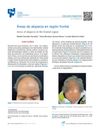 January 2025 in “Revista del Centro Dermatológico Pascua”
 Early diagnosis and treatment can help manage fibrosing alopecia in older women.
 April 2024 in “International Journal of Research Publication and Reviews”
 Alopecia areata causes hair loss with varied treatment responses and frequent relapses.
 March 2024 in “International journal of pharmaceutical chemistry and analysis (Print)”
 Betulin may help treat hair loss caused by testosterone.
Hair transplantation is a good option for improving appearance in hair loss.
 January 2023 in “Springer eBooks”
 Most older adults experience pattern hair loss due to shrinking hair follicles, with men and women showing different balding patterns.
May 2022 in “Journal of cosmetic dermatology” Combined carboxytherapy and minoxidil 20% may help treat Lichen planopilaris.
 April 2022 in “Jurnal Ilmiah Kesehatan Media Husada”
 Telogen effluvium is a common, reversible hair loss condition treatable with patient education and sometimes Minoxidil.
 February 2021 in “Journal of pharmaceutical and biological sciences”
 No cure exists for alopecia areata, and treatments are personalized.
 August 2019 in “Journal of The American Academy of Dermatology”
 5% minoxidil foam effectively regrows hair in women, with postmenopausal women seeing the most improvement.
 January 2019 in “Analytical Science and Technology”
 About 21% of tested hair loss supplements contained illegal synthetic drugs.
 September 2017 in “Springer eBooks”
 Low-level laser therapy seems to promote hair growth but requires more research to confirm its effectiveness.
 April 2017 in “Journal of Investigative Dermatology”
 Researchers improved a method to study individual cells in newborn mouse skin and found a way to assess the severity of a skin condition in humans.
 January 2016 in “Springer eBooks”
 Alopecia Areata is an unpredictable autoimmune hair loss condition with limited and variable treatment effectiveness.
April 2014 in “The FASEB journal” The extract helps prevent hair loss and promotes hair growth in stressed mice.
 March 2012 in “Journal of The American Academy of Dermatology”
 Dermoscopy helps diagnose different hair loss conditions, and characteristics vary among ethnicities and individual cases.

A man's scalp hair loss was due to a combined melanocytic nevus and alopecia areata, suggesting a possible link between the two conditions.
May 2011 in “Harper's Textbook of Pediatric Dermatology” Alopecia areata causes patchy hair loss and has no cure, but treatments like corticosteroids and minoxidil can help.