7 citations
,
January 2017 in “Dermatology Online Journal” TNF-inhibitor induced alopecia can be treated effectively with different therapies.
7 citations
,
March 2002 in “AIDS” Indinavir, especially with vitamin A, may cause bone changes, but switching to nelfinavir can reduce these effects.
 6 citations
,
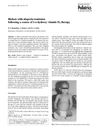
August 1989 in “European journal of pediatrics”
6 citations
,
August 1989 in “European journal of pediatrics” Child with rickets improved with a specific vitamin D therapy, but alopecia did not change.
 4 citations
,
January 2016 in “Dermatology Review”
4 citations
,
January 2016 in “Dermatology Review” Cancer treatments often cause skin, nail, and hair problems.
 3 citations
,
May 2018 in “InTech eBooks”
3 citations
,
May 2018 in “InTech eBooks” Animal models, especially mice, are essential for advancing hair loss research and treatment.
 3 citations
,
February 2014 in “Dong-ui saengni byeongni hakoeji”
3 citations
,
February 2014 in “Dong-ui saengni byeongni hakoeji” Microneedle roller therapy could help treat hair loss by promoting hair growth.
 3 citations
,
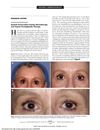
July 2010 in “Archives of internal medicine”
3 citations
,
July 2010 in “Archives of internal medicine” A woman kept her eyelashes during chemotherapy possibly because of her glaucoma eye drops.
1 citations
,
May 2025 in “BMC Cancer” CDK4/6 inhibitors affect safety and quality of life differently, requiring careful use.
1 citations
,
January 2024 in “JOURNAL OF CLINICAL AND DIAGNOSTIC RESEARCH” Leech therapy effectively treated a young girl's patchy hair loss with minimal complications.
July 2026 in “Skin Appendage Disorders” People prefer over-the-counter hair loss treatments despite better evidence for prescriptions, leading to delayed care.
April 2026 in “ACS Applied Materials & Interfaces” A new treatment using probiotic microneedles shows promise for promoting hair growth and reducing inflammation in androgenetic alopecia.
February 2026 in “Molecular and Cellular Probes” Stem cell and plant exosomes may help heal and regenerate skin.
 June 2025 in “Stem Cell Research & Therapy”
 Isoproterenol may help treat hair loss by activating hair follicle stem cells.
 March 2025 in “International Journal of Pharmaceutical Research and Applications”
 A multidisciplinary approach is key to delaying aging and preventing age-related diseases.
 November 2024 in “Journal of Education Health and Sport”
 Microneedling, PRP therapy, and pharmacological treatments show promise for hair loss, but more research is needed.

Baricitinib is effective for Alopecia Areata but requires careful patient history evaluation.
August 2024 in “International Journal of Pharmaceutics” The treatment promotes hair growth, improves hair density, and reduces skin irritation.
 June 2024 in “IP Indian journal of clinical and experimental dermatology”
 PRP therapy is effective and safe for various skin and hair conditions.

Hepatitis B vaccination can trigger HSP, and vitamin D correction and tonsillectomy can effectively manage it.
 March 2024 in “The journal of sexual medicine”
 The therapies improved ejaculation disorders and sexual function in middle-aged men.
 January 2024 in “Elsevier eBooks”
 Increasing regulatory T cells may help treat alopecia areata by reducing autoimmunity and promoting hair growth.
 June 2023 in “Acta Scientifci Nutritional Health”
 A gluten-free diet improves growth and reduces symptoms in children with celiac disease.
 April 2023 in “Voprosy kurortologii fizioterapii i lechebnoĭ fizicheskoĭ kultury”
 COVID-19 may cause hair loss, often after recovery, with androgenetic alopecia being the most common type.
 January 2023 in “National journal of physiology, pharmacy and pharmacology”
 Low-dose methotrexate is generally safe but can cause mild to severe side effects, and folic acid can reduce these risks.
 January 2023 in “Медицинский вестник Северного Кавказа”
 The patient with Hoffman's folliculitis got better with the right treatment, leading to hair regrowth.

Pumpkin roots contain compounds like Alpha-spinasterol, squalene, and palmitic acid, which may have health benefits like reducing depression, treating certain cancers, and having antibacterial properties.
 September 2019 in “Journal of Investigative Dermatology”
 Targeted therapy with Ustekinumab significantly improved a skin condition called ILVEN, which is caused by mutations in the CARD14 gene.
 January 2018 in “Springer eBooks”
 Cancer treatments targeting specific cells often cause skin, hair, and nail problems, affecting patients' lives and requiring careful management.
June 2016 in “Afro-Egyptian Journal of Infectious and Endemic Diseases” Most patients on this hepatitis C treatment experienced skin issues, especially hair loss.
March 2016 in “International Journal of Infectious Diseases” Peginterferon alpha-2a effectively treats acute hepatitis C in hemodialysed patients, despite some side effects.