 March 2024 in “Bioimpacts”
 400 nm particles penetrate hair follicles best, but mouse models aren't fully reliable for human studies.

The new skin cream with zinc oxide nanoparticles is stable, spreads well, and doesn't deeply penetrate the skin.
 February 2023 in “International journal of research - granthaalayah”
 The new microscope method helps study energy from pre-cancerous skin cells.
January 2023 in “Indian Dermatology Online Journal” Uncombable hair syndrome is linked to Zellweger syndrome.
 September 2021 in “Mağallaẗ al-Muẖtar li-l-ʿulūm”
 Two sisters have rare hair disorders causing short, fragile, kinky hair.
Antiandrogen treatment helps reduce hair follicles and sebaceous glands in hirsute women.
 March 2012 in “Korean Journal of Microscopy”
 Quantum dot nanoparticles can penetrate skin and reach sebocytes through hair follicles.
1 citations
,
November 2011 in “Turkish Journal of Dermatology” Biotin treatment improved hair and skin issues in a child with biotinidase deficiency.
27 citations
,
February 1991 Cuticle damage doesn't affect hair's tensile strength; the cortex is responsible for it.
17 citations
,
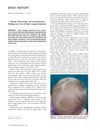
April 1997 in “American Journal of Dermatopathology” PC-associated alopecia has unique microscopic features.
 4 citations
,
May 2017 in “Pediatric Dermatology”
4 citations
,
May 2017 in “Pediatric Dermatology” The study found that Short Anagen Syndrome results in short hair growth not due to hair fragility, and hair may grow longer after puberty.
71 citations
,
January 2011 in “Journal of cutaneous pathology” A rare skin condition was confirmed to be associated with a specific virus in a young girl.
 45 citations
,
December 2006 in “Biopolymers”
45 citations
,
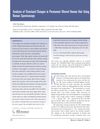
December 2006 in “Biopolymers” Permanent waving weakens hair by altering its protein structure.
 19 citations
,
July 2018 in “ACS biomaterials science & engineering”
19 citations
,
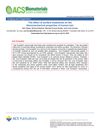
July 2018 in “ACS biomaterials science & engineering” Bleaching and combing damage hair's surface and mechanical properties.
15 citations
,
August 1991 in “American Journal of Medical Genetics” A special diet can fix hair problems in argininosuccinase deficiency.
9 citations
,
January 2011 in “Journal of X-ray science and technology” Perming and bleaching damage hair differently, with bleached hair having more cysteic acid in the cuticle.
2 citations
,
June 2013 in “In Vitro Cellular & Developmental Biology - Animal” Melanocytes from human fetal hair follicles were successfully cultured, showing potential for hair disease research and clinical use.
1 citations
,
March 2017 in “Roczniki Naukowe Polskiego Towarzystwa Zootechnicznego” Domestic cat hair varies in thickness and length, with guard hairs being longest and thickest, and all hair types mainly contain keratin.
1 citations
,
August 1985 in “Proceedings annual meeting Electron Microscopy Society of America” SEM/EDX can analyze hair elements but struggles with trace elements, limiting its forensic use.
 May 2026 in “Frontiers in Medicine”
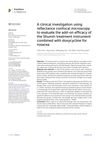
 The Shumin device with doxycycline is more effective for rosacea than red light therapy.
 January 2025 in “Advanced Materials Interfaces”
 Tannic acid can reduce hair loss by 56.2% by coating hair and releasing beneficial molecules.
Bacterial augmentation improves hair composting and nutrient availability.
 August 2024 in “Dermatological Reviews”
 New technologies are improving the diagnosis and treatment of hair and nail disorders.
January 2015 in “SciDok (Saarland University and State Library)” Clobetasol nanocarriers can be effectively delivered to hair follicles, with uptake improved by massage and affected by particle type.
June 2010 in “Chinese Journal of Dermatology” A new gene mutation is linked to monilethrix in the studied family.
May 2009 in “International Journal of Cosmetic Science” Permanent waving damages hair protein and weakens hair, especially with repeated treatments using sodium thioglycolate.
January 2005 in “Chinese Journal of Veterinary” Hairless mice lose hair by 3-4 weeks, develop thicker, folded skin, and show pigmentation differences.
 1 citations
,
January 1987 in “Journal of Society of Cosmetic Chemists of Japan”
1 citations
,
January 1987 in “Journal of Society of Cosmetic Chemists of Japan” The method accurately measures hair damage and strength, revealing effects of cosmetics and metal correlations.
2 citations
,
July 2011 in “International Journal of Dermatology” EPF can occur without visible pustules.
 20 citations
,
September 2018 in “Journal of colloid and interface science”
20 citations
,
September 2018 in “Journal of colloid and interface science” Modified keratin binds better to hair, especially bleached hair.