December 2024 in “International Journal of Molecular Sciences” Targeting CXCL12 may help treat hair loss caused by androgens.
 December 2024 in “Drug Discoveries & Therapeutics”
 Baricitinib-loaded EVs help hair regrowth in alopecia areata by reducing inflammation and promoting hair follicle regeneration.
 March 2023 in “Journal of Applied Biomedicine”
 Oleanolic acid improved hair growth in mice by affecting hair growth pathways and reducing inflammation.
June 2020 in “The journal of investigative dermatology/Journal of investigative dermatology” Scientists found new and known long non-coding RNAs in mouse hair follicle stem cells that may be important for stem cell function and could be targets for cancer treatment.
EGF and FGF signaling stops hair follicle development in mice.
January 2000 in “The Mouseion at the JAXlibrary (Jackson Laboratory)” The lanceolate hair-J mutation in mice helps understand human hair disorders like Netherton's syndrome.
 July 1995 in “Journal of Dermatological Science”
 Cyclosporine starts hair growth faster, while minoxidil makes it last longer.
4 citations
,
January 2018 in “Microscopy research” Scientists found markers called CD34 and CD200 that help identify stem cells in mouse and human hair follicles.
1 citations
,
January 2012 in “生物医学研究杂志:英文版” Cyclosporine A promotes hair growth in mice.
January 2010 in “Chinese journal of clinical anatomy” Hair follicles in C57BL/6 mice develop rapidly from late embryonic stages to shortly after birth, with key growth and regeneration phases identified.
 829 citations
,
May 2007 in “Nature”
829 citations
,
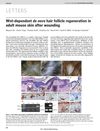
May 2007 in “Nature” Hair follicles can regrow in wounded adult mouse skin using a process like embryo development.
335 citations
,
March 2004 in “Development” Temporary activation of β-catenin can create new hair follicles, but ongoing activation is needed to keep hair follicle tumors.
 127 citations
,
December 2005 in “Experimental Dermatology”
127 citations
,
December 2005 in “Experimental Dermatology” Stress can stop hair growth in mice, and treatments can reverse this effect.
50 citations
,
December 2000 in “Journal of Pharmaceutical Sciences” Hair follicles significantly enhance electroosmotic transport during iontophoresis.
47 citations
,
September 2004 in “Journal of Biological Chemistry” Hoxc13 regulates specific hair protein genes on mouse chromosome 16.
 46 citations
,
March 2015 in “Regeneration”
46 citations
,
March 2015 in “Regeneration” Mice can grow new hair follicles after skin wounds through a process not involving existing hair stem cells, but requiring more research to understand fully.
31 citations
,
January 1993 in “Skin Pharmacology and Physiology” Potassium channel openers can boost hair growth by stimulating DNA in hair follicles.
18 citations
,
March 2023 in “Molecular Therapy — Nucleic Acids” Mechanical stimuli and CCL2 can help regenerate hair follicles in adult mice.
18 citations
,
February 2006 in “Genomics” A new genetic mutation in mice causes permanent hair loss and skin wrinkling.
15 citations
,
October 1999 in “British Journal of Dermatology” Collagen remodeling is more active during hair growth stages.
 9 citations
,
July 2008 in “Oncology Reports”
9 citations
,
July 2008 in “Oncology Reports” HPV16-transformed cells can change human skin cell properties, aiding tumor growth.
7 citations
,
February 1962 in “Experimental Biology and Medicine” Male and female mice have different lipid compositions in their skin during hair growth cycles.
7 citations
,
October 1988 in “Clinics in Dermatology” Minoxidil can promote hair growth in hairless mice.
 5 citations
,
September 2015 in “PLoS ONE”
5 citations
,
September 2015 in “PLoS ONE” Gelfoam® histoculture supports long-term hair and nerve growth in mouse whisker follicles.
5 citations
,
January 2001 in “Journal of dermatological science” The G(S) alpha subunit gene may help start hair follicle growth in newborn mice.
1 citations
,
April 2018 in “The journal of investigative dermatology/Journal of investigative dermatology” HDAC inhibitors like Vorinostat and Entinostat may encourage hair regrowth and could be new treatments for hair loss conditions.
February 2024 in “International journal of molecular sciences” UV exposure reduced hair shine in mice, but minoxidil helped restore it.
 June 2023 in “Current Issues in Molecular Biology”
 DN106212, an extract from a plant, is better at promoting hair growth than other tested substances by affecting hair growth factors and follicle development.
North American ginseng extract helped regrow hair in balding mice.
January 2010 in “Chinese Journal of Aesthetic Medicine” EGCG promotes hair growth in mice.