January 2026 in “PLoS Biology” ARHGEF3 is essential for proper hair follicle development in mice.
 May 2022 in “Frontiers in Cell and Developmental Biology”
 miR-29a-5p prevents the formation of early hair structures by targeting a gene important for hair growth and is regulated by a complex network involving lncRNA627.1.
5 citations
,
September 2021 in “Journal of Molecular Histology” LHX2, with other markers, can identify hair placodes in rats.
43 citations
,
January 2016 in “Development” LHX2 is essential for hair follicle development, controlled by NF-κB and TGFβ2 signaling.
8 citations
,
October 2024 in “Developmental Cell”  479 citations
,
January 2005 in “BioEssays”
479 citations
,
January 2005 in “BioEssays” Hair follicle development is controlled by interactions between skin tissues and specific molecular signals.
117 citations
,
April 2008 in “Developmental biology” Ectodysplasin inhibits Wnt signaling to help form hair follicles.
56 citations
,
February 2012 in “Developmental biology” Sostdc1 controls the size and number of hair and mammary gland structures.
23 citations
,
June 2023 in “Cell Reports” Early hair follicle development involves distinct cell populations and Wnt signaling influences cell identity.
2 citations
,
September 2018 in “bioRxiv (Cold Spring Harbor Laboratory)” Hair follicle niches are specified before they form and depend on progenitor cells.
November 2022 in “bioRxiv (Cold Spring Harbor Laboratory)” Researchers identified new cell types and genes in early hair follicle development.
 April 2017 in “Journal of Investigative Dermatology”
 Dermal Wnt/β-catenin signaling is important for the proper size and development of hair follicles.
Fgf20 helps form hair follicle structures by stopping cell division and increasing cell movement.
April 2018 in “Journal of Investigative Dermatology” Key signals for hair follicle formation were identified.
 12 citations
,
December 2020 in “Archives animal breeding/Archiv für Tierzucht”
12 citations
,
December 2020 in “Archives animal breeding/Archiv für Tierzucht” EDA and EDAR are important for hair follicle development in cashmere goats and affect other related genes.

ARHGEF3 is essential for proper hair follicle development.
 July 2023 in “bioRxiv (Cold Spring Harbor Laboratory)”
 The mesenchyme can start hair growth, but the exact signal that causes this is still unknown.
 82 citations
,
May 2009 in “Development”
82 citations
,
May 2009 in “Development” EGF and KGF signalling prevent hair follicle formation and promote skin cell development in mice.
293 citations
,
September 2004 in “Development” WNT signaling is crucial for starting mammary gland development.
45 citations
,
January 2010 in “Forensic science international” Neonatal hair can help determine drug exposure during pregnancy.
 25 citations
,
July 2008 in “British Journal of Dermatology”
25 citations
,
July 2008 in “British Journal of Dermatology” CD10 and CD34 levels change during hair development and different hair growth stages, which could be important for hair regeneration treatments.
6 citations
,
January 2019 in “Biochemical and Biophysical Research Communications” Sox13 is a useful marker for early hair follicle development but not essential for hair growth.
September 2019 in “Journal of Investigative Dermatology” Sox13 is a new marker for early hair follicle development and differentiation.
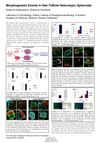
Researchers developed a method to create artificial hair follicles that may help with hair loss treatment and research.
 48 citations
,
January 2012 in “The journal of investigative dermatology/Journal of investigative dermatology”
48 citations
,
January 2012 in “The journal of investigative dermatology/Journal of investigative dermatology” Chemokine signaling is important for hair development.
 43 citations
,
February 2013 in “Developmental dynamics”
43 citations
,
February 2013 in “Developmental dynamics” Foxi3 expression in developing teeth and hair is controlled by the ectodysplasin pathway.
 243 citations
,
October 2003 in “Developmental biology”
243 citations
,
October 2003 in “Developmental biology” Ectodin integrates BMP, SHH, and FGF signals in developing ectodermal organs.
 76 citations
,
May 2011 in “Cell death and differentiation”
76 citations
,
May 2011 in “Cell death and differentiation” A20 protein is crucial for normal skin and hair development.
12 citations
,
March 2022 in “Development” Mechanical forces are crucial in shaping our sensory organs during development.
 April 2023 in “The journal of investigative dermatology/Journal of investigative dermatology”
 Scientists created skin-like structures from stem cells that include features like hair and sweat glands.