 14 citations
,
February 2021 in “Experimental Dermatology”
14 citations
,
February 2021 in “Experimental Dermatology” Cannabinoid receptor-1 signaling is essential for the survival and growth of human hair follicle stem cells.
 14 citations
,
August 2007 in “Bioorganic & Medicinal Chemistry Letters”
14 citations
,
August 2007 in “Bioorganic & Medicinal Chemistry Letters” The compound (1R,2S)-4-(2-Cyano-cyclohexyl-oxy)-2-trifluoromethyl-benzonitrile can stimulate hair growth and reduce oil production when applied topically.
 14 citations
,
June 2001 in “Endocrinology”
14 citations
,
June 2001 in “Endocrinology” Prolactin affects when mice shed and grow hair.
13 citations
,
December 2005 in “Traffic” Syntaxin 9 helps in transporting and signaling of the EGF receptor in skin and stomach cells.
 8 citations
,
January 1998 in “Journal of Investigative Dermatology”
8 citations
,
January 1998 in “Journal of Investigative Dermatology” Topical estrogen treatments did not change hair growth in certain mouse strains, questioning previous findings on their role in hair growth control.
8 citations
,
February 2009 in “Journal of Dermatological Science” Targeting androgen receptors with antiandrogen oligonucleotides could effectively treat hair loss.
 5 citations
,
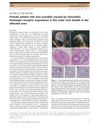
August 2012 in “Journal of Dermatology”
5 citations
,
August 2012 in “Journal of Dermatology” Tamoxifen may cause female hair loss by increasing androgen receptor expression.
 November 2022 in “Journal of Investigative Dermatology”
 Activating a bitter taste receptor in hair follicles can stop hair growth by increasing a specific growth factor.
October 2017 in “Institutional Repositories DataBase (IRDB)” Polyacetylene compounds from Panax ginseng may slow hair growth.
Human scalp hair follicles have PGE2 and its receptors, which might affect hair growth.
 February 2026 in “International Journal of Molecular Sciences”
 Silencing SFRP1 alone promotes hair growth, but adding DKK1 does not help.
 February 2026 in “International Journal of Molecular Sciences”
 Muscarinic acetylcholine receptors in skin cells help regulate and promote hair growth.
June 2025 in “Molecular Therapy — Nucleic Acids” A new treatment using a DNA aptamer can promote hair growth by targeting a specific receptor.
November 2024 in “Journal of Investigative Dermatology” Stimulating OR10J1 can promote hair growth and may help treat hair loss.
 October 2024 in “Scientific Reports”
 OXTR agonists may promote hair growth and be effective for treating hair loss.
July 2024 in “Journal of Investigative Dermatology” Linalool in fragrances may harm hair follicles and contribute to hair loss.
 June 2024 in “International journal of molecular sciences”
 Adenosine complex helps increase hair thickness and density in hair loss.
May 2024 in “Pharmacia/Farmaciâ” Purple sweet potato leaf extracts can help treat hair loss and fungal infections.
 February 2024 in “Scientific Reports”
 Cinnamic acid may help hair grow by activating oxytocin receptors.
January 2024 in “Neuroscience Applied” Oxytocin receptor changes in hair cells may help identify autism, especially in males.
 October 2023 in “IBRO neuroscience reports”
 Rat hair follicle stem cells have functional oxytocin receptors, useful for studying neuropsychiatric disorders.
 July 2023 in “Frontiers in Veterinary Science”
 Melatonin helps hair grow by activating the RORα receptor in goats.

The research identified key molecules that help hair matrix and dermal papilla cells communicate and influence hair growth in cashmere goats.
144 citations
,
December 2004 in “Molecular Endocrinology” The vitamin D receptor is essential for normal hair growth, even without its usual binding.
 2 citations
,
February 2019 in “Journal of Investigative Dermatology”
2 citations
,
February 2019 in “Journal of Investigative Dermatology” Higher levels of the DP2 receptor may lead to hair loss.
 November 2025 in “Stem Cell Reviews and Reports”
 The error in figures didn't affect the study's results or conclusions.
250 citations
,
November 2003 in “The Journal of Cell Biology” BMP receptor IA is essential for proper hair cell differentiation in mice.
71 citations
,
February 2000 in “Endocrinology and metabolism/American journal of physiology: endocrinology and metabolism” Estradiol stops hair growth in mice, but an antagonist can reverse this effect.
 37 citations
,
March 2010 in “British Journal of Dermatology”
37 citations
,
March 2010 in “British Journal of Dermatology” Oestrogen and thyrotropin-releasing hormone affect prolactin and its receptor in human skin and hair, suggesting new treatment options for related conditions.
25 citations
,
September 2024 in “Cardiovascular Drugs and Therapy” GLP1-RAs may have higher reports of suicidal events and hair loss compared to other diabetes drugs.