117 citations
,
April 2008 in “Developmental biology” Ectodysplasin inhibits Wnt signaling to help form hair follicles.
105 citations
,
October 2017 in “Stem cells” Wnt signaling is crucial for skin development and hair growth.
 100 citations
,
September 2017 in “Molecular and Cellular Endocrinology”
100 citations
,
September 2017 in “Molecular and Cellular Endocrinology” Male hormones and their receptors play a key role in hair loss and skin health, with potential new treatments being explored.
 95 citations
,
July 2010 in “Genes & development”
95 citations
,
July 2010 in “Genes & development” Notch/CSL signaling controls hair follicle differentiation through Wnt5a and FoxN1.
 89 citations
,
September 2010 in “Annual Review of Genomics and Human Genetics”
89 citations
,
September 2010 in “Annual Review of Genomics and Human Genetics” The document concludes that understanding the genes and pathways involved in hair growth is crucial for developing treatments for hair diseases.
85 citations
,
June 2017 in “Journal of Investigative Dermatology” Blimp1 is crucial for hair follicle growth and skin health.
74 citations
,
January 2014 in “Journal of Investigative Dermatology” High kallistatin levels in diabetics worsen wound healing by blocking important cell signals.
 74 citations
,
September 2006 in “Cell Cycle”
74 citations
,
September 2006 in “Cell Cycle” The HR protein's role as a repressor is essential for controlling hair growth.
64 citations
,
January 2009 in “The International journal of developmental biology” Hair follicle stem cells are controlled by their surrounding environment.
 60 citations
,
July 2011 in “Stem Cells and Development”
60 citations
,
July 2011 in “Stem Cells and Development” Certain signals and genes play a key role in hair growth and regeneration, and understanding these could lead to new treatments for skin regeneration.
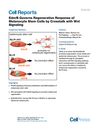 59 citations
,
April 2016 in “Cell Reports”
59 citations
,
April 2016 in “Cell Reports” EdnrB signaling helps melanocyte stem cells regenerate and could be targeted to treat pigmentation issues.
57 citations
,
April 2009 in “Differentiation” SDF-1/CXCL12 and its receptor CXCR4 are crucial for melanocyte movement in mouse hair follicles.
 56 citations
,
May 2017 in “Nature Cell Biology”
56 citations
,
May 2017 in “Nature Cell Biology” Hair can regrow after certain stem cells are lost because other stem cells can take over their role.
 51 citations
,
April 2020 in “Cells”
51 citations
,
April 2020 in “Cells” Special cell particles from macrophages can help hair grow.
 48 citations
,
July 2008 in “Acta Biochimica et Biophysica Sinica”
48 citations
,
July 2008 in “Acta Biochimica et Biophysica Sinica” Wnt signaling is important for development and cell regulation but can cause diseases like cancer when not working properly.
45 citations
,
August 2009 in “American Journal Of Pathology” Noggin promotes skin tumors by activating certain cell signaling pathways.
 43 citations
,
December 2013 in “Seminars in Cell & Developmental Biology”
43 citations
,
December 2013 in “Seminars in Cell & Developmental Biology” Genetic mutations can cause hair growth disorders by affecting key genes and signaling pathways.
43 citations
,
April 2010 in “Developmental Biology” Sebaceous glands can form new hair follicles when activated, but hair follicle bulges cannot.
 42 citations
,
January 2014 in “Cold Spring Harbor Perspectives in Medicine”
42 citations
,
January 2014 in “Cold Spring Harbor Perspectives in Medicine” Hair growth is influenced by various body and external factors, and neighboring hairs communicate to synchronize regeneration.
41 citations
,
December 2011 in “The journal of investigative dermatology/Journal of investigative dermatology” Deleting MED1 in skin cells causes hair loss and skin changes.
 41 citations
,
November 2011 in “The Journal of Dermatology”
41 citations
,
November 2011 in “The Journal of Dermatology” Some hair loss disorders are caused by genetic mutations affecting hair growth.
 40 citations
,
April 2014 in “Genes & Development”
40 citations
,
April 2014 in “Genes & Development” Hormones during pregnancy and lactation keep skin stem cells inactive, preventing hair growth.
35 citations
,
July 2022 in “Frontiers in Cell and Developmental Biology” Proper mTOR signaling is crucial for healthy skin and preventing skin diseases.
 35 citations
,
July 2018 in “Cell Reports”
35 citations
,
July 2018 in “Cell Reports” The study found that a specific area of the hair follicle helps start hair growth by reducing the blocking effects on certain cells and controlling growth signals.
32 citations
,
April 2020 in “BMC Developmental Biology” Ocu-miR-205 helps control hair growth in Rex rabbits by affecting cell processes and signaling pathways.
 32 citations
,
April 2016 in “Journal of Investigative Dermatology”
32 citations
,
April 2016 in “Journal of Investigative Dermatology” STAT5 activation is crucial for starting the hair growth phase.
 29 citations
,
January 2021 in “Journal of Investigative Dermatology”
29 citations
,
January 2021 in “Journal of Investigative Dermatology” Fat under the skin releases HGF which helps hair grow and gain color.
29 citations
,
January 2021 in “Journal of nanobiotechnology” Tiny particles from brain cells help hair grow by targeting a specific hair growth pathway.
 28 citations
,
October 2019 in “Seminars in Cell & Developmental Biology”
28 citations
,
October 2019 in “Seminars in Cell & Developmental Biology” Hair can regrow in large wounds through a process similar to how hair forms in embryos, and understanding this could lead to new treatments for hair loss or scarring.
 26 citations
,
May 2015 in “Lasers in Surgery and Medicine”
26 citations
,
May 2015 in “Lasers in Surgery and Medicine” Laser treatment helped regrow hair in mice by activating a key growth pathway.