 April 2026 in “Asian Journal of Research in Pharmaceutical Sciences”
 Semecarpus anacardium may promote hair growth, but more research is needed for safe use in humans.
December 2025 in “The American Journal of Interdisciplinary Innovations and Research” The InvisiCaps Method ensures natural-looking hair extensions by carefully matching donor hair characteristics.
June 2025 in “British Journal of Dermatology” Hair transplantation has evolved significantly, becoming more effective and popular despite challenges.
3 citations
,
December 2021 in “Skin research and technology” Higher hair luminosity and shine mean higher perceived transparency.
 December 2024 in “Journal of Cutaneous and Aesthetic Surgery”
 Advanced FUE systems have evolved to improve precision and efficiency in hair transplantation.
June 2024 in “Regenerative Therapy” Exosomes from stem cells may help rejuvenate skin and regrow hair, but more research is needed.
 7 citations
,
July 2020 in “Pigment cell & melanoma research”
7 citations
,
July 2020 in “Pigment cell & melanoma research” RT1640 treatment reverses gray hair and promotes hair growth in mice.
 101 citations
,
January 2016 in “Journal of Cutaneous and Aesthetic Surgery”
101 citations
,
January 2016 in “Journal of Cutaneous and Aesthetic Surgery” Different types of hair loss need specific treatments, and while many classification systems exist, each has its flaws; more research is needed to refine these systems and treatments.
 56 citations
,
November 2010 in “Pigment Cell & Melanoma Research”
56 citations
,
November 2010 in “Pigment Cell & Melanoma Research” Brain hormones significantly affect hair color and could potentially be used to prevent or reverse grey hair.
 50 citations
,
August 1999 in “Experimental dermatology”
50 citations
,
August 1999 in “Experimental dermatology” The control system for hair growth cycles is not well understood and needs more research.
 31 citations
,
November 2013 in “Dermatologic Clinics”
31 citations
,
November 2013 in “Dermatologic Clinics” The ARTAS robotic system for hair restoration is efficient with fewer cuts than manual methods, but it's limited to certain hair types and can still leave scars.
 14 citations
,
May 2022 in “Asian Journal of Pharmaceutical Sciences”
14 citations
,
May 2022 in “Asian Journal of Pharmaceutical Sciences” New hair follicle-targeting treatments show promise for hair disorders but need more research on safety and effectiveness.
 4 citations
,
December 2021 in “Journal of Pharmacopuncture”
4 citations
,
December 2021 in “Journal of Pharmacopuncture” Microneedle Treatment System is effective for hair growth and skin improvement with no serious side effects, but more research is needed.
 3 citations
,
August 2013 in “Stem cells”
3 citations
,
August 2013 in “Stem cells” Certain inhibitors applied to the skin can promote hair growth by maintaining a key hair growth signal.
 2 citations
,
May 2018 in “International Society of Hair Restoration Surgery”
2 citations
,
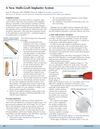
May 2018 in “International Society of Hair Restoration Surgery” The new system makes hair transplants faster and more precise.
 April 2026 in “Cosmetics”
 Robotic systems in cosmetic surgery show promise but face challenges like high costs and need more research and training.
 March 2025 in “Molecular Medicine”
 Cholesterol helps hair grow by activating nerves and boosting hair follicle stem cells.
 September 2023 in “Chinese Medical Journal”
 Robotic surgical systems are being used more in plastic and reconstructive surgery due to their precision and control, improving patient outcomes and satisfaction, despite challenges like high costs.
January 2018 in “Figshare” Melatonin helps Cashmere goats grow more hair by affecting genes and cell signals important for hair and blood vessel development.
414 citations
,
August 2005 in “Nature” Activating TERT in mice skin boosts hair growth by waking up hair follicle stem cells.
 263 citations
,
February 2013 in “Wiley interdisciplinary reviews. Nanomedicine and nanobiotechnology”
263 citations
,
February 2013 in “Wiley interdisciplinary reviews. Nanomedicine and nanobiotechnology” Polymeric nanoparticles show promise for treating skin diseases.
143 citations
,
January 2013 in “Dermatologic surgery” In-office laser hair removal works well long-term, especially Nd:YAG for darker skin, but home devices need more testing.
122 citations
,
October 2013 in “PEDIATRICS” Maternal stress during pregnancy affects a child's stress levels.
71 citations
,
June 2007 in “Bioorganic & Medicinal Chemistry Letters” PLGA nanospheres improve hair growth by effectively delivering ingredients to hair follicles.
 66 citations
,
May 2012 in “Scientific Reports”
66 citations
,
May 2012 in “Scientific Reports” Scientists successfully created and transplanted bioengineered hair follicles that function like natural ones, suggesting a new treatment for hair loss.
 61 citations
,
June 2018 in “Proceedings of the National Academy of Sciences of the United States of America”
61 citations
,
June 2018 in “Proceedings of the National Academy of Sciences of the United States of America” Light can turn on hair growth cells through a nerve path starting in the eyes.
 61 citations
,
December 2016 in “The EMBO Journal”
61 citations
,
December 2016 in “The EMBO Journal” The study showed that hair follicle stem cells can maintain and organize themselves in a lab setting, keeping their ability to renew and form hair and skin.
 59 citations
,
July 2015 in “Journal of innovative optical health sciences/Journal of innovation in optical health science”
59 citations
,
July 2015 in “Journal of innovative optical health sciences/Journal of innovation in optical health science” Nanoparticles around 600-700 nm can effectively enter and stay in hair follicles for days, which may help in delivering drugs to specific cells.
 48 citations
,
April 2019 in “ACS Applied Materials & Interfaces”
48 citations
,
April 2019 in “ACS Applied Materials & Interfaces” A new method for delivering drugs through the skin using biodegradable particles was found to be effective.
 30 citations
,
October 2016 in “Current research in translational medicine”
30 citations
,
October 2016 in “Current research in translational medicine” Hair follicles on the scalp interact with and respond to the nervous system, influencing their own behavior and growth.