 October 2018 in “InTech eBooks”
 The most effective treatments for hair loss are minoxidil, finasteride, PRP, and hair transplants, with steroids and immunosuppressants for autoimmune types.
 September 1997 in “Dermatologic Surgery”
 Hair restoration has greatly improved, allowing for natural-looking hairlines and better results.
 December 1989 in “The Journal of Dermatologic Surgery and Oncology”
 New techniques and findings in dermatologic surgery show improved pain management, safer liposuction, better hair transplantation, and effective treatments for skin conditions.
 5 citations
,
February 2018 in “Experimental Dermatology”
5 citations
,
February 2018 in “Experimental Dermatology” Scientists developed a way to isolate sweat glands from the scalp during hair transplants, keeping them alive for 6 days for research and cosmetic uses.
 53 citations
,
May 2010 in “Dermatologic Surgery”
53 citations
,
May 2010 in “Dermatologic Surgery” Hair transplantation may not work for Frontal Fibrosing Alopecia as transplanted hair was lost when the disease came back.
22 citations
,
July 2017 in “Australasian journal of dermatology” Hair transplantation can effectively restore hair in patients with stable lichen planopilaris or frontal fibrosing alopecia.
 16 citations
,
October 1979 in “The Journal of Dermatologic Surgery and Oncology”
16 citations
,
October 1979 in “The Journal of Dermatologic Surgery and Oncology” Scalp reduction surgery successfully reduced baldness and improved self-image in a burn victim before hair transplantation.
 13 citations
,
August 2016 in “Journal of Cosmetic Dermatology”
13 citations
,
August 2016 in “Journal of Cosmetic Dermatology” Using normal saline in vertical extraction for hair transplants reduces donor area injury more than acute extraction.
 11 citations
,
January 2015 in “Current problems in dermatology”
11 citations
,
January 2015 in “Current problems in dermatology” The conclusion is that treatments like finasteride and minoxidil can prevent baldness progression and improve hair density, but more research is needed on other therapies.
 10 citations
,
January 2010 in “Springer eBooks”
10 citations
,
January 2010 in “Springer eBooks” Asian hair restoration surgery requires different methods due to the unique characteristics of Asian hair, such as its sparseness and coarseness.
 8 citations
,
January 2007 in “Hair transplant forum international”
8 citations
,
January 2007 in “Hair transplant forum international” Vitamin B12 improves the health and growth of hair micrografts.
 6 citations
,
July 2007 in “Aesthetic Surgery Journal”
6 citations
,
July 2007 in “Aesthetic Surgery Journal” The document concludes that using autologous follicular unit implantation is a successful method to correct hairline deformities after facial rejuvenation.
4 citations
,
October 2016 in “The journal of investigative dermatology/Journal of investigative dermatology” Using an anti-ICAM-1 antibody with rapamycin improves hair transplant survival in monkeys.
 4 citations
,
January 2016 in “Dermatology practical & conceptual”
4 citations
,
January 2016 in “Dermatology practical & conceptual” A man developed a rare skin condition after a hair transplant surgery.
 4 citations
,
November 2006 in “Dermatologic Surgery”
4 citations
,
November 2006 in “Dermatologic Surgery” Transplanted transected hair follicles can survive but grow at unsatisfactory rates and are thinner, suggesting limited potential for unlimited donor hair supply.
 3 citations
,
September 2016 in “Hair transplant forum international”
3 citations
,
September 2016 in “Hair transplant forum international” Southeast and East Asian men typically have straighter hairlines with less recession and lower hair density, which is important to consider in hair restoration surgery.
2 citations
,
July 2009 in “Medical hypotheses” Identifying specific hair follicle parts could lead to better hair loss treatments.
 1 citations
,
July 2018 in “Elsevier eBooks”
1 citations
,
July 2018 in “Elsevier eBooks” Heredity and hormones cause common hair loss, and topical minoxidil is the first recommended treatment.
 1 citations
,
January 2014 in “Annals of Dermatology”
1 citations
,
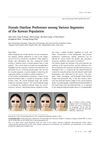
January 2014 in “Annals of Dermatology” Korean people prefer M-shaped hairlines and lower foreheads, with no major differences across various demographics.
 1 citations
,
February 2004 in “Journal of The European Academy of Dermatology and Venereology”
1 citations
,
February 2004 in “Journal of The European Academy of Dermatology and Venereology” Hair loss improved with treatment and successful transplant.
 September 2025 in “Journal of Cosmetic Dermatology”
 Rb-bFGF improves hair transplant results and patient satisfaction with fewer complications.
PRP can help regrow hair and improve hair transplant results.
 July 2022 in “Plastic surgery and modern techniques”
 Using stem cell-enriched fat injections before hair transplant surgery can result in less hair loss and thicker hair.
 April 2022 in “Research Square (Research Square)”
 The conclusion is that treating scalp AVF caused by hair transplantation with endovascular methods like coiling is safe and effective.
 January 2022 in “Book Publisher International (a part of SCIENCEDOMAIN International)”
 The document concludes that hair doctors should explain hair loss progression to patients and recommend suitable hairline heights to prevent future issues and maintain a natural look.
 March 2021 in “International Journal of Research in Dermatology”
 Trapezoid donor strips give more hair follicles than elliptical ones in hair transplants.
 November 2019 in “Hair transplant forum international”
 The SketchAndCalc app is a faster and more precise method for measuring hair transplant areas than traditional grid counting.
December 2017 in “Facial plastic surgery” Hair transplants can effectively treat facial hair loss from trauma.
 January 2007 in “Dermatologic Surgery”
 A new scalp surgery technique leads to significantly thinner scars.
 November 2006 in “Dermatologic Surgery”
 Cutting hair follicles into pieces for transplantation results in poor growth and thinner hair, and the technique is more invasive than previously thought.