133 citations
,
July 1994 in “Journal of Dermatological Science” Human hair growth can be influenced by certain growth factors and has specific metabolic needs.
 66 citations
,
June 2010 in “Experimental Dermatology”
66 citations
,
June 2010 in “Experimental Dermatology” The hair follicle is a great model for research to improve hair growth treatments.
 12 citations
,
January 2021 in “Journal of Investigative Dermatology”
12 citations
,
January 2021 in “Journal of Investigative Dermatology” Hair follicle studies suggest that maintaining telomere length could help treat hair loss and graying, but it's uncertain if mouse results apply to humans.
16 citations
,
August 1996 in “The journal of experimental zoology/Journal of experimental zoology” Red deer hair cells offer a new way to study how hormones affect hair growth.
 3 citations
,
May 2018 in “InTech eBooks”
3 citations
,
May 2018 in “InTech eBooks” Animal models, especially mice, are essential for advancing hair loss research and treatment.
 13 citations
,
December 1991 in “Annals of the New York Academy of Sciences”
13 citations
,
December 1991 in “Annals of the New York Academy of Sciences” Researchers created a lab model to study human hair growth, showing it can grow and self-regulate outside the body.
11 citations
,
March 2001 in “Clinics in dermatology” The new microneedle method delivers hair loss treatment more effectively by enhancing growth pathways.
17 citations
,
July 2024 in “Frontiers in Oncology” New therapies and trials are needed for Merkel cell carcinoma, a tough skin cancer.
 100 citations
,
November 1996 in “Molecular Medicine Today”
100 citations
,
November 1996 in “Molecular Medicine Today” Growth factors and cytokines are important for hair growth and could potentially treat hair loss, but more research is needed to overcome challenges before they can be used in treatments.
May 2025 in “World Journal of Biology Pharmacy and Health Sciences” Butterfly pea flower is beneficial for hair serum due to its antioxidant and pigmenting properties.
 29 citations
,
April 2020 in “Journal of Tissue Engineering and Regenerative Medicine”
29 citations
,
April 2020 in “Journal of Tissue Engineering and Regenerative Medicine” The experiment showed that human skin grown in the lab started to form early hair structures when special cell clusters were added.
 16 citations
,
September 2018 in “Scientific reports”
16 citations
,
September 2018 in “Scientific reports” Scientists created keratinocyte cell lines from human hair that can differentiate similarly to normal skin cells, offering a new way to study skin biology and diseases.
 April 2016 in “Journal of Investigative Dermatology”
 The symposium showed that stem cells are key for understanding and treating skin diseases and for developing new skin models and therapies.
 759 citations
,
February 2009 in “Current Biology”
759 citations
,
February 2009 in “Current Biology” Hair follicles are complex, dynamic mini-organs that help us understand cell growth, death, migration, and differentiation, as well as tissue regeneration and tumor biology.
 30 citations
,
April 2018 in “Experimental Dermatology”
30 citations
,
April 2018 in “Experimental Dermatology” The article concludes that developing in vitro models for human hair structures is important for research and reducing animal testing, but there are challenges like obtaining suitable samples and the models' limitations.
 1398 citations
,
May 2008 in “Histochemistry and Cell Biology”
1398 citations
,
May 2008 in “Histochemistry and Cell Biology” Keratins are crucial for cell stability, wound healing, and cancer diagnosis.
 11 citations
,
August 2013 in “Facial Plastic Surgery Clinics of North America”
11 citations
,
August 2013 in “Facial Plastic Surgery Clinics of North America” New cell-based therapies may improve hair loss treatments in the future.
 97 citations
,
September 2016 in “Reviews in Endocrine and Metabolic Disorders”
97 citations
,
September 2016 in “Reviews in Endocrine and Metabolic Disorders” The sebaceous gland has more roles than just producing sebum and contributing to acne, and new research could lead to better skin disease treatments.
 65 citations
,
November 2012 in “Tissue Engineering Part B-reviews”
65 citations
,
November 2012 in “Tissue Engineering Part B-reviews” Hair follicle stem cells are a promising source for tissue repair and treating skin or hair diseases.
 8 citations
,
January 2016 in “Journal of Investigative Dermatology”
8 citations
,
January 2016 in “Journal of Investigative Dermatology” The research created a model to understand human hair growth cycle, which can help diagnose and treat hair growth disorders and test potential hair growth drugs.
3 citations
,
April 2025 in “Science Advances” Loss of Ten1 in mice causes telomere shortening and symptoms similar to human dyskeratosis congenita.
179 citations
,
June 2000 in “The American journal of pathology” The absence of functional sebaceous glands causes hair follicle destruction and scarring alopecia.
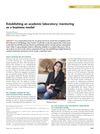 1 citations
,
October 2014 in “Molecular Biology of the Cell”
1 citations
,
October 2014 in “Molecular Biology of the Cell” Valentina Greco emphasizes the importance of combining business management with mentoring to run a successful academic lab.
 31 citations
,
January 2021 in “Experimental Dermatology”
31 citations
,
January 2021 in “Experimental Dermatology” Skin organoids are a promising new model for studying human skin development and testing treatments.
127 citations
,
November 2010 in “Pigment cell & melanoma research” We need more research on human hair follicle pigmentation, not just mouse models.
 August 2023 in “Military Medical Research”
 Scientists have improved 3D models of human skin for research and medical uses, but still face challenges in perfectly replicating real skin.
5 citations
,
April 2024 in “Biology” Improving human hair follicle models is crucial for better hair loss treatments.
39 citations
,
March 2022 in “Nature Protocols” Scientists created hair-growing skin models from stem cells, which could help treat hair loss and skin diseases.
 130 citations
,
August 2015 in “Experimental Dermatology”
130 citations
,
August 2015 in “Experimental Dermatology” Human hair follicle organ culture is a useful model for hair research with potential for studying hair biology and testing treatments.
 52 citations
,
October 2012 in “Journal of Dermatological Science”
52 citations
,
October 2012 in “Journal of Dermatological Science” The document concludes that mouse models are crucial for studying hair biology and that all mutant mice may have hair growth abnormalities that require detailed analysis to identify.