March 2017 in “Current dermatology reports” Topical JAK inhibitors can effectively treat alopecia areata and vitiligo by modulating immune responses.
The document concludes that hair loss in women is complex, often linked to aging, health conditions, and nutritional deficiencies, and emotional impacts should not be underestimated.
January 2015 in “OhioLink ETD Center (Ohio Library and Information Network)” Balanced vitamin A is essential for healthy hair, as too much or too little can cause hair loss.
July 2013 in “International Society of Hair Restoration Surgery” Vitamin D might help with hair growth and hair loss treatments.
 November 2005 in “Journal of Investigative Dermatology Symposium Proceedings”
 The 2004 hair research meeting presented new findings on hair cell differentiation, genetic factors in hair loss, hair pigmentation, and potential targeted therapies.
Finasteride and minoxidil help regrow hair by improving hair thickness and length.
 September 1997 in “JEADV. Journal of the European Academy of Dermatology and Venereology/Journal of the European Academy of Dermatology and Venereology”
 Anti-IL-1 treatments might help with certain types of hair loss in people with high inflammation.
 September 1997 in “JEADV. Journal of the European Academy of Dermatology and Venereology/Journal of the European Academy of Dermatology and Venereology”
 Blocking IL-1 could help treat some hair loss conditions; alopecia affects liver detox systems; spironolactone is better than finasteride for female hair growth; focusing on the catagen hair phase could lead to new alopecia treatments.
July 1994 in “Archives of Dermatology” The book provides a thorough guide on hair and scalp diseases, covering causes, types, and evaluation methods.
 October 2020 in “Journal of Aesthetic Nursing”
 Platelet-rich plasma (PRP) injections effectively treat hair loss and thinning in both men and women, with high satisfaction and no major side effects.
57 citations
,
August 2023 in “American Journal of Clinical Dermatology” JAK inhibitors and platelet-rich plasma show promise for treating alopecia areata.
 32 citations
,
March 2021 in “Journal of cosmetic dermatology (Print)”
32 citations
,
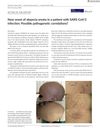
March 2021 in “Journal of cosmetic dermatology (Print)” COVID-19 infection may trigger alopecia areata in some patients.
14 citations
,
February 2011 in “Experimental dermatology” A protein called COMP is part of the connective tissue in normal human hair follicles and may be important for hair health.
 3 citations
,
April 2019 in “The journal of investigative dermatology/Journal of investigative dermatology”
3 citations
,
April 2019 in “The journal of investigative dermatology/Journal of investigative dermatology” ILC1 cells contribute to hair loss in alopecia areata.
May 2025 in “Journal of the Egyptian Womenʼs Dermatologic Society” Hair follicles in nonsegmental vitiligo are better protected from immune attacks than in alopecia areata.

γδTregs may help treat autoimmune diseases like alopecia areata by promoting hair regrowth and reducing immune attacks.
July 1997 in “JEADV. Journal of the European Academy of Dermatology and Venereology/Journal of the European Academy of Dermatology and Venereology” TGF-β is found in hair follicles and may cause hair loss in alopecia areata.
January 2020 in “Journal of Womens Health, Issues and Care” Scalp micropigmentation is a successful, non-surgical way to make hair look fuller.
 September 2023 in “JPRAS Open”
 Botulinum Toxin A may help with hair growth and has some side effects; more research is needed.
 1113 citations
,
August 1999 in “The New England Journal of Medicine”
1113 citations
,
August 1999 in “The New England Journal of Medicine” Hair follicle biology advancements may lead to better hair growth disorder treatments.
 48 citations
,
July 1992 in “International Journal of Dermatology”
48 citations
,
July 1992 in “International Journal of Dermatology” HIV can cause various nail and hair disorders, important for early diagnosis and treatment.
 34 citations
,
October 2017 in “Archivos Argentinos De Pediatria”
34 citations
,
October 2017 in “Archivos Argentinos De Pediatria” Alopecia Areata is a complex, unpredictable autoimmune hair loss condition with limited treatment options and a significant psychological impact.
27 citations
,
May 2011 in “Journal of dermatology” Methylprednisolone pulse therapy works best for recent and specific types of severe alopecia areata.
18 citations
,
December 2015 in “PubMed” Intralesional triamcinolone is more effective than topical betamethasone for treating localized alopecia areata.
 15 citations
,
October 2020 in “Journal of Investigative Dermatology Symposium Proceedings”
15 citations
,
October 2020 in “Journal of Investigative Dermatology Symposium Proceedings” Platelet-Rich Plasma (PRP) could potentially help regrow hair in people with Alopecia Areata, but more research is needed to confirm its effectiveness.
 6 citations
,
October 2014 in “PubMed”
6 citations
,
October 2014 in “PubMed” Autoimmune diseases like lupus, dermatomyositis, and scleroderma can cause hair loss and other hair problems, and treatments for these diseases might also affect hair.
 6 citations
,
January 2011 in “PubMed”
6 citations
,
January 2011 in “PubMed” The document concludes that most patients with endocrine disorders experience diffuse, non-scarring hair loss, with scarring hair loss being rare.
3 citations
,
August 2025 in “Stem Cell Research & Therapy” Adipose-derived stem cells show promise in treating hair loss by promoting hair regrowth and improving hair follicle function.
 2 citations
,
March 2014 in “Turkderm”
2 citations
,
March 2014 in “Turkderm” Mesotherapy and platelet-rich plasma treatments may help with hair loss, but their safety and effectiveness are still uncertain.
 1 citations
,
November 2017 in “Journal of Investigative Dermatology”
1 citations
,
November 2017 in “Journal of Investigative Dermatology” Platelet-rich plasma and microneedling could potentially help hair regrowth in alopecia areata patients, but more research is needed.