October 2021 in “bioRxiv (Cold Spring Harbor Laboratory)” The Hair Cell Analysis Toolbox automates and improves the analysis of cochlear hair cells using machine learning.
69 citations
,
May 1997 in “Veterinary Pathology” The angora mouse mutation causes long hair and hair defects due to a gene deletion.
 February 2024 in “Buletin Veteriner Udayana”
 The dog with severe hair loss and itching improved after treatment for ehrlichiosis and demodicosis.
4 citations
,
August 1991 in “The Journal of Dermatology” The tumor on the man's nose was a rare type called pedunculated follicular hamartoma.
 10 citations
,
January 2010 in “Veterinary pathology”
10 citations
,
January 2010 in “Veterinary pathology” A new mutation in the hairless gene causes hair loss and skin wrinkling in mice.
 48 citations
,
March 1997 in “Veterinary Dermatology”
48 citations
,
March 1997 in “Veterinary Dermatology” Some cats with sudden hair loss and tiredness might have cancer-related alopecia.
29 citations
,
February 2019 in “Pediatric dermatology” Trichotillomania shows specific signs like black dots and uneven hair lengths but lacks certain features of alopecia areata.
1 citations
,
July 2015 in “Microscopy Research and Technique” Friedreich's ataxia causes thin, weak hair with surface damage and cavities.
May 2025 in “Dermatology Reports” A genetic mutation in the LIPH gene causes a rare hair disorder with sparse, curly hair.
28 citations
,
July 1980 in “British Journal of Dermatology” The hair disorder was caused by abnormal protein formation, making hair easily damaged.
 September 1998 in “JEADV. Journal of the European Academy of Dermatology and Venereology/Journal of the European Academy of Dermatology and Venereology”
 Hair changes could indicate neurological diseases and help monitor treatment.
1 citations
,
December 2018 in “Veterinary dermatology” The hair coat disorder in Schipperkes is similar to Alopecia X and involves increased androstenedione levels and hair cycle arrest.
 November 2022 in “Brazilian journal of veterinary pathology”
 The Yorkshire terrier has a genetic hair loss condition not improved by treatment.
 October 2016 in “Veterinary record case reports”
 A cat had a rare skin disorder with hair loss and scaling, linked to a suspected tumor.
7 citations
,
January 2013 in “Supportive care in cancer” Hair mass index is a precise way to measure hair loss in chemotherapy patients.
3 citations
,
December 1956 in “PubMed”  December 2019 in “Ukrainian Journal of Veterinary and Agricultural Sciences”
 Donkey and horse hair have different microscopic structures, which can help tell them apart.
56 citations
,
June 2010 in “Clinical and experimental dermatology” Coudability hairs are useful markers for alopecia areata activity.
Low vitamin C caused bleeding and corkscrew hair, resolved with vitamin C treatment.
 126 citations
,
January 1987 in “Journal of The American Academy of Dermatology”
126 citations
,
January 1987 in “Journal of The American Academy of Dermatology” The document concludes that understanding hair structure is key to diagnosing hair abnormalities and recommends gentle hair care for management.
8 citations
,
September 2016 in “Journal of the American Academy of Dermatology” It's important to tell the difference between hair casts, pseudocasts, and nits.
 11 citations
,
September 2012 in “Chinese science bulletin/Chinese Science Bulletin”
11 citations
,
September 2012 in “Chinese science bulletin/Chinese Science Bulletin” Hair mineral content can help diagnose certain common illnesses.
 July 2023 in “Turkish journal of veterinary research”
 Wild boar bristles in Balıkesir vary in length and thickness but are unsuitable for species separation.
January 2011 in “대한피부과학회지” A 7-year-old girl was diagnosed with trichothiodystrophy due to low sulfur levels in her hair.
 January 2015 in “Springer eBooks”
 Understanding hair structure and growth is key for diagnosing hair diseases accurately.
13 citations
,
August 1985 in “The Journal of Dermatology” HKN-2 antibody targets specific skin and hair cells, showing keratin complexity.
2 citations
,
August 1987 in “Analytical Biochemistry” A new method isolated previously undetected hair proteins rich in glycine and tyrosine.
26 citations
,
January 1983 in “PubMed” Trichothiodystrophy involves brittle hair due to low sulfur amino acids, not a transport defect.
 1 citations
,
August 2011 in “Dermatology Reports”
1 citations
,
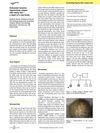
August 2011 in “Dermatology Reports” Two siblings were found to have a genetic condition causing progressive hair loss and woolly hair, which may often be misdiagnosed.