April 2021 in “The journal of investigative dermatology/Journal of investigative dermatology” MPZL3 protein is important for controlling hair growth cycles.
33 citations
,
July 2007 in “Journal of cell science” Miz1 is essential for proper hair structure and growth.
 September 2023 in “British Journal of Dermatology”
 Some cases of short anagen hair syndrome are linked to specific genetic variations that are also connected to male pattern baldness.
1 citations
,
March 2024 in “Genes & Diseases” EBF1 controls hair type and length.
68 citations
,
December 2010 in “The journal of investigative dermatology/Journal of investigative dermatology” HOXC13 is essential for hair and nail development by regulating Foxn1.
 July 2022 in “The journal of investigative dermatology/Journal of investigative dermatology”
 Scientists created a detailed map of gene activity in different parts of human hair follicles.
73 citations
,
May 2009 in “Proceedings of the National Academy of Sciences” Disrupting the Sox21 gene in mice causes hair loss and regrowth cycles.
February 2018 in “bioRxiv (Cold Spring Harbor Laboratory)” Rodent spiny hair traits are due to genetic factors other than the Edar gene.
49 citations
,
March 2004 in “Journal of Investigative Dermatology” The hHa7 gene is regulated by androgens in certain body hair, not scalp hair.
 April 2023 in “The journal of investigative dermatology/Journal of investigative dermatology”
 Removing certain immune cells in mice causes their hair to enter the growth phase earlier than usual.
14 citations
,
September 2001 in “Archives of Dermatological Research” Blocking hair follicle development stops key gene signals needed for hair growth in mice.
7 citations
,
April 2000 in “Mammalian Genome” A new mutation in mice causes crooked whiskers and messy hair.
140 citations
,
October 2008 in “Nature Genetics”  August 2023 in “Acta Scientific Paediatrics”
 A baby from an Indian family had a rare genetic disorder causing no scalp or body hair due to a specific gene deletion.
 April 2018 in “Journal of Investigative Dermatology”
 Researchers found that the Leptin receptor is a consistent marker for hair follicle dermal cells, which may help future hair research.
24 citations
,
January 2018 in “Development” Frizzled 3 and Frizzled 6 together control the orientation of mouse hair follicles.
20 citations
,
December 2010 in “Journal of Morphology” Lizard claws have hair-like keratins similar to those in mammals.
 24 citations
,
May 2019 in “PLOS genetics”
24 citations
,
May 2019 in “PLOS genetics” Mutations in the HEPHL1 gene cause abnormal hair and cognitive issues.
 1 citations
,
May 2023 in “European Journal of Human Genetics”
1 citations
,
May 2023 in “European Journal of Human Genetics” Rare ULBP3 gene changes may raise the risk of Alopecia areata, a certain FAS gene deletion could cause a dysfunctional protein in an immune disorder, and having one copy of a specific genetic deletion is okay, but two copies cause sickle cell disease.
 April 2016 in “Journal of Investigative Dermatology”
 Wnt ligands, produced by dermal papilla cells, are essential for adult hair growth and regeneration.
25 citations
,
October 2007 in “Developmental biology” Clim proteins are essential for maintaining healthy corneas and hair follicles.
December 2025 in “ILDS-DEV” 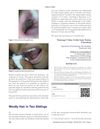 January 2012 in “International Journal of Trichology”
 Two siblings have a rare genetic condition causing curly, coarse hair.
June 2010 in “Chinese Journal of Dermatology” A new gene mutation is linked to monilethrix in the studied family.
November 2022 in “Journal of Investigative Dermatology” A new tool helps study hair follicle cells to develop better treatments for hair disorders.
26 citations
,
March 1995 in “Differentiation” A rabbit gene important for hair development was identified and detailed.
 21 citations
,
December 2013 in “Archives of Dermatological Research”
21 citations
,
December 2013 in “Archives of Dermatological Research” No link found between new male baldness genes and female hair loss.
 5 citations
,
September 2013 in “The Journal of Dermatology”
5 citations
,
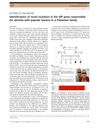
September 2013 in “The Journal of Dermatology” Researchers found a new mutation in the HR gene causing hair loss and skin bumps in a Pakistani family.
 July 2024 in “Journal Archives of Health”
 Woolly hair is a rare genetic condition with no effective treatments.
 April 2026 in “bioRxiv (Cold Spring Harbor Laboratory)”
 The Lanyu pig's hair follicles are similar to human ones, making it useful for studying skin healing.