4 citations
,
January 2020 in “Dermatology Online Journal” Congenital atrichia with papular lesions causes permanent hair loss and skin bumps due to a gene mutation.
January 2007 in “Pizhūhish va sāzandigī” Hairless guinea pigs are useful for research in allergies, skin tests, and diseases.
1 citations
,
November 2010 in “Pediatric dermatology” An 11-month-old girl has no scalp or body hair, and the cause is being studied.
 April 2020 in “International journal of research in dermatology”
 An 8-year-old girl has a rare, irreversible hair loss condition caused by a genetic mutation.
20 citations
,
January 2002 in “Laboratory Animals” Mutations in the hairless gene cause hair loss and skin cysts in rhesus macaques.
166 citations
,
July 1999 in “American Journal Of Pathology” The hairless (hr) gene is essential for normal hair follicle function and its mutation leads to hair loss.
 1 citations
,
February 2009 in “Journal of Investigative Dermatology”
1 citations
,
February 2009 in “Journal of Investigative Dermatology” Lipase H is important for hair follicle function and shaping hair fibers.
83 citations
,
October 1998 in “The American Journal of Human Genetics” A specific gene mutation causes complete hair loss in an Irish Traveller family.
38 citations
,
September 1997 in “The journal of investigative dermatology/Journal of investigative dermatology” A mutation in mice causes hair loss and skin issues due to a defect in a gene affecting cell adhesion.
35 citations
,
April 2008 in “Journal of Biological Chemistry” Hirosaki hairless rats lack hair due to missing DNA with key keratin genes.
66 citations
,
December 1999 in “Journal of Investigative Dermatology” New mutations in the hairless gene may cause hair loss and affect bone development.
18 citations
,
February 2006 in “Genomics” A new genetic mutation in mice causes permanent hair loss and skin wrinkling.
January 2004 in “Laboratory Animal Science and Administration” The hairless mutant gene causes early hair loss and affects skin and thymus development in mice.
 15 citations
,
April 2002 in “British Journal of Dermatology”
15 citations
,
April 2002 in “British Journal of Dermatology” Hairless gene not strongly linked to baldness.
37 citations
,
June 2000 in “Experimental dermatology” The Lanceolate hair-J mutation in mice mimics human hair disorders like Netherton's syndrome.
 21 citations
,
April 1982 in “Genetics Research”
21 citations
,
April 1982 in “Genetics Research” Mice with the naked gene have missing or abnormal hair cells.
 3 citations
,
March 2010 in “Dermatologica Sinica”
3 citations
,
March 2010 in “Dermatologica Sinica” A Taiwanese patient had hair loss and skin bumps without the usual gene mutation, suggesting other genetic factors might be involved.
23 citations
,
December 1991 in “Annals of the New York Academy of Sciences” Balding scalps slow down hair growth.
 13 citations
,
July 2012 in “Pigment Cell & Melanoma Research”
13 citations
,
July 2012 in “Pigment Cell & Melanoma Research” A mutation in the Adam10 gene causes freckle-like spots on Hairless mice.
8 citations
,
January 2014 in “Indian Journal of Paediatric Dermatology” Congenital atrichia with papular lesions causes permanent hair loss and skin bumps from birth.
36 citations
,
July 1996 in “The journal of investigative dermatology/Journal of investigative dermatology” Mice with the 'lanceolate hair' mutation have abnormal hair and skin similar to human Netherton's syndrome.
1 citations
,
October 1996 in “Dermatologic clinics” Adiponectin reduces inflammation and bone loss in joint replacements.
 July 2019 in “Journal der Deutschen Dermatologischen Gesellschaft”
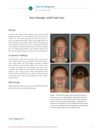
 A mother and daughter have a rare genetic hair loss disorder with no effective treatment.
26 citations
,
October 2002 in “Journal of Investigative Dermatology” A specific gene mutation causes congenital hair loss.
January 2008 in “HAL (Le Centre pour la Communication Scientifique Directe)” The mutant HR bmh protein affects hair follicle formation by failing to repress vitamin D receptor activity.
37 citations
,
January 1997 in “Journal of Pharmaceutical Sciences” Hairless rats absorb substances through their skin more easily than hairy rats.
The naked mutation in mice causes hair loss and helps identify keratin genes.
 19 citations
,
May 2006 in “Clinical and Experimental Dermatology”
19 citations
,
May 2006 in “Clinical and Experimental Dermatology” Researchers found a new mutation causing total hair loss from birth.
 October 2018 in “InTech eBooks”
 The gene Foxn1 is important for hair growth, and understanding it may lead to new alopecia treatments.