Hair dysplasias involve various hair disorders causing fragility, breakage, and poor hair adhesion.
Loose anagen hair syndrome in children may improve with age, but treatment results vary.
 4 citations
,
December 2017 in “American Journal of Dermatopathology”
4 citations
,
December 2017 in “American Journal of Dermatopathology” Naked hair shafts are significantly associated with scarring hair loss and may help diagnose it, especially when multiple are found.
Mutations in the hairless protein gene cause hair loss.
 89 citations
,
September 2010 in “Annual Review of Genomics and Human Genetics”
89 citations
,
September 2010 in “Annual Review of Genomics and Human Genetics” The document concludes that understanding the genes and pathways involved in hair growth is crucial for developing treatments for hair diseases.
May 2002 in “Therapeutische Umschau” Hypertrichosis and hirsutism can cause psychological issues, with laser treatments being the most promising for permanent hair removal.
 12 citations
,
November 1987 in “Pediatric dermatology”
12 citations
,
November 1987 in “Pediatric dermatology” Four children had unmanageable pale blond hair due to uncombable-hair syndrome.
14 citations
,
April 2013 in “Journal of dermatological science” Hairless protein reduces Msx2 gene activity, affecting hair follicle development.
July 2023 in “International journal of physiology” Hypertrichosis lanuginosa causes excessive fine hair growth, often linked to genetics or cancer, with limited treatment options.
 April 2017 in “Journal of Investigative Dermatology”
 Sweat glands and hair follicles are determined by opposing signals, with BMPs promoting sweat glands and blocking BMPs leading to hair follicles.
1 citations
,
August 1984 in “Therapeutische Umschau. Revue thérapeutique” Permanent hair removal with lasers is the most promising treatment for excessive hair growth.
7 citations
,
January 2012 in “International journal of trichology” Permanent hair removal with lasers may cure itchy black hair bristles on the back.
 2 citations
,
June 1980 in “International Journal of Dermatology”
2 citations
,
June 1980 in “International Journal of Dermatology” Scalp biopsies are important for diagnosing hair loss conditions.
 81 citations
,
January 2006 in “Journal of cellular physiology”
81 citations
,
January 2006 in “Journal of cellular physiology” Mice without the vitamin D receptor gene lose hair due to disrupted hair follicle cycles.
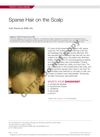
A 5-year-old girl has sparse, dry, and brittle hair but is otherwise healthy.
9 citations
,
June 2024 in “Cell Reports” Hair follicles play a crucial role in regulating skin barrier function.
August 2004 in “CRC Press eBooks” New hair restoration techniques look more natural, increasing their popularity.
 14 citations
,
July 2010 in “Experimental Dermatology”
14 citations
,
July 2010 in “Experimental Dermatology” A new mutation in the HR gene causes hair loss in a specific family.
December 2025 in “ILDS-DEV”  8 citations
,
March 2014 in “American Journal of Pathology”
8 citations
,
March 2014 in “American Journal of Pathology” Damaged hair follicles make mice more prone to skin inflammation and skin cancer after UV exposure.
15 citations
,
October 1976 in “Biochemical Journal” Naked-mouse hair lacks certain proteins and has less soluble fibril.

Men with hair loss are seen as less attractive and shorter, and height is a key factor in attractiveness ratings.
69 citations
,
August 1988 in “Journal of Investigative Dermatology” 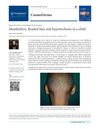 January 2026 in “Cosmoderma”
 A 9-year-old girl has a rare hair disorder causing beaded, sparse hair.
January 2005 in “Journal of Zhejiang University(Sciences Edition)” Yuyi hairless mice lose hair after birth, develop thick, loose skin with folds, and show disorganized skin structure as they age.
 22 citations
,
April 2015 in “Current problems in dermatology”
22 citations
,
April 2015 in “Current problems in dermatology” Human hair follicles have a unique metabolism that changes between growth stages and may contribute to baldness.
 10 citations
,
February 2008 in “Photochemistry and photobiology”
10 citations
,
February 2008 in “Photochemistry and photobiology” Vitamin D receptor can control the hairless gene linked to hair loss even without vitamin D.
 5 citations
,
December 1964 in “Australasian journal of dermatology”
5 citations
,
December 1964 in “Australasian journal of dermatology” Congenital atrichia is a rare condition where children are born without hair, and treatment is often ineffective.
 July 2022 in “المجلة العراقية للصيدلة”
 Most women with excessive hair growth (hirsutism) also experience a common type of non-scarring hair loss called Androgenetic alopecia with telogen effluvium.
Hair transplantation can restore underarm hair after surgery, despite challenges.