 6 citations
,
January 2013 in “The Journal of Dermatology”
6 citations
,
January 2013 in “The Journal of Dermatology” Researchers found a new genetic mutation causing a rare hair loss condition in the first Japanese child studied.
December 2024 in “Pediatrics in Review” Early detection and treatment of Menkes disease with copper injections are crucial for better outcomes.
 10 citations
,
July 2013 in “British Journal of Dermatology”
10 citations
,
July 2013 in “British Journal of Dermatology” High MUC-18/MCAM levels in blood indicate a worse outlook for melanoma patients.
47 citations
,
April 2000 in “Experimental Dermatology” A new gene mutation causes a rare type of hair loss.
 7 citations
,
January 2011 in “Veterinary Pathology”
7 citations
,
January 2011 in “Veterinary Pathology” A horse with severe hair loss was diagnosed with alopecia areata and a yeast infection.
78 citations
,
August 1996 in “The Journal of Clinical Endocrinology & Metabolism” The same gene mutation can cause different symptoms in family members.
23 citations
,
January 1985 in “Journal of Neuropathology & Experimental Neurology” Cupric chloride treatment corrected abnormal Purkinje cell development in brindled mice.
 2 citations
,
March 2023 in “JAAD case reports”
2 citations
,
March 2023 in “JAAD case reports” Hair repigmentation can indicate malignancy and should be investigated.
 January 2026 in “Frontiers in Medicine”
 FFA and FAPD might be related or stages of the same disease.
 February 2023 in “Cosmoderma”
 An infant with complete hair loss was diagnosed with a genetic disorder affecting hair growth.
97 citations
,
March 2006 in “Journal of Investigative Dermatology” Mutations in the DSG4 gene cause a severe form of brittle hair and skin issues.
48 citations
,
June 2000 in “Japanese Journal of Cancer Research” Dimethylarsinic acid speeds up skin tumor growth in certain mice.
 1 citations
,
March 2015 in “Journal of the European Academy of Dermatology and Venereology”
1 citations
,
March 2015 in “Journal of the European Academy of Dermatology and Venereology” A clinically suspected melanoma appeared benign under the microscope but was confirmed by specific tests and a rare mutation.
372 citations
,
December 2004 in “Nature Genetics”  April 2023 in “Journal of Investigative Dermatology”
 Human TMEM2 does not break down hyaluronan but helps control its metabolism.
37 citations
,
August 1999 in “Journal of Investigative Dermatology” A specific gene mutation causes complete hair loss without other health issues.
26 citations
,
April 2011 in “British Journal of Dermatology” New mutations in the DSG4 gene cause a rare hair condition.
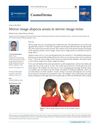
Mirror-image twins can have alopecia areata on opposite sides of their heads.
22 citations
,
February 2012 in “Journal of Investigative Dermatology” A specific gene mutation causes severe skin and nail issues and hair loss.
1 citations
,
September 2022 in “Canadian Journal of Ophthalmology” Paraproteinemic keratopathy can show eye symptoms before other signs of disease, needing careful treatment and long-term follow-up.
288 citations
,
January 2001 in “Journal of Biological Chemistry” Tgm2 helps stabilize dying cells and aids fibroblast attachment to the extracellular matrix.
 13 citations
,
September 2011 in “Archives of dermatology”
13 citations
,
September 2011 in “Archives of dermatology” A patient with steroid sulfatase deficiency had a unique hair pattern and a brain malformation not previously linked to the condition.
53 citations
,
October 2003 in “Genetics” The mK6irs1/Krt2-6g gene likely causes wavy hair in mice.
 April 2023 in “The journal of investigative dermatology/Journal of investigative dermatology”
 Too much IKZF1 and Ikaros protein may cause alopecia areata.
37 citations
,
June 2000 in “Experimental dermatology” The Lanceolate hair-J mutation in mice mimics human hair disorders like Netherton's syndrome.
29 citations
,
July 2008 in “British Journal of Dermatology” The patient had paraneoplastic pemphigus without mucosal involvement.
15 citations
,
October 1999 in “PubMed” Understanding genes and mutations can lead to new treatments for hair loss disorders.
Amotosalen-treated donor T-cells can prevent late CMV infection after bone marrow transplants.
15 citations
,
October 2012 in “Journal of child neurology” The same genetic mutation in Sjögren-Larsson syndrome can lead to different levels of severity, suggesting other factors influence the symptoms.
 2 citations
,
March 2022 in “Portuguese Journal of Nephrology & Hypertension”
2 citations
,
March 2022 in “Portuguese Journal of Nephrology & Hypertension” A rare EGFR mutation in newborns leads to severe health issues and early death.