 115 citations
,
February 2016 in “Nature Communications”
115 citations
,
February 2016 in “Nature Communications” Epidermal β-catenin activation changes the dermis by signaling different fibroblast types.
 39 citations
,
March 2008 in “Journal of biological chemistry/The Journal of biological chemistry”
39 citations
,
March 2008 in “Journal of biological chemistry/The Journal of biological chemistry” GLI2 increases follistatin production in human skin cells.
 1 citations
,
April 2025 in “Cureus”
1 citations
,
April 2025 in “Cureus” Dead Sea water and magnetized saline water can protect skin from UVB damage by activating autophagy.
 27 citations
,
May 2017 in “Marine Drugs”
27 citations
,
May 2017 in “Marine Drugs” Undariopsis peterseniana extract helps hair grow by activating certain cell growth pathways and could be a new treatment for hair loss.
 26 citations
,
May 2012 in “Cellular and Molecular Life Sciences”
26 citations
,
May 2012 in “Cellular and Molecular Life Sciences” NcoA4 may have roles beyond helping control gene activity, possibly affecting cell behavior and stability.
 17 citations
,
February 2019 in “Journal of steroid biochemistry and molecular biology/The Journal of steroid biochemistry and molecular biology”
17 citations
,
February 2019 in “Journal of steroid biochemistry and molecular biology/The Journal of steroid biochemistry and molecular biology” AKR1D1 controls glucocorticoid levels and receptor activity in liver cells.
 8 citations
,
July 2024 in “Scientific Reports”
8 citations
,
July 2024 in “Scientific Reports” Salicylate helps wounds heal without scarring in mice.
 7 citations
,
July 2019 in “International Journal of Molecular Sciences”
7 citations
,
July 2019 in “International Journal of Molecular Sciences” PGA-4HGF may help treat hair loss by activating hair growth pathways and extending the hair growth phase.
 July 2024 in “Frontiers in Pharmacology”
 Pilose antler extracts help hair growth by activating hair follicle stem cells.
 12 citations
,
June 2017 in “Cell Cycle”
12 citations
,
June 2017 in “Cell Cycle” Minoxidil foam helps hair growth by increasing good proteins and decreasing bad pathways in men with hair loss.
PRP may help reduce brain inflammation and protect brain cells.
 January 2026 in “Frontiers in Bioscience-Landmark”
 Araliadiol protects skin cells from damage by boosting antioxidant defenses.
 June 2017 in “Experimental dermatology”
 Skin has a larger surface area than thought, certain skin cells improve skin flap survival, better trials for skin conditions in children are needed, Stevens-Johnson syndrome rates vary by age and race, and better skin barrier function may reduce inflammation in the elderly.
 94 citations
,
January 2016 in “Journal of the European Academy of Dermatology and Venereology”
94 citations
,
January 2016 in “Journal of the European Academy of Dermatology and Venereology” Sensitive skin is often caused by nerve fibers and environmental factors, and can be managed with mild skincare and professional advice.
 60 citations
,
May 2015 in “Archives of dermatological research”
60 citations
,
May 2015 in “Archives of dermatological research” PPAR agonists show promise for skin conditions but need more research before being a main treatment.
26 citations
,
August 2018 in “Journal of Investigative Dermatology” Activating TRPV3 reduces skin oil production and increases inflammation, potentially causing dry skin issues.
1 citations
,
February 2025 in “Journal of Dermatological Science” Rapid thawing increases tissue destruction and tumor growth inhibition.
January 2026 in “Journal of the Egyptian Womenʼs Dermatologic Society” High levels of HSP70 and IL-15 are linked to more severe alopecia areata.
 103 citations
,
November 2014 in “Journal of Cell Biology”
103 citations
,
November 2014 in “Journal of Cell Biology” MicroRNA-214 is important for skin and hair growth because it affects the Wnt pathway.
 61 citations
,
September 2010 in “Genomics”
61 citations
,
September 2010 in “Genomics” The study found that immune responses disrupt hair growth cycles, causing hair loss in alopecia areata.
 47 citations
,
December 2019 in “Frontiers in immunology”
47 citations
,
December 2019 in “Frontiers in immunology” A new mutation in the STING protein causes a range of symptoms and its severity may be affected by other genetic variations; treatment with a specific inhibitor showed improvement in one patient.
 19 citations
,
January 2018 in “Scientific Reports”
19 citations
,
January 2018 in “Scientific Reports” Non-immune factors play a significant role in alopecia areata.
18 citations
,
June 2010 in “Cell Stress and Chaperones” Heat treatment increases hair loss in certain mice.
 17 citations
,
July 2017 in “Molecular and Cellular Endocrinology”
17 citations
,
July 2017 in “Molecular and Cellular Endocrinology” Effective treatments for spinal and bulbar muscular atrophy are not yet available; more research is needed.
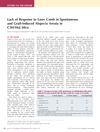 13 citations
,
January 2014 in “Journal of Investigative Dermatology”
13 citations
,
January 2014 in “Journal of Investigative Dermatology” The laser comb did not improve hair regrowth in mice with alopecia areata.
 11 citations
,
January 2018 in “Royal Society Open Science”
11 citations
,
January 2018 in “Royal Society Open Science” Scientists found genes linked to the growth of high-quality brush hair in Chinese Haimen goats.
 9 citations
,
January 2023 in “International Journal of Biological Sciences”
9 citations
,
January 2023 in “International Journal of Biological Sciences” CTHRC1 is essential for healing and preventing heart rupture after a heart attack.
 8 citations
,
June 2019 in “Scientific Reports”
8 citations
,
June 2019 in “Scientific Reports” Increased PPARGC1α relates to hair thinning in common baldness.
6 citations
,
June 2023 in “Journal of the European Academy of Dermatology and Venereology” Inflammation damages sweat ducts, causing sweat gland injury.
 5 citations
,
April 2023 in “BMC Microbiology”
5 citations
,
April 2023 in “BMC Microbiology” Shampoo with heat-killed Lacticaseibacillus paracasei GMNL-653 improves scalp health and hair growth by changing scalp bacteria.