32 citations
,
November 1998 in “Journal of Biological Chemistry” Mouse and human keratin 16 can both form filaments, with differences likely due to the tail domain, not the helical domain.
10 citations
,
November 2013 in “Biochemistry and Molecular Biology Education” Keratins are crucial proteins for hair and nails, with a structure that helps teach protein principles.
53 citations
,
October 2003 in “Genetics” The mK6irs1/Krt2-6g gene likely causes wavy hair in mice.
72 citations
,
May 1993 in “The Journal of Cell Biology” Trichohyalin in sheep hair follicles may help with structure and calcium binding.
47 citations
,
June 1994 in “Experimental Cell Research” mHa2 and mHa3 keratins have different structures and roles in mouse hair and tongue tissues.
3 citations
,
September 2018 in “Journal of Structural Biology” Oxidized trichocyte keratin has a helical dislocation in its structure.
161 citations
,
June 1993 in “Journal of Biological Chemistry” Trichohyalin helps in hair and skin cell structure and function by binding calcium and linking proteins.
29 citations
,
July 2015 in “Journal of Medical Genetics” A genetic variant in the KRT25 gene causes tightly curled hair.
28 citations
,
August 1992 in “Differentiation” A new pair of mouse keratins, 65 kD and 48 kD, are found in specific skin areas and are linked to a unique skin differentiation type.
 21 citations
,
April 2014 in “PLoS ONE”
21 citations
,
April 2014 in “PLoS ONE” A rare gene variant causes hair and nail issues in a family.
Obstructive sleep apnea can be hereditary and linked to a genetic mutation in the COL1A2 gene.
 91 citations
,
May 2005 in “The Journal of Clinical Endocrinology & Metabolism”
91 citations
,
May 2005 in “The Journal of Clinical Endocrinology & Metabolism” A new mutation in the human glucocorticoid receptor reduces its function and causes resistance to glucocorticoids.
 18 citations
,
February 2015 in “Acta Crystallographica Section D: Structural Biology”
18 citations
,
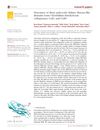
February 2015 in “Acta Crystallographica Section D: Structural Biology” The study concludes that certain domains in Clostridium histolyticum enzymes are structurally unique, bind calcium to become more stable, and play distinct roles in breaking down collagen, with potential applications in medicine and drug delivery.
 74 citations
,
October 1998 in “Journal of biological chemistry/The Journal of biological chemistry”
74 citations
,
October 1998 in “Journal of biological chemistry/The Journal of biological chemistry” The 190-kbp domain contains all human type I hair keratin genes, showing their organization and evolution.
 70 citations
,
December 2004 in “Differentiation”
70 citations
,
December 2004 in “Differentiation” The study identified and characterized new keratin genes linked to hair follicles and epithelial tissues.
33 citations
,
September 2017 in “Journal of Investigative Dermatology” A mutation in the KRT25 gene causes woolly hair and hair loss.
97 citations
,
March 2010 in “The American Journal of Human Genetics” A mutation in the KRT74 gene causes tightly curled hair.
78 citations
,
May 2012 in “Journal of Investigative Dermatology” A specific gene mutation causes woolly hair and hair loss.
 2 citations
,
January 2013 in “Elsevier eBooks”
2 citations
,
January 2013 in “Elsevier eBooks” The document explains the genetic causes and characteristics of inherited hair disorders.
 2 citations
,
July 2015 in “Archives of Dermatological Research”
2 citations
,
July 2015 in “Archives of Dermatological Research” A new gene variant in the DSP gene is linked to a unique type of hair loss.
 11 citations
,
July 2008 in “Facial Plastic Surgery Clinics of North America”
11 citations
,
July 2008 in “Facial Plastic Surgery Clinics of North America” Hair restoration surgery redistributes existing hair to achieve a natural look, with visible regrowth in 3-4 months and rare complications, mostly aesthetic.
 19 citations
,
January 2009 in “International review of cell and molecular biology”
19 citations
,
January 2009 in “International review of cell and molecular biology” Hair's strength and flexibility come from its protein structure and molecular interactions.
 99 citations
,
July 2012 in “PLoS Genetics”
99 citations
,
July 2012 in “PLoS Genetics” A mutation in the KRT75 gene causes frizzle feathers in chickens.
 38 citations
,
October 2011 in “Analytical biochemistry”
38 citations
,
October 2011 in “Analytical biochemistry” Hair proteins have weak spots in their α-helical segments.
 35 citations
,
October 2017 in “Trends in Molecular Medicine”
35 citations
,
October 2017 in “Trends in Molecular Medicine” Mice with enhanced regeneration abilities may help develop new regenerative medicine therapies.
43 citations
,
October 2006 in “Journal of Cell Science” Keratin 10 end domains may increase skin cancer risk by reducing cell death.
 16 citations
,
January 2017 in “Physical chemistry chemical physics/PCCP. Physical chemistry chemical physics”
16 citations
,
January 2017 in “Physical chemistry chemical physics/PCCP. Physical chemistry chemical physics” The 3D structure of a key hair protein was modeled, revealing specific helical structures and stabilization features.
77 citations
,
March 2000 in “Journal of Investigative Dermatology” The research identified six functional hair keratin genes and four pseudogenes, providing insights into hair formation and gene organization.
28 citations
,
December 1997 in “Journal of Biological Chemistry” A genetic mutation in the hHa1 gene creates a smaller, but still functional, hair protein without causing hair problems.
13 citations
,
December 2005 in “Traffic” Syntaxin 9 helps in transporting and signaling of the EGF receptor in skin and stomach cells.