24 citations
,
February 1986 in “Cancer” A pancreatic tumor caused high glucagon levels and symptoms, but treatment reduced glucagon and shrank liver tumors.
 September 2025 in “Pakistan Journal of Science”
 Diabetics have lower essential element levels, which may contribute to diabetes, and certain plants might help manage it.
10 citations
,
November 2019 in “Neuroendocrinology” Measuring 17-hydroxyprogesterone in hair can help monitor androgen levels in people with congenital adrenal hyperplasia.
 1 citations
,
December 2023 in “Curēus”
1 citations
,
December 2023 in “Curēus” Most children with a common hemochromatosis genotype had elevated iron levels but no severe symptoms.
October 2025 in “The Egyptian Journal of Hospital Medicine” Lower adiponectin and higher leptin levels may predict hair loss in alopecia areata.
17 citations
,
May 2014 in “Cell transplantation” Genetically modified stem cells from human hair follicles can lower blood sugar and increase survival in diabetic mice.
 55 citations
,
June 2006 in “Central European Journal of Public Health”
55 citations
,
June 2006 in “Central European Journal of Public Health” Hair loss in older men is linked to higher rates of diabetes and high blood pressure.
 8 citations
,
February 2005 in “British Journal of Haematology”
8 citations
,
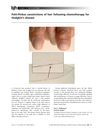
February 2005 in “British Journal of Haematology” Chemotherapy caused the patient's hair to have alternating thick and thin segments.
 June 1996 in “Irish Journal of Medical Science (1971 -)”
 The document summarizes medical findings on topics like heart rhythm treatment, sleep apnea therapy, and various health conditions and treatments.
 June 1987 in “Pediatric Neurology Briefs”
 Biotinidase deficiency can cause symptoms like sleepiness, hair loss, and seizures.
 January 1953 in “The Lancet”
 Alopecia areata's causes are unclear, treatments exist but relapses are common.
Hair analysis can help identify specific minerals and amino acids linked to various diseases.
 33 citations
,
September 2014 in “Reproductive Biology and Endocrinology”
33 citations
,
September 2014 in “Reproductive Biology and Endocrinology” High afamin levels are linked to metabolic syndrome and may predict its development in women with insulin resistance.
 June 2013 in “Faculty Opinions – Post-Publication Peer Review of the Biomedical Literature”
 People with moderate or severe hair loss are at a higher risk of dying from diabetes and heart disease.
 6 citations
,
January 2014 in “Clinical hemorheology and microcirculation”
6 citations
,
January 2014 in “Clinical hemorheology and microcirculation” Hereditary elliptocytosis causes elongated red blood cells and can lead to mild or no symptoms.
 December 2023 in “PubMed”
 Metformin and liraglutide improved symptoms of HAIR-AN syndrome in a child.
 27 citations
,
March 2008 in “Journal of The European Academy of Dermatology and Venereology”
27 citations
,
March 2008 in “Journal of The European Academy of Dermatology and Venereology” Men with a certain type of hair loss (AGA) have higher bad cholesterol and lower good cholesterol levels, making them more likely to get heart disease.
 July 2015 in “Egyptian Journal of Dermatology and Venereology”
 People with androgenetic alopecia, both men and women, are more likely to develop heart diseases in the future.
4 citations
,
July 2023 in “Frontiers in Microbiology” HGF combined with ADA is highly accurate for diagnosing tuberculous pleural effusion, especially in younger females.
 49 citations
,
May 2013 in “JAMA Dermatology”
49 citations
,
May 2013 in “JAMA Dermatology” Hair loss links to higher death risk from diabetes and heart disease; not a direct cause, but a marker for risk factors.
 11 citations
,
January 1987 in “Electrophoresis”
11 citations
,
January 1987 in “Electrophoresis” Keratin proteins are consistent across different hair types from the same person.
179 citations
,
May 1982 in “The Journal of clinical investigation/The journal of clinical investigation” High levels of 3 alpha-diol glucuronide in the blood are a marker of increased androgen action in women with excessive hair growth of unknown cause.
 2 citations
,
January 2013 in “International Journal of Dermatology”
2 citations
,
January 2013 in “International Journal of Dermatology” ALDOA levels drop in hair cells during hair loss.
 23 citations
,
December 2017 in “Scientific Reports”
23 citations
,
December 2017 in “Scientific Reports” ARL15 is important for fat cell development and the release of the hormone adiponectin.
 3 citations
,
January 1992 in “Gynecological Endocrinology”
3 citations
,
January 1992 in “Gynecological Endocrinology” 3α, 17β-androstanediol-glucuronide is not a useful marker for androgen excess but may help monitor certain treatments.
January 2026 in “Egyptian Journal of Dermatology and Venerology” Androgenetic alopecia is linked to insulin resistance and hormonal imbalances.
3 citations
,
October 2022 in “Journal of Cosmetic Dermatology” CAR is a useful marker for assessing alopecia areata severity.
12 citations
,
November 2022 in “Toxics” EtG in hair can help detect alcohol use but may be inaccurate in people with certain health conditions.
 30 citations
,
September 2017 in “Clinics in Dermatology”
30 citations
,
September 2017 in “Clinics in Dermatology” Acanthosis nigricans is a skin condition that may indicate a higher risk for insulin resistance and type 2 diabetes, and more research is needed to understand and treat it.
 January 2010 in “Ciencia UANL”
 Young men with hair loss may have a higher risk of insulin resistance and related health issues.