Search
for
Sort by
Research
810-840 / 1000+ results
research Disrupted Pancreatic Exocrine Differentiation and Malabsorption in Response to Chronic Elevated Systemic Glucocorticoid
High glucocorticoids cause pancreatic malfunction and malabsorption, reversible with enzyme supplements.
research Identification of microRNAs involved in growth arrest and cell death in hydrogen peroxide-treated human dermal papilla cells
Targeting specific miRNAs may help treat hair follicle issues caused by hydrogen peroxide.
research El papel de los inhibidores de JAK en la alopecia areata: revisión de la literatura
JAK inhibitors help treat alopecia areata but have high recurrence after stopping.
research Central centrifugal cicatricial alopecia amalgamated with alopecia areata: immunologic findings
The patient with both scarring and non-scarring hair loss showed complex immune reactions and improved with steroid treatment.
research Three cases of liver toxicity with a dietary supplement intended to stop hair loss.
A supplement for hair loss with green tea in it may cause liver problems.
research A New CARASIL Family: Recurrent Lobar Hemorrhage as a Novel Characteristic of the Disease
CARASIL can cause different symptoms even with the same genetic mutation.
research Generalized pruritus in primary sclerosing cholangitis: implications of histamine release by lysophosphatidic acid
A certain medication improved severe itching in a boy with liver and bowel disease by reducing histamine levels, suggesting a new treatment target.
research Reply
The document concludes that doctors should monitor children's brain development when treating hemangiomas with interferon alfa and consider stopping the treatment if problems arise, while also exploring drugs that might counteract side effects.
research Three cases of liver toxicity with a dietary supplement intendedto stop hair loss
A hair loss supplement with green tea caused liver damage in three people.
research High frequency of cutaneous manifestations including vitiligo and alopecia areata in a prospective cohort of patients with chronic graft-vs-host disease
Patients with chronic graft-versus-host disease often have skin problems like vitiligo and alopecia areata.
research 675 Hair loss in hephaestin knockout mice is associated with iron deficiency
Iron deficiency causes hair loss by affecting hair differentiation and cycling.
research Phenotypic profiling of parents with cryptic nonclassic congenital adrenal hyperplasia: findings in 145 unrelated families
Some parents have a mild form of congenital adrenal hyperplasia without symptoms, and they usually don't need treatment.
research Congenital adrenal hyperplasia with polycystic ovarian disease: A rare cause of hirsutism
Rare conditions can cause excessive hair growth in women, but proper diagnosis and treatment can manage symptoms.
research [Candida folliculitis in heroin addicts. Histological study].
Candida was found in most heroin users with folliculitis.
research Sebaceous carcinoma arising at a chronic candidiasis skin lesion of a patient with keratitis-ichthyosis-deafness (KID) syndrome
A man with KID syndrome developed a rare cancer in a long-term skin infection.
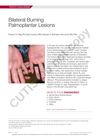
research Bilateral Burning Palmoplantar Lesions
The woman was diagnosed with lichen sclerosus, a rare skin condition, after initial misdiagnosis and ineffective treatments.
research The Case Files
The man's skin condition improved with sun protection and topical steroids, but UV exposure still caused flare-ups.
research Recommendations for treatment of nonclassic congenital adrenal hyperplasia (NCCAH): An update
The document suggests treating individuals with nonclassic congenital adrenal hyperplasia who show symptoms, especially those related to excess male hormones.
research Therapeutic effect of exosomes derived from hepatocyte-growth-factor-overexpressing adipose mesenchymal stem cells on liver injury
Exosomes from modified stem cells may help treat liver injury.
research SAT-130 Estrogen deficiency in patients with reduced fat mass as a cause of non-alcoholic fatty liver disease
Low estrogen due to poor nutrition can lead to non-alcoholic fatty liver disease.

research Steroidogenic Factor-1 Lineage Origin of Skin Lesions in Carney Complex Syndrome
Skin lesions in Carney Complex are caused by a gene change in some skin cells that leads to increased pigmentation and may lead to tumors.
research High circulating oestrone and low testosterone correlate with adverse clinical outcomes in men with advanced liver disease
Men with advanced liver disease and high oestrone and low testosterone levels have worse health outcomes.
research P-017 CUSHING'S SYNDROME DUE TO PRIMARY BILATERAL MACRONODULAR ADRENAL HYPERPLASIA AND METACRONOUS PHEOCHROMOCYTOMA
A rare case of Cushing's syndrome and pheochromocytoma requires careful re-evaluation to avoid complications.
research 1270 Fibroproliferative genes are preferentially expressed in central centrifugal cicatricial alopecia
CCCA may be a fibroproliferative disorder, and anti-fibrotic therapies could help.
research Hirsutism in the United Arab Emirates: a hospital study
Most women with hirsutism in the UAE have polycystic ovary syndrome (PCOS).
research PROTECTIVE EFFECT OF TRIBULUS TERRESTRIS ON HEPATO-BIOCHEMICAL PARAMETERS OF ALBINO RAT AFTER TREATMENT WITH DRUG CYPROTERONE ACETATE
Tribulus terrestris may protect the liver from drug damage.
research Effects of in vivo-administered 2,3,7,8-tetrachlorodibenzo-p-dioxin on receptor binding of epidermal growth factor in the hepatic plasma membrane of rat, guinea pig, mouse, and hamster.
TCDD reduces EGF receptor activity and causes various developmental changes in animals.
research 2,3,7,8‐Tetrachlorodibenzo‐p‐dioxin causes an increase in protein kinases growth hepatic associated with epidermal factor receptor in the plasma membrane
TCDD reduces EGF receptors in the liver, affecting growth and development.
research The Case | Bilateral kidney tumors and lung cysts
A man with kidney tumors and lung cysts was diagnosed with Birt–Hogg–Dubé syndrome and treated successfully, with genetic testing confirming the diagnosis.