January 2022 in “Zenodo (CERN European Organization for Nuclear Research)” Eclipta prostrata has many health benefits, including protecting the liver, fighting cancer, and reducing inflammation.

False daisy is a medicinal herb with many health benefits, including hair growth promotion.
April 2021 in “Zenodo (CERN European Organization for Nuclear Research)” Elephantopus scaber has potential medicinal benefits, including anticancer properties.
 July 2019 in “International journal of Unani and integrative medicine”
 Aftimoon (Cuscuta reflexa) has various health benefits, including anti-inflammatory and anticonvulsant effects.
 September 2018 in “Asian journal of pharmacy and pharmacology”
 Honey has many health benefits and is good for you.
November 2017 in “International Journal of Biomedical and Advance Research - International Journal of Biomedical and Advance Research” Guazuma tomentosa is effective against many health issues.
Eclipta alba Linn. is effective for various health issues and promotes hair growth.
January 2013 in “Anti-infection Pharmacy” Ligustri Lucidi Fructus has potential benefits for skin health, including anti-inflammation, anti-allergy, and promoting hair growth.
3 citations
,
October 2018 in “Revista de Chimie” Nettle contains quercetin, a promising antioxidant and anti-aging agent.
 6 citations
,
October 2017
6 citations
,
October 2017 Indian Gooseberry has potential for cancer prevention and treatment and promotes hair growth.
 February 2022 in “Research Journal of Biotechnology”
 Eclipta alba L. is a medicinal plant with many health benefits, including treating diseases and promoting hair growth.
 1 citations
,
December 2004 in “Hepatology”
1 citations
,
December 2004 in “Hepatology” Tenofovir is more effective than adefovir for resistant hepatitis B, Fibroscan is good for assessing liver damage, regulatory T cells may help hepatitis C persist, and other insights into liver health and disease were found.
20 citations
,
November 2022 in “Nutrients” Placenta extract may protect and improve liver health by reducing stress, inflammation, and cell death, and promoting regeneration.
28 citations
,
December 2001 in “European Journal of Pharmacology” M50054 may help treat hepatitis and hair loss from chemotherapy.
 10 citations
,
October 2010 in “Hepatology”
10 citations
,
October 2010 in “Hepatology” Certain liver diseases respond well to specific treatments and have varying risks for liver cancer.
12 citations
,
November 2024 in “International Journal of Molecular Sciences” Hydroxytyrosol helps reduce liver injury by blocking certain inflammation pathways.
March 2016 in “International Journal of Infectious Diseases” Peginterferon alpha-2a effectively treats acute hepatitis C in hemodialysed patients, despite some side effects.
 52 citations
,
October 2010 in “Antiviral Therapy”
52 citations
,
October 2010 in “Antiviral Therapy” New treatments for Hepatitis C show promise but need more research to confirm their safety and effectiveness for clinical use.
 69 citations
,
February 2021 in “PLoS Computational Biology”
69 citations
,
February 2021 in “PLoS Computational Biology” Securinine and ajmaline may effectively treat liver cancer, with securinine being less toxic to normal cells.
 176 citations
,
June 2016 in “PLoS ONE”
176 citations
,
June 2016 in “PLoS ONE” Nucleic acid polymers can enhance antiviral responses and improve treatment outcomes for chronic hepatitis B.
January 2021 in “Universal Journal of Pharmaceutical Research” Russelia equisetiformis extract protects against liver damage from paracetamol.
 1 citations
,
April 2018 in “Journal of Investigative Dermatology”
1 citations
,
April 2018 in “Journal of Investigative Dermatology” Oleoylethanolamide (OEA) safely boosts fat production in skin cells and may help treat dry skin and reduce inflammation.
 June 2025 in “Universities Journal of Phytochemistry and Ayurvedic Heights”
 Eclipta alba has more wedelolactone, but Wedelia chinensis is better at fighting bacteria.
 April 2018 in “Journal of Investigative Dermatology”
 Mint water extract boosts protective enzymes in skin cells.
 April 2018 in “Journal of Investigative Dermatology”
 Claudin-1 and Claudin-3 are crucial for keeping hair follicle structure and preventing a type of hair loss called telogen effluvium.
 April 2018 in “Journal of Investigative Dermatology”
 Acne patients' skin, both with and without lesions, shows a strong immune response and higher antimicrobial activity.
 April 2018 in “Journal of Investigative Dermatology”
 The role of γδT-cells in causing alopecia areata remains unclear.
 April 2018 in “Journal of Investigative Dermatology”
 Nicotinic acid reduces excessive oil production in skin cells by activating a specific receptor, which could help treat acne.
 October 2012 in “Humana Press eBooks”
 Grape seed extract is good for skin care, with antioxidant, anti-inflammatory, and anti-cancer effects.
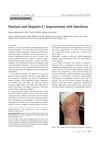 January 2011 in “Annals of dermatology/Annals of Dermatology”
 A woman's psoriasis improved after hepatitis C treatment with interferon, despite interferon's risk of worsening skin conditions.