October 2025 in “Journal of the Endocrine Society” Low estrogen due to poor nutrition can lead to non-alcoholic fatty liver disease.
 1 citations
,
December 2004 in “Hepatology”
1 citations
,
December 2004 in “Hepatology” Tenofovir is more effective than adefovir for resistant hepatitis B, Fibroscan is good for assessing liver damage, regulatory T cells may help hepatitis C persist, and other insights into liver health and disease were found.
20 citations
,
November 2022 in “Nutrients” Placenta extract may protect and improve liver health by reducing stress, inflammation, and cell death, and promoting regeneration.
 52 citations
,
October 2010 in “Antiviral Therapy”
52 citations
,
October 2010 in “Antiviral Therapy” New treatments for Hepatitis C show promise but need more research to confirm their safety and effectiveness for clinical use.
 12 citations
,
July 2025 in “Journal of Clinical and Translational Hepatology”
12 citations
,
July 2025 in “Journal of Clinical and Translational Hepatology” TGF-β inhibitors may help treat liver fibrosis by targeting various pathways.
 10 citations
,
October 2010 in “Hepatology”
10 citations
,
October 2010 in “Hepatology” Certain liver diseases respond well to specific treatments and have varying risks for liver cancer.
 19 citations
,
October 1994 in “Tumori Journal”
19 citations
,
October 1994 in “Tumori Journal” As of 1994, treatments for liver cancer had not significantly improved patient survival.
12 citations
,
November 2024 in “International Journal of Molecular Sciences” Hydroxytyrosol helps reduce liver injury by blocking certain inflammation pathways.
28 citations
,
December 2001 in “European Journal of Pharmacology” M50054 may help treat hepatitis and hair loss from chemotherapy.
 69 citations
,
February 2021 in “PLoS Computational Biology”
69 citations
,
February 2021 in “PLoS Computational Biology” Securinine and ajmaline may effectively treat liver cancer, with securinine being less toxic to normal cells.
March 2016 in “International Journal of Infectious Diseases” Peginterferon alpha-2a effectively treats acute hepatitis C in hemodialysed patients, despite some side effects.
 December 2023 in “Journal of Science Innovations and Nature of Earth”
 Tribulus terrestris may protect the liver from drug damage.
 18 citations
,
February 2022 in “Cell Death Discovery”
18 citations
,
February 2022 in “Cell Death Discovery” ECM1-modified stem cells can effectively treat liver cirrhosis.
 1 citations
,
September 2023
1 citations
,
September 2023 Tridax procumbens and ginger juice together protect the liver from paracetamol damage.
12 citations
,
January 2016 in “Journal of clinical biochemistry and nutrition” Deferasirox combined with sorafenib reduces liver cancer risk and lessens treatment side effects.
 1 citations
,
April 2025 in “Tropical Journal of Natural Product Research”
1 citations
,
April 2025 in “Tropical Journal of Natural Product Research” Avicennia marina shows potential to treat Hepatitis C by targeting key proteins.
99 citations
,
February 2023 in “Cellular and Molecular Immunology” 44 citations
,
June 2015 in “British Journal of Pharmacology” Betulinic acid can help treat hepatitis C by stopping virus replication.
 September 2022 in “Ciencia Unemi”
 More clinical trials are needed to confirm if plant-based products can effectively treat COVID-19.
 176 citations
,
June 2016 in “PLoS ONE”
176 citations
,
June 2016 in “PLoS ONE” Nucleic acid polymers can enhance antiviral responses and improve treatment outcomes for chronic hepatitis B.
245 citations
,
January 2010 in “Blood” Antihepcidin antibodies may treat inflammation-induced anemia by improving iron metabolism.
 17 citations
,
February 2011 in “Expert Opinion on Drug Safety”
17 citations
,
February 2011 in “Expert Opinion on Drug Safety” Manage side effects of hepatitis C treatment with dose changes and medications, which may improve patient adherence and treatment success.
 January 2011 in “Annals of dermatology/Annals of Dermatology”
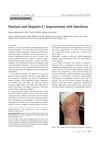
 A woman's psoriasis improved after hepatitis C treatment with interferon, despite interferon's risk of worsening skin conditions.
 12 citations
,
February 2018 in “Scientific Reports”
12 citations
,
February 2018 in “Scientific Reports” Using a drug to activate bone marrow stem cells can help the liver regenerate and function better after major surgery in rats.
 October 2022 in “Medičnì perspektivi”
 Darier-White disease causes skin and nail issues, starts around age 20, worsens until 40-50, and has poor treatment options.
January 2021 in “Universal Journal of Pharmaceutical Research” Russelia equisetiformis extract protects against liver damage from paracetamol.
36 citations
,
March 2014 in “Annals of the Rheumatic Diseases” Activating liver X receptors can reduce fibrosis by stopping certain immune cells from releasing harmful proteins.
1 citations
,
April 2025 in “Frontiers in Medicine” Advancements in liver cirrhosis treatment and prognosis could improve patient care.
17 citations
,
January 1993 in “Journal of Gastroenterology and Hepatology” Interferon α‐2b can temporarily reduce hepatitis C virus and normalize liver enzyme levels.
4 citations
,
February 2022 in “PeerJ” Hair follicle stem cell transplants can reverse liver cirrhosis by blocking harmful cell activation.