 24 citations
,
May 1963 in “Archives of Dermatology”
24 citations
,
May 1963 in “Archives of Dermatology” Most new moms had their hair grow back within 4-6 months after childbirth, and hair loss is likely due to hormonal changes.
 November 2015 in “Springer eBooks”
 Hair loss treated with minoxidil, finasteride, laser/light, hair transplant, and scalp prostheses; more research needed for skin of color.
 February 2023 in “Medical Clinical Update”
 Some people with alopecia areata, a hair loss condition, get better within a year without treatment, but it can happen again.
 January 2026 in “Cosmoderma”
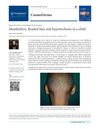
 A 9-year-old girl has a rare hair disorder causing beaded, sparse hair.
January 2006 in “Casopís lékar̆ů c̆eských” Female hair loss is influenced by genetics and hormones, often starting in middle age or after hormonal changes.
 1 citations
,
February 2017 in “MOJ bioequivalence & bioavailability”
1 citations
,
February 2017 in “MOJ bioequivalence & bioavailability” Treating hair loss effectively may require a multi-sided approach, using different treatments together, and topical treatments could be more effective and safer than oral ones.
 37 citations
,
January 2010 in “International Journal of Trichology”
37 citations
,
January 2010 in “International Journal of Trichology” Hair loss affects quality of life, self-esteem, and confidence, but younger patients cope better.
September 1976 in “PubMed” Hirsutism is excessive male-pattern hair growth mainly caused by ovarian hormones, and severe cases may require costly treatment with side effects.
 19 citations
,
March 1988 in “International Journal of Dermatology”
19 citations
,
March 1988 in “International Journal of Dermatology” Hair shaft dysplasias are abnormal hair conditions that can be inherited or acquired and may signal other health issues, with limited treatment options available.
July 2026 in “International Journal of Homoeopathic Sciences” Constitutional homeopathy may effectively manage alopecia areata in children.
179 citations
,
July 2005 in “Human Reproduction Update” PCOS is influenced by both genes and environment, but its exact genetic cause is still unclear.
2 citations
,
June 2022 in “Life” A 14-year-old boy is the youngest person reported with a rare, benign tumor related to hair follicles, usually found in older people.
November 2025 in “Plant Science Today” Natural anti-aging products from plants may help improve skin health.
15 citations
,
May 2010 in “Pediatrics in Review” Delayed puberty often runs in families, can affect growth, and may need hormone treatment.
 11 citations
,
February 2019 in “Research and reports in forensic medical science”
11 citations
,
February 2019 in “Research and reports in forensic medical science” DNA phenotyping helps predict physical traits from DNA with varying accuracy and requires careful ethical and legal handling.
 1 citations
,
January 2019 in “Springer eBooks”
1 citations
,
January 2019 in “Springer eBooks” Hidradenitis Suppurativa is a chronic skin condition best treated early with surgery for better outcomes and less recurrence.
 June 2018 in “Journal of evolution of medical and dental sciences”
 Skin problems like excessive hair growth, acne, and dark skin patches can be signs of Polycystic Ovarian Disease, which may also be linked to family history and a risk for diabetes.
17 citations
,
January 2014 in “Journal of Oral and Maxillofacial Pathology” Seborrheic keratosis is a common, harmless skin growth that can look like cancer, so it may need a biopsy.
 December 2025 in “GARI International Journal of Multidisciplinary Research”
 Ayurveda suggests natural remedies and lifestyle changes for managing premature hair greying.
2 citations
,
June 2021 in “Sultan Qaboos University medical journal” Familial frontal fibrosing alopecia is rare, mostly affects women, and often occurs between sisters or mother-daughter pairs.
75 citations
,
September 2007 in “Journal of Heredity” FGF5 gene mutations cause long hair in domestic cats.
22 citations
,
March 1994 in “Journal of Heredity” A mutation in mice causes hair loss and immune problems.
32 citations
,
January 2000 in “Human Heredity” Monilethrix severity varies and may be influenced by other genetic or environmental factors.
 18 citations
,
March 2011 in “Journal of The American Academy of Dermatology”
18 citations
,
March 2011 in “Journal of The American Academy of Dermatology” Familial factors affect hair loss types in Koreans, with M type in men, L type in women, and paternal factors influencing male hair loss more.
 39 citations
,
May 2011 in “Human Immunology”
39 citations
,
May 2011 in “Human Immunology” Genetics play a role in acne, but how exactly they contribute is not fully understood.
 4 citations
,
January 2017 in “Journal of pediatric endocrinology & metabolism/Journal of pediatric endocrinology and metabolism”
4 citations
,
January 2017 in “Journal of pediatric endocrinology & metabolism/Journal of pediatric endocrinology and metabolism” Two different mutations in the vitamin D receptor gene cause different symptoms and responses to treatment in Lebanese patients with hereditary rickets.

Screening for iron levels in patients with hair loss may help find a genetic iron overload condition early.
 2 citations
,
June 2016 in “International Journal of Medical Research and Review”
2 citations
,
June 2016 in “International Journal of Medical Research and Review” Newborn skin conditions like Epstein pearls and Mongolian spots are common and influenced by race, environment, and hormones.
 136 citations
,
May 2019 in “Cells”
136 citations
,
May 2019 in “Cells” Stem cell therapy, particularly using certain types of cells, shows promise for treating hair loss by stimulating hair growth and development, but more extensive trials are needed to confirm these findings.
 21 citations
,
January 1988 in “Stress Medicine”
21 citations
,
January 1988 in “Stress Medicine” Stress affects skin health and emotional well-being should be considered in skin disease treatment.