 95 citations
,
December 1980 in “The New England Journal of Medicine”
95 citations
,
December 1980 in “The New England Journal of Medicine” Minoxidil helped bald patient regrow hair.
January 2026 in “Dermatologic Therapy” 0.5% minoxidil mesotherapy is more effective and safe for hair growth in women with androgenetic alopecia than topical 2% minoxidil.
 16 citations
,
June 2021 in “Journal of Dermatological Treatment”
16 citations
,
June 2021 in “Journal of Dermatological Treatment” Minoxidil effectively treats hair loss, especially androgenetic alopecia, but needs more research for better understanding.
1 citations
,
January 1989 in “The Nishinihon Journal of Dermatology” Minoxidil does not prevent aging in hair follicle cells.
 4 citations
,
December 2019 in “Dermatologic Therapy”
4 citations
,
December 2019 in “Dermatologic Therapy” Hair enzyme activity predicts minoxidil success in Brazilian women with hair loss.
 37 citations
,
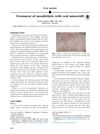
May 2016 in “JAAD case reports”
37 citations
,
May 2016 in “JAAD case reports” Oral minoxidil shows promise in treating monilethrix-related hair loss.
October 2020 in “El-Minia Medical Bulletin” Minoxidil effectively treats hair loss in both men and women.
1 citations
,
September 2021 in “Frontiers in Endocrinology” Minoxidil can help transgender males grow facial hair before starting testosterone therapy.
 2 citations
,
December 2019 in “Biomedical dermatology”
2 citations
,
December 2019 in “Biomedical dermatology” Minoxidil works faster, but ketoconazole is a safer alternative for female hair loss.
 September 2024 in “Journal of the American Academy of Dermatology”
 Oral minoxidil is easier to use and more satisfying for hair loss treatment but may cause more unwanted hair growth.
1 citations
,
January 1992 in “The Nishinihon Journal of Dermatology” Minoxidil sulfate did not enhance hair growth or cell proliferation at tested levels.
 6 citations
,
October 2012 in “PubMed”
6 citations
,
October 2012 in “PubMed” The combined treatment of 3% minoxidil and 0.1% finasteride is more effective in improving hair loss than 3% minoxidil alone, with similar side effects.
 34 citations
,
April 2009 in “Skin Pharmacology and Physiology”
34 citations
,
April 2009 in “Skin Pharmacology and Physiology” Minoxidil affects cell growth in two ways: low doses increase growth, while high doses slow it down and can be toxic.
 32 citations
,
January 1994 in “Skin Pharmacology and Physiology”
32 citations
,
January 1994 in “Skin Pharmacology and Physiology” Minoxidil helps hair growth by activating enzymes in hair follicles.
July 2026 in “Journal of Drug Delivery Science and Technology” 18 citations
,
January 1976 in “Clinical Science” Minoxidil effectively lowers severe high blood pressure but may cause side effects like increased hair growth.
 13 citations
,
June 2016 in “Dermatologic Therapy”
13 citations
,
June 2016 in “Dermatologic Therapy” Minoxidil works better when applied on a damp scalp than a dry one.
Compounded topical minoxidil works better and is more tolerated than over-the-counter minoxidil for treating hair loss in Black women.
 April 2025 in “Archives of Dermatological Research”
 The combination of finasteride and minoxidil is as safe and effective as minoxidil alone for improving hair growth in men.
 5 citations
,
November 1999 in “Medical Hypotheses”
5 citations
,
November 1999 in “Medical Hypotheses” Minoxidil, a common hair loss treatment, might work by counteracting a hormone that reduces hair growth and promotes hair loss.
1 citations
,
April 2024 in “Anais Brasileiros de Dermatologia” 
Intradermotherapy with minoxidil is as effective as topical application for treating hair loss.
January 2011 in “The Internet Journal of Pharmacology” Minoxidil is cost-effective for regrowing hair on the scalp's top but not the front, requiring ongoing use.
Topical 5% minoxidil is safe and effective for treating hair loss in Korean men.
 July 2025 in “Zenodo (CERN European Organization for Nuclear Research)”
 Minoxidil is commonly used for female hair loss, with other treatments being explored.
8 citations
,
April 1990 in “PubMed” Minoxidil helps hair growth by prolonging cell division in skin cells.
 July 2025 in “Zenodo (CERN European Organization for Nuclear Research)”
 Minoxidil is commonly used for female hair loss, with other treatments being explored.
 June 2024 in “British Journal of Dermatology”
 PRP with topical minoxidil is the most effective treatment for increasing hair density in androgenetic alopecia.
January 2021 in “Medical research archives” The 5% minoxidil lotion without propylene glycol is effective, well-tolerated, and cosmetically acceptable for hair loss.
 December 2018 in “Evidence-Based Practice”
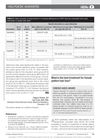
 Topical minoxidil 1% and 2% are twice as effective as placebo for female pattern hair loss.