53 citations
,
October 2003 in “Genetics” The mK6irs1/Krt2-6g gene likely causes wavy hair in mice.
8 citations
,
April 2016 in “Experimental Dermatology” The type of tumor suppressor affects the form of skin cancer from hair follicle stem cells.
21 citations
,
December 1994 in “Journal of Investigative Dermatology”  20 citations
,
October 2018 in “American Journal of Clinical Dermatology”
20 citations
,
October 2018 in “American Journal of Clinical Dermatology” Some drugs can cause skin and hair color changes, often reversible when the drug is stopped.
 August 2025 in “ChemPhotoChem”
 A new method using solid-state circular dichroism anisotropy can distinguish similar chiral compounds better than traditional techniques.
1 citations
,
September 2018 in “International journal of research - granthaalayah” Human hair medulla doesn't break down hydrogen peroxide, which may affect hair color formation.
 1 citations
,
June 2022 in “Experimental dermatology”
1 citations
,
June 2022 in “Experimental dermatology” The SHJH hr mice with a mutated Hr gene show signs of faster skin aging due to poor antioxidative protection.
 11 citations
,
January 2012 in “Archives of Dermatology”
11 citations
,
January 2012 in “Archives of Dermatology” Polarized microscopy is a quick and free method to correctly identify types of hair loss.
 49 citations
,
June 2009 in “Seminars in Cutaneous Medicine and Surgery”
49 citations
,
June 2009 in “Seminars in Cutaneous Medicine and Surgery” The cosmetic industry should adapt to the varied beauty standards of ethnic groups and offer specialized treatments.
 4 citations
,
February 2025 in “BMC Genomics”
4 citations
,
February 2025 in “BMC Genomics” Black wool in Qira sheep is linked to specific gene mutations, especially in the TYRP1 gene.
January 2020 in “대한미용학회지” Permanent hair dye reduces sulfur content in both gray and black-brown hair.
8 citations
,
December 2015 in “JAMA ophthalmology” A young man had vision loss, hair loss, and other symptoms, but tests showed mostly normal results except for slightly high protein in spinal fluid.
 17 citations
,
June 2011 in “The journal of investigative dermatology/Journal of investigative dermatology”
17 citations
,
June 2011 in “The journal of investigative dermatology/Journal of investigative dermatology” The G60S Connexin43 mutation causes hair growth issues and poor hair quality in mice, similar to human ODDD patients.
 12 citations
,
November 1945 in “Archives of dermatology”
12 citations
,
November 1945 in “Archives of dermatology” Transplanted skin on hooded rats often grows white hair instead of black.
17 citations
,
November 1967 in “American Journal of Anatomy” Hairless mice have longer hair follicles and abnormal structures during the catagen phase.
May 2011 in “Journal of Clinical Neuroscience” The woman was diagnosed with Vogt–Koyanagi–Harada disease and successfully treated with medication, restoring her vision and stopping headaches.
 1 citations
,
September 2024 in “BMC Ophthalmology”
1 citations
,
September 2024 in “BMC Ophthalmology” PCOS may increase eye pressure and corneal thickness, affecting eye health.
 1 citations
,
November 1983 in “The Lancet”
1 citations
,
November 1983 in “The Lancet” Acute leukemias with the Philadelphia chromosome may be biphenotypic, and identifying this is important for proper treatment.
76 citations
,
January 1998 in “Mammalian Genome” 8 citations
,
December 2017 in “Small Ruminant Research” Variation in the TCHH gene affects wool curliness in sheep.
 1 citations
,
October 2024 in “Dermatology Practical & Conceptual”
1 citations
,
October 2024 in “Dermatology Practical & Conceptual” Reflectance confocal microscopy is a promising non-invasive tool for diagnosing alopecia areata incognita.
21 citations
,
July 2024 in “Journal of Investigative Dermatology”  February 2021 in “Journal of the Korean Ophthalmological Society”
 A 7-year-old girl had unusually long eyelashes with no known cause or related health issues.
53 citations
,
March 2006 in “Biopolymers” TTD hair is brittle due to fewer sulfur amino acids and unstable disulfide bonds.
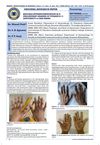 July 2021 in “PARIPEX INDIAN JOURNAL OF RESEARCH”
 Knuckle darkening can be an early sign of vitamin B12 deficiency.
2 citations
,
July 2001 in “Dermatologic Surgery” Trichoblastic carcinoma may be a distinct type of skin cancer different from basal cell carcinoma.
9 citations
,
October 1995 in “Clinical Dysmorphology” The family has a unique form of ectodermal dysplasia similar to Clouston syndrome but with different hair and skin symptoms.
June 2026 in “Journal of Cutaneous Pathology” Polarized light microscopy is better at distinguishing scarring from non-scarring alopecia than diffractive microscopy.
53 citations
,
September 2004 in “American journal of medical genetics. Part C, Seminars in medical genetics” Mutations in keratin genes cause cell fragility and various skin disorders.
 13 citations
,
August 2019 in “Biological & Pharmaceutical Bulletin”
13 citations
,
August 2019 in “Biological & Pharmaceutical Bulletin” Certain flavonoids help grow back colored hair after skin injury.