Search
for
Sort by
Research
810-840 / 1000+ resultsresearch Trichoscopy as a diagnostic tool in trichorrhexis invaginata and Netherton syndrome
Trichoscopy is useful for diagnosing Netherton syndrome in children with skin issues.

research Atrichia with papular lesions resulting from a novel insertion mutation in the human hairless gene
Researchers found a new mutation causing total hair loss from birth.

research Subclinical speckled perifollicular melanosis of the scalp.
The scalp has a natural speckled pattern of increased pigment around hair follicles, possibly linked to local hormone production.
research Conditional expression of the ErbB2 oncogene elicits reversible hyperplasia in stratified epithelia and up-regulation of TGFα expression in transgenic mice
research Structural and epistatic regulatory variants cause hallmark white spotting in cattle
Two gene variants cause white spots in cattle.
research Changes in hair chromium concentrations with increasing distances from hair roots
Hair chromium levels show past nutritional status, not environmental exposure.
research Trichothiodystrophy: Review of sulfur-deficient brittle hair syndromes and association with the ectodermal dysplasias
research Hypertrichosis lanuginosa acquisita associated with autoimmune hepatitis
HLA can be linked to autoimmune hepatitis.
research CCDC47 gene and trichohepatoneurodevelopmental syndrome: Report of the fifth and sixth cases from Saudi Arabia
Variants in the CCDC47 gene are linked to trichohepatoneurodevelopmental syndrome.
research Hair Shaft Abnormalities. Pili Bifurcati: A Scanning Electron Microscopy Analysis
The study found that pili bifurcati causes hair to intermittently split into two branches, each with its own outer layer.

research Plerixafor Biases CXCR4 Signaling Through β-Arrestin to Promote Melanogenesis via β-Catenin–MITF Activation
Plerixafor may help treat pigmentation disorders by promoting skin repigmentation.

research Lichen Planus Pigmentosus as a Cutaneous Extrahepatic Manifestation of Chronic Hepatitis C Virus Infection: A Case Report
Lichen planus pigmentosus may indicate undetected hepatitis C infection.
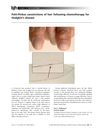
research Pohl-Pinkus constrictions of hair following chemotherapy for Hodgkin's disease
Chemotherapy caused the patient's hair to have alternating thick and thin segments.

research Short histological kaleidoscope – recent findings in histology. Part IV
Recent findings in cell biology help understand cell roles in health and disease.
research AMPK Phosphorylates ZDHHC13 to Increase MC1R Activity and Suppress Melanomagenesis
AMPK activation may reduce melanoma risk in red-haired individuals.
research Deficiency in Nucleotide Excision Repair Family Gene Activity, Especially ERCC3, Is Associated with Non-Pigmented Hair Fiber Growth
Low ERCC3 gene activity is linked to non-pigmented hair growth.
research Patterned Trichoteiromania in Androgenetic Alopecia
Self-induced hair loss should be considered in patients with androgenetic alopecia.
research Senile hair graying: H 2 O 2 ‐mediated oxidative stress affects human hair color by blunting methionine sulfoxide repair
Gray hair is caused by hydrogen peroxide buildup, which damages hair color repair.
research The Use of High-Density SNP Array to Map Homozygosity in Consanguineous Families to Efficiently Identify Candidate Genes: Application to Woodhouse-Sakati Syndrome
Using SNP array testing helped quickly find the gene causing Woodhouse-Sakati syndrome in two related individuals.
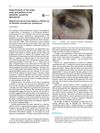
research Hypertrichosis of the malar areas and poliosis of the eyelashes caused by latanoprost
Latanoprost eye drops caused excessive cheek hair growth and eyelash whitening in a woman.
research Lichen planus pigmentosus: a clinico‐pathological study in a Caucasian population from North Africa
Lichen planus pigmentosus mainly affects middle-aged women with darker skin, is underreported, and is hard to treat.
research Preparation and Evaluation of One Stage and Two Stage Polyherbal Hair Dye Formulations
Herbal hair dyes using plants like henna and beetroot are safer and can produce varied colors, with two-stage applications giving darker shades.
research Special issue on epidermal and hair follicle differentiation, part 2
research Angora Mouse Mutation: Altered Hair Cycle, Follicular Dystrophy, Phenotypic Maintenance of Skin Grafts, and Changes in Keratin Expression
The angora mouse mutation causes long hair and hair defects due to a gene deletion.
research Clinicopathologic Correlate of a Fresh Eyelid Pigment Implantation
The pigment in black eyeliner can spread in the skin and may cause permanent eyelash loss.
research Koebnerization secondary to microblading
A woman developed vitiligo from repeated eyebrow microblading.
research The hairless (hr) gene is involved in the congential hypotrichosis of Valle del Belice sheep
The hr gene is linked to hair loss in Valle del Belice sheep.
research Case Report: Bi-allelic missense variant in the desmocollin 3 gene causes hypotrichosis and recurrent skin vesicles
A new genetic change in the DSC3 gene is linked to a rare condition causing hair loss and skin blisters in a child.
research Tyrosinase Depletion Prevents the Maturation of Melanosomes in the Mouse Hair Follicle
Reducing Tyrosinase prevents mature color pigment cells from forming in mouse hair.