 14 citations
,
September 2007 in “Steroids”
14 citations
,
September 2007 in “Steroids” The study concluded that androstendione and DHEA are important for diagnosing high male hormone levels in women with excessive hair growth.
 January 2004 in “Online Publication Service of Würzburg University (Würzburg University)”
 Women with PCOS have higher 5alpha-reductase activity, affecting steroid levels.
9 citations
,
December 1987 in “European journal of endocrinology” The treatment significantly reduced hair growth and male hormone levels in hirsute women.
 23 citations
,
April 1999 in “The Journal of Clinical Endocrinology and Metabolism”
23 citations
,
April 1999 in “The Journal of Clinical Endocrinology and Metabolism” All treatments reduce hair growth; low dose flutamide most effective with fewer side effects.
 September 2009 in “Annales D Endocrinologie”
 DHEA supplementation may improve quality of life, neuropsychological functions, and sexual satisfaction in individuals with adrenal insufficiency, but more research is needed to confirm its safety and effectiveness.
 June 2026 in “Oriental Journal Of Chemistry”
 Steroid 12 shows promise as a targeted treatment for prostate cancer by selectively reducing cell growth and increasing cell death.
8 citations
,
November 1978 in “British journal of dermatology/British journal of dermatology, Supplement” Cyproterone acetate can effectively treat idiopathic hirsutism, but ethinyl oestradiol and lynoestrenol may not always reduce hair growth.
13 citations
,
January 1997 in “Biochemical Pharmacology” Human liver enzyme DHEA ST helps process minoxidil.
 11 citations
,
April 2017 in “The European Journal of Contraception & Reproductive Health Care”
11 citations
,
April 2017 in “The European Journal of Contraception & Reproductive Health Care” Cyproterone acetate with ethinyl estradiol is effective for treating skin symptoms related to high androgen levels, like in PCOS.
164 citations
,
January 2003 in “Drugs” 7 citations
,
December 1971 in “European Journal of Endocrinology” Human hair follicles can process steroid hormones like DHEA.
 2 citations
,
October 2001 in “Analytical Sciences”
2 citations
,
October 2001 in “Analytical Sciences” A new compound that could treat various androgen-related conditions was created and analyzed.
 January 2007 in “Inpharma Weekly”
 Dutasteride is more effective for male pattern baldness than finasteride, and black cohosh extract BNO 1055 is as effective as conjugated estrogens in treating postmenopausal symptoms, with added benefits in reducing sweating and mental symptoms.
 6 citations
,
September 2014 in “Food Additives & Contaminants: Part A”
6 citations
,
September 2014 in “Food Additives & Contaminants: Part A” New method effectively detects illegal hormones in anti-aging foods.
 January 1986 in “Journal of Steroid Biochemistry”
 Women with severe acne, hirsutism, and androgenic alopecia often have higher levels of certain androgens, but the specific pattern can't be predicted just by looking at symptoms.
 15 citations
,
April 2008 in “Steroids”
15 citations
,
April 2008 in “Steroids” The more lipophilic the progesterone derivative, the better it binds to androgen receptors and has antiandrogenic effects.
 18 citations
,
January 2002 in “Chemical & pharmaceutical bulletin/Chemical and pharmaceutical bulletin”
18 citations
,
January 2002 in “Chemical & pharmaceutical bulletin/Chemical and pharmaceutical bulletin” New pregnane derivatives were more effective than finasteride at inhibiting a key enzyme for male pattern baldness.
 57 citations
,
May 1986 in “Clinics in endocrinology and metabolism”
57 citations
,
May 1986 in “Clinics in endocrinology and metabolism” Androstanediol glucuronide is a reliable marker for hirsutism in women.
 82 citations
,
January 2000 in “Hormone Research in Paediatrics”
82 citations
,
January 2000 in “Hormone Research in Paediatrics” DHEA stimulates skin oil glands and could help postmenopausal women, with potential for acne and excessive hair growth treatments.
Hirsutism is excessive male-pattern hair growth in women, often treated cosmetically or with hormone therapy if contraception is also desired.
 August 2009 in “International Journal of Dermatology”
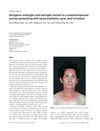
 A postmenopausal woman's facial redness, acne, and excess hair were caused by too much hormone therapy for insomnia, but improved after stopping the treatment.
 7 citations
,
September 2022 in “Communications biology”
7 citations
,
September 2022 in “Communications biology” Omega-6 fats in certain cells boost male hormone production.
20 citations
,
June 1985 in “Toxicologic Pathology” Some steroid-induced health issues in rodents improved after stopping treatment, but hair loss and eye problems did not.
49 citations
,
October 1988 in “The Journal of Clinical Endocrinology & Metabolism” Leuprolide effectively reduces hair growth in hirsute women at higher doses.
September 1976 in “PubMed” Hirsutism is excessive male-pattern hair growth mainly caused by ovarian hormones, and severe cases may require costly treatment with side effects.
5 citations
,
July 1987 in “European Journal of Obstetrics & Gynecology and Reproductive Biology” The treatment temporarily improved symptoms of hyperandrogenism in adolescents.
January 2006 in “Benzina: Revista d'excepcions culturals” Trienones are more effective at inhibiting the enzyme linked to hair loss than dienones.
 46 citations
,
August 1990 in “The Journal of clinical endocrinology and metabolism/Journal of clinical endocrinology & metabolism”
46 citations
,
August 1990 in “The Journal of clinical endocrinology and metabolism/Journal of clinical endocrinology & metabolism” Ketoconazole reduced hair growth and improved acne in women, but caused side effects needing careful monitoring.
 18 citations
,
March 2002 in “The journal of investigative dermatology/Journal of investigative dermatology”
18 citations
,
March 2002 in “The journal of investigative dermatology/Journal of investigative dermatology” Estrogen increases blood vessel growth factor production, while testosterone blocks this increase.
 64 citations
,
January 1998 in “Drugs”
64 citations
,
January 1998 in “Drugs” Dienogest combined with ethinylestradiol is a highly effective birth control that improves menstrual symptoms and has manageable side effects.