 1 citations
,
November 2023 in “Contact dermatitis”
1 citations
,
November 2023 in “Contact dermatitis” Some people with Frontal Fibrosing Alopecia may be allergic to a common sunscreen ingredient.
![Influence of FHIT on Benzo[a]pyrene-Induced Tumors and Alopecia in Mice: Chemoprevention by Budesonide and N-Acetylcysteine](/images/assets/f8f56777-f891-4879-8c45-c87d6aa82563/small/35499.jpg) 24 citations
,
May 2006 in “Proceedings of the National Academy of Sciences of the United States of America”
24 citations
,
May 2006 in “Proceedings of the National Academy of Sciences of the United States of America” Budesonide and N-acetylcysteine reduced tumors and alopecia in mice, regardless of FHIT gene status.
 22 citations
,
January 2019 in “Endocrinology and metabolism”
22 citations
,
January 2019 in “Endocrinology and metabolism” An mFG score of 7 or higher indicates hirsutism in Filipino women, often linked to higher free testosterone levels.
 1 citations
,
January 2024 in “Archives of Endocrinology and Metabolism”
1 citations
,
January 2024 in “Archives of Endocrinology and Metabolism” Self-assessed hirsutism scores are not reliable for clinical diagnosis but may help in screening.
 2 citations
,
January 2013 in “Türkiye klinikleri tıp bilimleri dergisi”
2 citations
,
January 2013 in “Türkiye klinikleri tıp bilimleri dergisi” The study suggests using a score of 11 on the mFG scale to diagnose hirsutism in Turkish women, with adjustments for age, skin type, and family history.
 2 citations
,
May 2017 in “International journal of pharmacy and pharmaceutical sciences/International Journal of Pharmacy and Pharmaceutical Sciences”
2 citations
,
May 2017 in “International journal of pharmacy and pharmaceutical sciences/International Journal of Pharmacy and Pharmaceutical Sciences” Hutchinson-Gilford Progeria Syndrome is a rare genetic disorder caused by a specific gene mutation, characterized by aging symptoms and managed by monitoring heart health and using low-dose aspirin.
 May 2019 in “Anais brasileiros de dermatologia/Anais Brasileiros de Dermatologia”
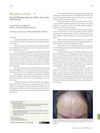
 Frontal fibrosing alopecia mostly affects postmenopausal women, with diagnosis often delayed by 3 years.
 January 2025 in “Indian Journal of Dermatology”
 Frontal fibrosing alopecia is a challenging hair loss condition with no known cause or definitive treatment.
 August 2023 in “Cell Proliferation”
 Human cells in plasma-derived gels can potentially mimic hair follicle environments, improving hair regeneration therapies.
EDM is better for isolating and growing human foreskin fibroblasts, and PPP helps repair UVB damage.
December 2023 in “JEADV Clinical Practice” Brownish halos around axillary hair can help diagnose frontal fibrosing alopecia.
 2 citations
,
November 2007 in “Hair transplant forum international”
2 citations
,
November 2007 in “Hair transplant forum international” The conclusion is that hair transplant surgery should use microscopically dissected natural hair groupings and some new terms were suggested for clarity.
 July 2018 in “Elsevier eBooks”
 Frontal Fibrosing Alopecia is a type of hair loss affecting mostly older women, with no agreed best treatment.
1 citations
,
February 2024 in “Journal of the European Academy of Dermatology and Venereology” Certain genetic factors may contribute to frontal fibrosing alopecia in Brazil.
 18 citations
,
February 2022 in “Cell Death Discovery”
18 citations
,
February 2022 in “Cell Death Discovery” ECM1-modified stem cells can effectively treat liver cirrhosis.
Arabidopsis Formin 2 stabilizes actin filaments to aid cell-to-cell trafficking.
8 citations
,
July 2020 in “Clinical, cosmetic and investigational dermatology” Excessive sun protection might cause frontal fibrosing alopecia by disrupting skin immune balance.
 January 2024 in “ACS Biomaterials Science & Engineering”
 A new method using a microfluidic device can prepare hair follicle germs efficiently for potential use in hair loss treatments.
November 2022 in “Journal of Investigative Dermatology” A new tool helps study hair follicle cells to develop better treatments for hair disorders.
3 citations
,
June 2016 in “JEADV. Journal of the European Academy of Dermatology and Venereology/Journal of the European Academy of Dermatology and Venereology” A patient with hair loss condition grew excessive hair in areas covered by a cast.
1 citations
,
July 2007 in “Journal of Investigative Dermatology” The mutation causes hairless mice due to mislocalized and dysfunctional HR protein.
 37 citations
,
August 2012 in “European Journal of Obstetrics & Gynecology and Reproductive Biology”
37 citations
,
August 2012 in “European Journal of Obstetrics & Gynecology and Reproductive Biology” A simplified scoring system can effectively diagnose hirsutism in Chinese women of reproductive age.
 1 citations
,
September 2021 in “CRC Press eBooks”
1 citations
,
September 2021 in “CRC Press eBooks” Frontal Fibrosing Alopecia is a hair loss condition mainly affecting postmenopausal women, with unclear causes and various clinical patterns.
5 citations
,
March 2010 in “International Journal of Dermatology” Accurate diagnosis of basaloid follicular hamartoma is crucial to avoid unnecessary treatments.
4 citations
,
February 2022 in “PeerJ” Hair follicle stem cell transplants can reverse liver cirrhosis by blocking harmful cell activation.
 1 citations
,
November 1992 in “Indian Dermatology Online Journal”
1 citations
,
November 1992 in “Indian Dermatology Online Journal” FUE is a popular hair restoration method that uses body hair and leaves no scars.
June 2026 in “Frontiers in Medicine” The excimer laser is a promising and safe treatment for frontal fibrosing alopecia.
FUE successfully restored hair growth in a patient with alopecia from Hansen's disease.
 5 citations
,
January 2023 in “International Journal of Molecular Sciences”
5 citations
,
January 2023 in “International Journal of Molecular Sciences” Hair follicles could be used to noninvasively monitor our body's internal clock and help identify risks for related diseases.
8 citations
,
September 2023 in “Skin Research and Technology” High-frequency ultrasound improves diagnosis accuracy for most subcutaneous lesions.