11 citations
,
January 1997 in “Journal of Dermatological Science” A new protein linked to hair strength was identified, aiding in understanding brittle hair conditions.
26 citations
,
December 1990 in “Journal of Biological Chemistry” Two specific genes are more active during hair growth in mice.
 12 citations
,
August 1984 in “Genetics Research”
12 citations
,
August 1984 in “Genetics Research” The N gene affects the protein makeup of mouse hair.
15 citations
,
January 1988 Hair follicles have unique proteins that vary by species and are influenced by nutrition.
 34 citations
,
January 2011 in “Fundamental & Clinical Pharmacology”
34 citations
,
January 2011 in “Fundamental & Clinical Pharmacology” New treatments for PCOS show promise, but no current medication treats all aspects of the condition.
2 citations
,
July 1994 in “Journal of Dermatological Science” Grafted human scalp samples on mice can produce human hair, useful for studying hair genetics.
 1 citations
,
January 2009 in “Journal of S C C J”
1 citations
,
January 2009 in “Journal of S C C J” Changing disulfide bonds in human hair affects its melting behavior and thermal stability.
23 citations
,
January 1981 Hair is mostly made of three protein types: helical, high-sulfur, and high-tyrosine.
10 citations
,
January 1994 Hair can be straightened using different chemicals, not just strong alkali.
January 2011 in “대한피부과학회지” A 7-year-old girl was diagnosed with trichothiodystrophy due to low sulfur levels in her hair.
 March 2010 in “International Journal of Cosmetic Science”
 Disulfide bonds affect the melting behavior of hair's crystalline structure, but hair retains some stability even after these bonds are broken.
34 citations
,
September 2007 in “Experimental Dermatology” The outer layer of Merino wool is rich in sulfur proteins, making it resistant to damage.
Culturing hair follicles at the air-liquid interface with minoxidil significantly boosts hair growth and preserves the root sheath.
 11 citations
,
June 2012 in “Archives of Dermatological Research”
11 citations
,
June 2012 in “Archives of Dermatological Research” L-cystine and vitamin B6 at high doses prevented hair loss in mice treated with a chemotherapy drug.
 4 citations
,
December 2018 in “Macedonian Journal of Chemistry and Chemical Engineering”
4 citations
,
December 2018 in “Macedonian Journal of Chemistry and Chemical Engineering” A new method accurately measures amino acids in treated hair, showing bleaching reduces amino acids while protein treatments increase them.
38 citations
,
May 2000 in “Livestock production science” Giving high-quality protein or methionine supplements helps improve hair growth in Angora goats and, to a lesser extent, in Cashmere goats.
 4 citations
,
November 2022 in “Journal of biomedical materials research. Part B, Applied biomaterials”
4 citations
,
November 2022 in “Journal of biomedical materials research. Part B, Applied biomaterials” Human hair proteins, especially keratins, can protect cells from oxidative stress in lab settings.
A new hydrogel made from human hair keratin can help regenerate skin and fight bacteria.

The research developed a human hair keratin and silver ion hydrogel that could help heal wounds.
4 citations
,
December 1989 in “The Journal of Dermatology” Human hair proteins have similar cysteine and glycine levels to skin proteins.
9 citations
,
January 1981 Nucleophilic reagents break down hair keratin, forming more lanthionine and lysinoalanine than in wool.
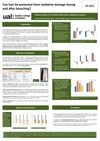 September 2018 in “University of the Arts London Research Online (University of the Arts London)”
 L-arginine, hydrolysed keratin, and cystine-silanol copolymer can help protect hair from damage during and after bleaching.
 6 citations
,
October 2016
6 citations
,
October 2016 Understanding how keratin structures in hair are arranged and interact is key for creating methods to extract and purify them.
39 citations
,
June 2012 in “Journal of Structural Biology” Disulfide bonds are crucial for hair structure during keratinization.
31 citations
,
January 2004 in “Methods in cell biology” Hair and follicle keratins differ in structure and expression, especially in cysteine content.
 26 citations
,
September 1990 in “Ophthalmology”
26 citations
,
September 1990 in “Ophthalmology” The study found no common cause for a girl's crystalline cataract and uncombable hair, suggesting their co-occurrence might be coincidental.
![Influence of FHIT on Benzo[a]pyrene-Induced Tumors and Alopecia in Mice: Chemoprevention by Budesonide and N-Acetylcysteine](/images/assets/f8f56777-f891-4879-8c45-c87d6aa82563/small/35499.jpg) 24 citations
,
May 2006 in “Proceedings of the National Academy of Sciences of the United States of America”
24 citations
,
May 2006 in “Proceedings of the National Academy of Sciences of the United States of America” Budesonide and N-acetylcysteine reduced tumors and alopecia in mice, regardless of FHIT gene status.
 14 citations
,
November 2015 in “Annals of the New York Academy of Sciences”
14 citations
,
November 2015 in “Annals of the New York Academy of Sciences” Changing the diet of mice lacking the enzyme CBS can affect symptoms related to the genetic condition.
May 2015 in “Cancer research” After chemotherapy for early breast cancer, 33.4% of patients had long-term significant hair loss, with some hair regrowth over time, but treatments for hair loss were largely ineffective.
 19 citations
,
March 1961 in “Nature”
19 citations
,
March 1961 in “Nature” A fatty acid/protein complex in human hair helps protect it from damage.