Combining vertical and horizontal sectioning improves scalp biopsy analysis for alopecia.
 December 2024 in “Planta Medica”
 Certain plants may help hair growth in alopecia.
 5 citations
,
February 2011 in “Expert Opinion on Drug Discovery”
5 citations
,
February 2011 in “Expert Opinion on Drug Discovery” We need better treatments for hair loss, and while test-tube methods are helpful, they can't fully replace animal tests for evaluating new hair growth treatments.
 109 citations
,
November 2004 in “Lupus”
109 citations
,
November 2004 in “Lupus” The paper concludes that the 1982 criteria for diagnosing systemic lupus erythematosus need updating to improve accuracy and involve dermatologists in the process.
 93 citations
,
November 2018 in “Carbohydrate Polymers”
93 citations
,
November 2018 in “Carbohydrate Polymers” New nanocomposites with copper show promise for healing burn wounds and regenerating skin.
 4 citations
,
January 2019 in “Dermatologic Therapy”
4 citations
,
January 2019 in “Dermatologic Therapy” Scalp basal cell carcinoma may be more aggressive and harder to treat than other types, requiring special attention and further research.
 2 citations
,
July 2022 in “Frontiers in Medicine”
2 citations
,
July 2022 in “Frontiers in Medicine” The cause of Frontal fibrosing alopecia, a type of hair loss, is complex, likely involving immune responses and genetics, but is not fully understood.
1 citations
,
January 2018 in “Skin appendage disorders” The complement system might be involved in the development of alopecia areata and could lead to new treatments.
 March 2021 in “Revista Medicina Cutánea Ibero-Latino-Americana”
 Trichoscopy helps diagnose scarring alopecia early and non-invasively.

Patients with lichen planus should be tested for hepatitis C.
March 2006 in “Chinese journal of plastic surgery” Microencapsulated human hair cells can regenerate hair follicles in mice ears.
SLE patients experience hair loss similar to telogen effluvium, with hair damage and immune activity at hair follicles.
56 citations
,
January 2004 in “Journal of the American Academy of Dermatology” Cyclosporine can cause a unique skin condition called "cyclosporine-induced folliculodystrophy."
 26 citations
,
March 1986 in “Clinical and Experimental Dermatology”
26 citations
,
March 1986 in “Clinical and Experimental Dermatology” Scalp hair grows at 0.37 mm/day, forearm hair at 0.18 mm/day, and thigh hair at 0.30 mm/day, with no significant differences found in people with certain hair conditions.
 October 2021 in “Journal of the European Academy of Dermatology and Venereology”
 There have been major advances in diagnosing and treating hair loss over the last 30 years, with new drugs and improved hair transplant techniques.
 March 2010 in “Ejc Supplements”
 CK 5/6 expression in breast cancer is linked to negative hormone receptor status and higher tumor grade.
 5 citations
,
August 2020 in “Curēus”
5 citations
,
August 2020 in “Curēus” The document concludes that recent studies help tell apart desmoplastic trichoepitheliomas from other skin tumors, but more research is needed for clear differentiation.
1 citations
,
January 2021 in “Journal of the American Academy of Dermatology” Careful histologic examination is crucial to differentiate types of bullous lesions in cutaneous lupus erythematosus.
57 citations
,
August 1997 in “Microscopy Research and Technique” New molecules involved in skin and hair growth were identified, improving understanding and future treatments.
 2 citations
,
January 2000 in “Journal of Toxicologic Pathology”
2 citations
,
January 2000 in “Journal of Toxicologic Pathology” A single recessive gene causes sparse hair in certain Japanese White rabbits.
 April 2017 in “Journal of Investigative Dermatology”
 Sweat glands and hair follicles are determined by opposing signals, with BMPs promoting sweat glands and blocking BMPs leading to hair follicles.
 1 citations
,
July 1973 in “British Journal of Dermatology”
1 citations
,
July 1973 in “British Journal of Dermatology” The document concludes that secondary syphilis cases are increasing and often misdiagnosed, pityriasis rubra pilaris can be distinguished from psoriasis by skin cell features, and different skin layers produce specific components during skin repair.
July 2023 in “Journal of the European Academy of Dermatology and Venereology” Anti-IL17A therapy reduced venous leg ulcer size by 64% without major side effects.
 November 2011 in “Australasian Journal of Dermatology”
 Cellulite may be linked to low adiponectin, isotretinoin with UVB can treat psoriasis effectively, permanent alopecia post-chemotherapy resembles a unique hair loss, deodorants may cause fragrance allergies, desmoplastic melanoma is becoming more common, and intensive UVB treatment can give long-term psoriasis remission.
 9 citations
,
March 2015 in “Journal of Microbiology and Biotechnology”
9 citations
,
March 2015 in “Journal of Microbiology and Biotechnology” Ultra-high molecular weight poly-γ-glutamic acid may help promote hair growth.
Alopecia areata is an autoimmune disease that targets hair follicles.
 23 citations
,
April 1999 in “Dermatologic Clinics”
23 citations
,
April 1999 in “Dermatologic Clinics” Pulsed-intense light can significantly reduce hair, with effectiveness depending on treatment number and timing, and has mild side effects.
 9 citations
,
December 1981 in “International Journal of Dermatology”
9 citations
,
December 1981 in “International Journal of Dermatology” The document concludes that early diagnosis is key for treating common baldness in women, but reassurance is often the best approach as hair thinning can be a normal part of aging.
October 2023 in “Sovremennye tehnologii v medicine” Living Skin Equivalent transplantation helps heal ischemic non-healing wounds.
 56 citations
,
June 1970 in “The BMJ”
56 citations
,
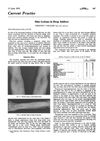
June 1970 in “The BMJ” Drug addicts often have scars, skin color changes, blocked veins, and bruising, with severe ulcers from barbiturate injections.