November 2018 in “Journal of dermatology & cosmetology” The document reports the first case of a rare skin condition in Colombia, the 19th case worldwide.
October 2017 in “DOAJ (DOAJ: Directory of Open Access Journals)” DA-9401 can protect against finasteride-induced reproductive damage in rats.
 April 2017 in “The journal of investigative dermatology/Journal of investigative dermatology”
 QMSI is a valuable method for studying drug penetration in skin tissues.
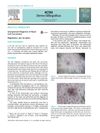 May 2015 in “Actas Dermo-Sifiliográficas”
 A young man was unexpectedly diagnosed with basal cell carcinoma after a scalp examination and confocal microscopy.
Patient history is key in diagnosing hair loss types.
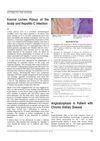
Patients with lichen planus should be tested for hepatitis C.
November 2012 in “Annales de Dermatologie et de Vénéréologie” Frontal fibrosing alopecia can occur in children, not just postmenopausal women.
 April 2012 in “Informa Healthcare eBooks”
 Alopecia areata is a common autoimmune condition causing varying hair loss, diagnosed by specific patterns of inflammation around hair follicles, with several treatment options available.
 April 2012 in “Informa Healthcare eBooks”
 Classifying hair diseases, like alopecia, is difficult and needs more research to understand their causes.
rhKGF2 significantly promotes hair growth and follicle development.
Fermented Cornus officinalis promotes hair growth effectively.
Rosemary oil effectively promotes hair growth in mice.
 March 2010 in “Ejc Supplements”
 CK 5/6 expression in breast cancer is linked to negative hormone receptor status and higher tumor grade.
January 2008 in “Journal of Practical Medical Techniques” Microencapsulated cells can regenerate hair follicles in rat ears.
January 2008 in “Chinese Journal of Aesthetic and Plastic Surgery” Type B material, ground for 8 hours, is the most suitable and compatible for use as a soft tissue filler.
March 2006 in “Chinese journal of plastic surgery” Microencapsulated human hair cells can regenerate hair follicles in mice ears.
January 2003 in “Linchuang pifuke zazhi” Zingiber coralliaum oil promotes early hair growth in mice.
 March 2001 in “Clinics in Dermatology”
 Hair disease research is a growing and evolving field in dermatology, with recent significant advances.
January 1999 in “Chinses Journal of Hand Surgery” Human hair keratin artificial tendon is a safe and effective tendon substitute.
 September 1998 in “Journal of the European Academy of Dermatology and Venereology”
 Autoimmune and inflammatory processes are involved in both scarring and non-scarring types of hair loss.
August 1994 in “Toxicology in Vitro” A lab model of human skin was created to study skin tumor promoters without using actual human skin.
February 2023 in “Medicine in novel technology and devices” Microneedles with traditional Chinese medicine can help regrow hair in androgenic alopecia.
 122 citations
,
June 2002 in “Genes & Development”
122 citations
,
June 2002 in “Genes & Development” Keratin 17 is crucial for early hair strength and cell survival.
88 citations
,
September 2003 in “Clinical endocrinology” Hormone treatment for transsexual individuals is effective but carries risks like thromboembolic events and mood changes, with most side effects being minor and reversible.
 83 citations
,
November 2002 in “British Journal of Dermatology”
83 citations
,
November 2002 in “British Journal of Dermatology” Low iron levels are not directly linked to chronic hair loss and iron supplements may not help.
 69 citations
,
September 1991 in “Journal of Surgical Research”
69 citations
,
September 1991 in “Journal of Surgical Research” Understanding how fetal wounds heal could help improve healing in adults.
 57 citations
,
April 2002 in “The journal of investigative dermatology/Journal of investigative dermatology”
57 citations
,
April 2002 in “The journal of investigative dermatology/Journal of investigative dermatology” Vitamin D receptor is crucial for starting hair growth after birth.
 28 citations
,
August 2015 in “Journal of Drug Targeting”
28 citations
,
August 2015 in “Journal of Drug Targeting” The new CoQ10 gel protects mouse skin better against aging from UV light than the old gel.
 13 citations
,
January 2014 in “Journal of Investigative Dermatology”
13 citations
,
January 2014 in “Journal of Investigative Dermatology” The laser comb did not improve hair regrowth in mice with alopecia areata.
2 citations
,
June 2020 in “Journal of Investigative Dermatology” 3D imaging of skin biopsies offers better accuracy but is time-consuming and can't clear melanin.