January 2008 in “HAL (Le Centre pour la Communication Scientifique Directe)” The mutant HR bmh protein affects hair follicle formation by failing to repress vitamin D receptor activity.
 2 citations
,
June 2012 in “Journal of Dermatological Science”
2 citations
,
June 2012 in “Journal of Dermatological Science” The gene HDC is important for the development of hair follicles in newborn mice.
 7 citations
,
July 2008 in “Experimental Dermatology”
7 citations
,
July 2008 in “Experimental Dermatology” The study concluded that a protein important for hair strength is regulated by certain molecular processes and is affected by growth phases.
 April 2018 in “Journal of Investigative Dermatology”
 DNMT3A is crucial for healthy skin and hair growth.
13 citations
,
December 2005 in “Traffic” Syntaxin 9 helps in transporting and signaling of the EGF receptor in skin and stomach cells.
 April 2024 in “The journal of investigative dermatology/Journal of investigative dermatology”
 ASH2L is essential for skin and hair development.
 September 2019 in “The journal of investigative dermatology/Journal of investigative dermatology”
 Tet1/2/3 enzymes affect hair follicle cell development by influencing BMP signaling.
 25 citations
,
June 2021 in “Developmental Cell”
25 citations
,
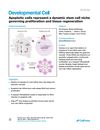
June 2021 in “Developmental Cell” Dying cells can help with faster healing and new hair growth by releasing a growth-promoting molecule.
132 citations
,
February 2002 in “Journal of Biological Chemistry” HOXC13 is crucial for regulating hair keratin genes in hair follicles.
 April 2018 in “Journal of Investigative Dermatology” 24 citations
,
December 2013 in “Archives of Dermatological Research”
April 2018 in “Journal of Investigative Dermatology” 24 citations
,
December 2013 in “Archives of Dermatological Research”  3 citations
,
January 2023 in “Science advances”
3 citations
,
January 2023 in “Science advances” The enzymes Tet2 and Tet3 are important for skin cell development and hair growth.
8 citations
,
June 2001 in “Journal of Biological Chemistry” A truncated protein linked to breast cancer may change cell adhesion.
 1 citations
,
June 2023 in “The FASEB journal”
1 citations
,
June 2023 in “The FASEB journal” LSD1 and HSP90 help heal skin wounds by changing hair follicle stem cells' metabolism.
14 citations
,
June 2012 in “Stem Cells” TACE/ADAM17 is essential for maintaining healthy hair and hair follicle stem cells.
1 citations
,
April 2018 in “The journal of investigative dermatology/Journal of investigative dermatology” HDAC inhibitors like Vorinostat and Entinostat may encourage hair regrowth and could be new treatments for hair loss conditions.
1 citations
,
February 1991 in “Journal of Biological Chemistry”  6 citations
,
June 2021 in “Developmental biology”
6 citations
,
June 2021 in “Developmental biology” Dermal EZH2 controls skin cell development and hair growth in mice.
 10 citations
,
May 2018 in “Cell death discovery”
10 citations
,
May 2018 in “Cell death discovery” HSP90 and lamin A/C are crucial for hair growth and could be targets for treating hair loss.
10 citations
,
May 2023 in “iScience” Sox9 is crucial for hair follicle stem cells to become melanocytes instead of glial cells.
92 citations
,
April 1999 in “The journal of investigative dermatology/Journal of investigative dermatology” Nonpalmoplantar skin cells can be made to express keratin 9 by interacting with palmoplantar fibroblasts.
 April 2023 in “The journal of investigative dermatology/Journal of investigative dermatology”
 Tet2 and Tet3 enzymes are important for controlling hair growth and shape by affecting gene activity and DNA structure in hair follicles.
 April 2026 in “Apollo (University of Cambridge)”
 SOX9 is crucial for cell development and repair but can cause fibrosis and cancer if misregulated.
305 citations
,
March 2008 in “AJP Endocrinology and Metabolism” SSAT is a key enzyme affecting cell growth and metabolism, with potential but risky use in disease treatment.
April 2021 in “The journal of investigative dermatology/Journal of investigative dermatology” TET enzymes are important for skin and hair development by controlling gene activity in specific areas.
June 1996 in “Journal of Dermatological Science” 34 citations
,
October 1975 in “Biochimica et Biophysica Acta (BBA) - Nucleic Acids and Protein Synthesis” The scant hair in snthr-1Bao mice is likely caused by a deletion affecting the Plcd1 gene.
4 citations
,
October 2024 in “Experimental Dermatology” CD8A and FOXD2-AS1 may be key for diagnosing and treating alopecia areata.
10 citations
,
August 2023 in “The EMBO Journal” Kdm6b is crucial for skin cell differentiation.