 May 2004 in “International Journal of Cosmetic Science”
 Melanogenesis inhibitors like kojic acid and niacinamide can reduce inflammation and pigment production in skin cells.
 28 citations
,
May 1986 in “Clinics in endocrinology and metabolism”
28 citations
,
May 1986 in “Clinics in endocrinology and metabolism” New compounds may soon be tested to treat excessive hair growth in women.
1 citations
,
March 2003 in “Journal of Investigative Dermatology” Early sunburn treatment with certain inhibitors may reduce skin cancer risk.
 7 citations
,
June 2010 in “Bioorganic & medicinal chemistry letters”
7 citations
,
June 2010 in “Bioorganic & medicinal chemistry letters” Two new compounds were found to effectively reduce hair growth in mice.
24 citations
,
February 2007 in “Hormone and metabolic research” The substance MK386 effectively blocked testosterone conversion and reduced cell growth in certain skin cells, but inhibiting 5α-reductase alone may not greatly improve acne.
2 citations
,
May 2023 in “The Journal of Immunology” NXC736 significantly reduced hair loss in mice with alopecia areata.
 1 citations
,
October 2023 in “JEADV. Journal of the European Academy of Dermatology and Venereology/Journal of the European Academy of Dermatology and Venereology”
1 citations
,
October 2023 in “JEADV. Journal of the European Academy of Dermatology and Venereology/Journal of the European Academy of Dermatology and Venereology” A man developed skin lesions as a side effect of a gamma secretase inhibitor used for treating a tumor.
 12 citations
,
December 2022 in “JEADV. Journal of the European Academy of Dermatology and Venereology/Journal of the European Academy of Dermatology and Venereology”
12 citations
,
December 2022 in “JEADV. Journal of the European Academy of Dermatology and Venereology/Journal of the European Academy of Dermatology and Venereology” New oral treatments for adult hair loss show promise, especially JAK inhibitors, with mild side effects.
 40 citations
,
December 2016 in “Journal of Dermatological Treatment”
40 citations
,
December 2016 in “Journal of Dermatological Treatment” JAK inhibitors show promise for treating skin and hair disorders but need more research on long-term safety and effectiveness.
September 2015 in “American journal of biomedicine” January 2025 in “Archives of Dermatological Research” 16 citations
,
June 2018 in “JAAD case reports” A JAK inhibitor improved both severe hair loss and chronic skin disease in one patient.
52 citations
,
September 2014 in “Nature medicine” JAK inhibitors might help treat alopecia areata.
 July 2022 in “Journal of Investigative Dermatology”
 Blocking DPP4 can help activate hair growth and improve hair regeneration.
 1 citations
,
January 2023 in “Portuguese Journal of Dermatology and Venereology”
1 citations
,
January 2023 in “Portuguese Journal of Dermatology and Venereology” JAK inhibitors effectively treat skin conditions and topical forms are safer.
The treatment was ineffective in humans.
 April 2025 in “Frontiers in Immunology”
 Tofacitinib effectively regrows hair in alopecia areata but may need continuous use.
 November 2023 in “Dermatologica sinica/Zhōnghuá pífūkē yīxué zázhì”
 Upadacitinib helped regrow hair in a severe alopecia areata patient but stopping treatment caused hair loss to return.
November 2025 in “FEBS Open Bio” JAK/STAT1 pathway causes hair loss during chemotherapy by reducing Shh in hair follicles.
August 2022 in “Journal of Investigative Dermatology” Baricitinib reduces inflammation and mitochondrial damage in skin cells.
 22 citations
,
August 2009 in “Evidence-based Complementary and Alternative Medicine”
22 citations
,
August 2009 in “Evidence-based Complementary and Alternative Medicine” The composition with carnitine, thioctic acid, and saw palmetto extract may effectively reduce inflammation in hair follicle cells.
May 2008 in “10th European Congress of Endocrinology”  23 citations
,
September 2017 in “Journal of the American Academy of Dermatology”
23 citations
,
September 2017 in “Journal of the American Academy of Dermatology” Apremilast did not work for treating severe alopecia areata.
April 2019 in “The journal of investigative dermatology/Journal of investigative dermatology” Blocking JAK1 or JAK3 helps reverse hair loss in a mouse model of alopecia areata.
 April 2024 in “Frontiers in pharmacology”
 Brepocitinib 30mg is most effective for moderate-to-severe alopecia areata, but ritlecitinib 50mg may offer a better balance of safety and effectiveness.
15 citations
,
December 2019 in “European Journal of Dermatology” Low-dose tofacitinib is effective and cheaper for severe alopecia areata.
 July 2024 in “JAAD Case Reports”
 Isotretinoin may effectively treat hereditary hypotrichosis simplex, a rare hair loss condition.
October 2021 in “Journal of Investigative Dermatology” Blocking IL-12 can help treat alopecia areata by preventing hair follicle immune issues.
 14 citations
,
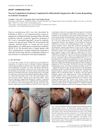
January 2015 in “Acta dermato-venereologica”
14 citations
,
January 2015 in “Acta dermato-venereologica” Acitretin significantly reduced inflammatory attacks in a woman with Naevus Comedonicus Syndrome but caused side effects.