 4 citations
,
January 2017 in “Annals of Dermatology”
4 citations
,
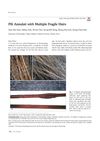
January 2017 in “Annals of Dermatology” Frequent hairdryer use may worsen hair fragility in people with Pili Annulati.
4 citations
,
January 2019 in “Indian Dermatology Online Journal” The term "Porokeratotic Adnexal Ostial Nevus" is suggested as a more appropriate name.
44 citations
,
January 2015 in “Development” Human Schwann cells can be quickly made from hair follicle stem cells for nerve repair.
3 citations
,
July 2009 in “Experimental and Clinical Endocrinology & Diabetes” Low-dose Buserelin effectively reduces hirsutism with minimal side effects.
17 citations
,
February 2023 in “Cosmetics” 3D printed hollow microneedles could effectively treat skin wrinkles with fewer side effects.
 49 citations
,
January 2010 in “International Journal of Pediatric Endocrinology”
49 citations
,
January 2010 in “International Journal of Pediatric Endocrinology” The document concludes that Nonclassic Congenital Adrenal Hyperplasia requires personalized treatment plans to manage symptoms and fertility, with glucocorticoids being a common therapy.
July 2024 in “Journal of Investigative Dermatology” A new test helps find drugs to treat head and neck cancer by targeting c-Rel.
August 2023 in “Diagnostics” Ultra-high-frequency ultrasound effectively evaluates the impact of hyaluronic acid fillers in reducing nasolabial fold wrinkles over time.
17 citations
,
November 1967 in “American Journal of Anatomy” Hairless mice have longer hair follicles and abnormal structures during the catagen phase.
 30 citations
,
June 2019 in “Frontiers in Endocrinology”
30 citations
,
June 2019 in “Frontiers in Endocrinology” The document concludes that managing non-classical congenital adrenal hyperplasia in females requires personalized treatment, genetic counseling, and a team of specialists.
48 citations
,
July 1993 in “Archives of Dermatological Research” Merkel cells are abundant in facial vellus hair follicles, especially during the anagen phase.
41 citations
,
October 2001 in “Experimental Dermatology” The nude gene is important for skin and hair development.
15 citations
,
May 2017 in “Journal of Cellular Biochemistry” The hairless protein is important for skin, hair, and may influence cancer development.
 49 citations
,
September 2012 in “The Journal of clinical endocrinology and metabolism/Journal of clinical endocrinology & metabolism”
49 citations
,
September 2012 in “The Journal of clinical endocrinology and metabolism/Journal of clinical endocrinology & metabolism” The document concludes with guidance for doctors on diagnosing and treating hirsutism effectively and safely.
11 citations
,
March 2018 in “Journal of cosmetic and laser therapy” Injecting non-cross-linked hyaluronic acid into the face improved skin hydration, texture, pores, and reduced wrinkles.
March 2021 in “CRC Press eBooks” Microneedling helps improve skin and hair by creating tiny, controlled skin injuries.
14 citations
,
December 2024 in “Pharmaceutics” Hydrogel microneedles offer a promising, minimally invasive way to treat diseases like cancer and hair loss, but need improvements in strength and standardization.
86 citations
,
June 1998 in “Journal of Investigative Dermatology” The hairless gene mutation causes baldness by disrupting hair follicle structure.
7 citations
,
July 2025 in “The Journal of Physiology” C-tactile nerves are sensitive to hair movement.
27 citations
,
January 2000 in “Developmental Dynamics” Mutations in the Whn gene affect hair keratin gene expression differently.
 3 citations
,
February 2020 in “The journal of gene medicine”
3 citations
,
February 2020 in “The journal of gene medicine” A mutation in the HR gene causes a rare form of irreversible hair loss in two Kashmiri families. Whole exome sequencing is effective for finding such mutations.
48 citations
,
July 1988 in “PubMed” Rhino mice show significant meibomian gland changes, making them a potential model for studying gland disorders.
2 citations
,
January 2009 in “Human cell culture”  April 2017 in “The journal of investigative dermatology/Journal of investigative dermatology”
 HSD11b1 affects skin nerves and increases non-histaminergic itch.
November 2007 in “Science” Keratin-based hydrogels from human hair help nerve repair better than traditional methods.
November 2025 in “Journal of the European Academy of Dermatology and Venereology” Different types of hidradenitis suppurativa need specific treatments based on unique skin cell issues.
January 2018 in “bioRxiv (Cold Spring Harbor Laboratory)” The mutant HR bmh protein mis-localizes in cells, affecting skin and hair development.
68 citations
,
December 2010 in “The journal of investigative dermatology/Journal of investigative dermatology” HOXC13 is essential for hair and nail development by regulating Foxn1.
 November 2022 in “Journal of Investigative Dermatology”
 Growth hormone-releasing hormone (GHRH) boosts hair growth and human scalp hair follicles have their own growth hormone system.