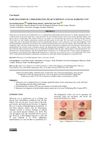
 March 2022 in “Folia Medica Indonesiana”
 The lump on a woman's scalp was a rare, potentially cancerous tumor from the hair follicle, not a common cyst.
1 citations
,
May 2016 in “Journal of Cosmetic Dermatology” Cytokeratins 15 and 19 may help track vitiligo treatment progress.
153 citations
,
April 1998 in “Current Biology” The risk of skin tumors becoming malignant depends on the specific skin cell type affected.
4 citations
,
January 2019 in “Indian Dermatology Online Journal” The term "Porokeratotic Adnexal Ostial Nevus" is suggested as a more appropriate name.
2 citations
,
May 2007 in “Pediatrics in Review” Thorough history and examination are crucial for diagnosing genetic disorders like juvenile polyposis and hypomelanosis of Ito.
66 citations
,
December 1999 in “Journal of Investigative Dermatology” New mutations in the hairless gene may cause hair loss and affect bone development.
Selenium levels are similar in healthy people from both high and low NPC risk areas.
6 citations
,
January 2015 in “Indian Dermatology Online Journal” PEODDN is a rare skin disorder with limited treatment options, best treated with laser therapy.
10 citations
,
December 2008 in “Molecular Carcinogenesis” The PML protein helps prevent skin cancer in mice.
105 citations
,
December 1998 in “Archives of Dermatological Research” Dermal papilla cells mainly drive blood vessel growth in hair follicles.
 74 citations
,
October 1998 in “Journal of biological chemistry/The Journal of biological chemistry”
74 citations
,
October 1998 in “Journal of biological chemistry/The Journal of biological chemistry” The 190-kbp domain contains all human type I hair keratin genes, showing their organization and evolution.
 1 citations
,
January 2017 in “Tohoku journal of experimental medicine”
1 citations
,
January 2017 in “Tohoku journal of experimental medicine” A woman's mature cystic teratoma caused her virilization by producing testosterone.
2 citations
,
April 2008 in “PubMed” A gene mutation causes monilethrix in a Chinese family.
 July 2021 in “British Journal of Dermatology”
 Laser treatment for skin conditions VEN and ILVEN is effective and liked by patients.
January 2016 in “Indian Dermatology Online Journal” A rare skin condition called Eruptive Vellus Hair Cyst can cause itchy papules on the face.
 November 2025 in “Clinical Cosmetic and Investigational Dermatology”
 LIPH mutations cause woolly hair in some Chinese people.
 23 citations
,
September 2014 in “JEADV. Journal of the European Academy of Dermatology and Venereology/Journal of the European Academy of Dermatology and Venereology”
23 citations
,
September 2014 in “JEADV. Journal of the European Academy of Dermatology and Venereology/Journal of the European Academy of Dermatology and Venereology” Laser treatments are the most effective for porokeratotic adnexal ostial nevus.
4 citations
,
August 1991 in “The Journal of Dermatology” The tumor on the man's nose was a rare type called pedunculated follicular hamartoma.
37 citations
,
June 2000 in “Experimental dermatology” The Lanceolate hair-J mutation in mice mimics human hair disorders like Netherton's syndrome.
32 citations
,
May 1986 in “Archives of Dermatology” The condition is likely inherited in an autosomal-dominant pattern.
 8 citations
,
February 2005 in “British Journal of Haematology”
8 citations
,
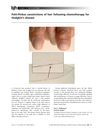
February 2005 in “British Journal of Haematology” Chemotherapy caused the patient's hair to have alternating thick and thin segments.
October 2023 in “European Journal of Dermatology” Combining hair transplantation with PRP is more effective for treating hair loss than hair transplantation alone.
 106 citations
,
March 2013 in “Nature Communications”
106 citations
,
March 2013 in “Nature Communications” A new genetic region, 17q21.31, is linked to higher ovarian cancer risk.
 February 2021 in “IP Indian journal of clinical and experimental dermatology”
 A rare non-cancerous tumor that grows like hair was found in an unusual spot, the vulva.
18 citations
,
March 2009 in “Experimental Dermatology” Pilomatricoma can develop into various hair-related structures.
March 2022 in “Veterinary dermatology” A one-year-old cat had multiple benign skin tumors similar to those known in humans.
79 citations
,
March 2005 in “Journal of Medical Genetics” A mutation in the hHb3 gene is linked to the hair disorder monilethrix.
238 citations
,
May 1989 in “Journal of Investigative Dermatology” 68 citations
,
December 1983 in “British Journal of Dermatology” Major histocompatibility antigens are found in specific skin cells and structures, but not in sweat glands.
 January 2023 in “Indian dermatology online journal”
 A boy with Pachyonychia congenita has a confirmed gene mutation, highlighting the need for a local genetic database in India.