 February 2023 in “Cosmoderma”
 An infant with complete hair loss was diagnosed with a genetic disorder affecting hair growth.
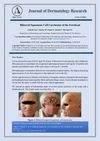
A 70-year-old man with skin cancer on both sides of his forehead was treated with surgery and cryotherapy, highlighting the need for early detection and prevention.
July 2022 in “British Journal of Dermatology”  May 2025 in “International Medical Case Reports Journal”
 Lichen planus pigmentosus may indicate undetected hepatitis C infection.
 9 citations
,
October 2008 in “British Journal of Dermatology”
9 citations
,
October 2008 in “British Journal of Dermatology” The growth of the Epstein-Barr virus in the patient's cells was linked to the worsening of her lymphoma.
 19 citations
,
August 1999 in “European journal of endocrinology”
19 citations
,
August 1999 in “European journal of endocrinology” The study concluded that testing hormone levels after stimulation is not reliable for identifying carriers of 21-hydroxylase deficiency; genetic testing is necessary.
17 citations
,
July 2024 in “Frontiers in Oncology” New therapies and trials are needed for Merkel cell carcinoma, a tough skin cancer.
1 citations
,
March 2013 in “Journal of Dermatological Case Reports” A rare skin condition affected only the facial hair of a 46-year-old man.
June 2025 in “Indian Journal of Dermatology” A rare skin condition was identified and planned for treatment in an elderly man.
April 2013 in “Cancer Research” SKH1 hairless mice have identifiable epidermal stem cells with specific markers.
29 citations
,
February 1989 in “Journal of Cutaneous Pathology” A unique hair tumor with a rippled pattern was identified, showing incomplete differentiation and unusual cell arrangements.
 4 citations
,
July 2020 in “BMC Complementary Medicine and Therapies”
4 citations
,
July 2020 in “BMC Complementary Medicine and Therapies” Human placenta helps hair grow back after chemotherapy by blocking cell death and increasing hair follicle growth.
 7 citations
,
January 2019 in “Australasian Journal of Dermatology”
7 citations
,
January 2019 in “Australasian Journal of Dermatology” A genetic marker linked to a type of hair loss was found in most patients studied.
 December 2024 in “PubMed”
 A man with a rare disease experienced late hair whitening and loss, but hair color returned, suggesting a good outlook.
 1 citations
,
October 2022 in “Dermatology practical & conceptual”
1 citations
,
October 2022 in “Dermatology practical & conceptual” Isolated patchy heterochromia with pili annulati can occur without other health issues.
 40 citations
,
February 1990 in “Journal of The American Academy of Dermatology”
40 citations
,
February 1990 in “Journal of The American Academy of Dermatology” A 17-year-old developed woolly hair nevus in adolescence, which is unusual, and over time the hair darkened and straightened slightly, but microscopic changes persisted.
21 citations
,
June 1992 in “Pediatric Dermatology” Eruptive vellus hair cysts are often underreported and need histologic confirmation for accurate diagnosis.
 1 citations
,
September 2016 in “Journal of Obstetrics and Gynaecology Research”
1 citations
,
September 2016 in “Journal of Obstetrics and Gynaecology Research” The study found no significant link between Helicobacter pylori infection and polycystic ovary syndrome in young females.
 January 2019 in “Przegląd Dermatologiczny”
 An 87-year-old woman was diagnosed with type 3 autoimmune polyendocrine syndrome and had multiple autoimmune issues.
April 2026 in “Research Square”  4 citations
,
March 2020 in “Turkish Journal of Medical Sciences”
4 citations
,
March 2020 in “Turkish Journal of Medical Sciences” There may be a link between Helicobacter pylori infection and the skin condition pityriasis versicolor.
6 citations
,
March 1996 in “Journal of Investigative Dermatology”  1 citations
,
March 2010 in “Internal medicine journal”
1 citations
,
March 2010 in “Internal medicine journal” A 72-year-old man with sudden taste issues and hair growth was diagnosed with a severe stomach cancer and died within 5 months.
September 2024 in “Journal of the American Academy of Dermatology” 2 citations
,
March 2011 in “International Journal of Dermatology” An 18-year-old man was diagnosed with a rare genetic disorder causing hair loss, severe light sensitivity, and skin issues.
37 citations
,
January 1993 in “Journal of Investigative Dermatology” 15 citations
,
January 1991 in “Mammalian Genome” 7 citations
,
February 2011 in “Journal of dermatology” The 736T>A mutation in the LIPH gene is common in Japanese people with autosomal recessive woolly hair.
135 citations
,
January 1996 in “Journal of Investigative Dermatology” July 2025 in “Journal of Investigative Dermatology” Complex basal cell carcinomas need personalized treatment due to unique genetic mutations.