18 citations
,
February 1992 in “Molecular Biology Reports” A specific type II hair keratin was identified and found in hair cortex and tongue cells.
RNA-based treatments show promise for managing Hutchinson-Gilford Progeria Syndrome.
 April 2017 in “The journal of investigative dermatology/Journal of investigative dermatology”
 HSD11b1 affects skin nerves and increases non-histaminergic itch.
 7 citations
,
May 2010 in “Journal of Cutaneous Pathology”
7 citations
,
May 2010 in “Journal of Cutaneous Pathology” A new genetic area linked to a rare hair loss condition was found on chromosome 13 in a Chinese family.
 1 citations
,
May 2023 in “European Journal of Human Genetics”
1 citations
,
May 2023 in “European Journal of Human Genetics” Rare ULBP3 gene changes may raise the risk of Alopecia areata, a certain FAS gene deletion could cause a dysfunctional protein in an immune disorder, and having one copy of a specific genetic deletion is okay, but two copies cause sickle cell disease.
 51 citations
,
November 2011 in “British Journal of Dermatology”
51 citations
,
November 2011 in “British Journal of Dermatology” A gene called HDAC9 might be a new factor in male-pattern baldness.
37 citations
,
January 1993 in “Journal of Investigative Dermatology” 44 citations
,
December 2005 in “Journal of Investigative Dermatology” Certain genetic markers, especially the MICA gene, are linked to alopecia areata.
66 citations
,
December 1999 in “Journal of Investigative Dermatology” New mutations in the hairless gene may cause hair loss and affect bone development.
June 2019 in “International journal of dermatology and venereology” The Hedgehog Signaling Pathway is important for skin and hair development and skin cancer treatment, but more research is needed to understand it fully.
324 citations
,
May 2002 in “Oncogene”  115 citations
,
March 2019 in “Nature Communications”
115 citations
,
March 2019 in “Nature Communications” Frontal fibrosing alopecia is linked to four genetic areas, especially the HLA-B*07:02 allele.
 2 citations
,
May 2017 in “International journal of pharmacy and pharmaceutical sciences/International Journal of Pharmacy and Pharmaceutical Sciences”
2 citations
,
May 2017 in “International journal of pharmacy and pharmaceutical sciences/International Journal of Pharmacy and Pharmaceutical Sciences” Hutchinson-Gilford Progeria Syndrome is a rare genetic disorder caused by a specific gene mutation, characterized by aging symptoms and managed by monitoring heart health and using low-dose aspirin.
6 citations
,
June 2016 in “Journal of cellular biochemistry” The Hr protein binds to DNA, interacts with p53, and affects cell cycle genes.
1 citations
,
September 2023 in “Frontiers in Genetics” A heterozygous mutation in HTRA1 can cause severe CARASIL symptoms.
 3 citations
,
March 2010 in “Dermatologica Sinica”
3 citations
,
March 2010 in “Dermatologica Sinica” A Taiwanese patient had hair loss and skin bumps without the usual gene mutation, suggesting other genetic factors might be involved.
 23 citations
,
May 2013 in “Virology”
23 citations
,
May 2013 in “Virology” HPV16 oncogenes disrupt the normal activity of hair follicle stem cells.

Skin tumor cells in patients with tuberous sclerosis have higher levels of a protein called cathepsin B.
December 2016 in “The journal of investigative dermatology/Journal of investigative dermatology” Hedgehog signaling controls hair follicle development and can affect skin cancer growth.
 1 citations
,
August 2023 in “Biomolecules & therapeutics”
1 citations
,
August 2023 in “Biomolecules & therapeutics” HAPLN1 can promote hair growth and may help treat hair loss.
1 citations
,
October 2021 in “bioRxiv (Cold Spring Harbor Laboratory)” Heat shock proteins help basal cell carcinoma grow by responding to inflammation signals.
September 2019 in “The journal of investigative dermatology/Journal of investigative dermatology” Certain proteins are significantly increased in the skin of people with hidradenitis suppurativa.
3 citations
,
January 2013 in “Dermatology” New genetic mutations causing hair loss were found in a Chinese family.
September 2023 in “Journal of the American Academy of Dermatology” BAP1 mutations are rare in pediatric melanocytic tumors and may develop later in life.
5 citations
,
September 2021 in “Journal of Molecular Histology” LHX2, with other markers, can identify hair placodes in rats.
 26 citations
,
August 2019 in “Stem Cell Research & Therapy”
26 citations
,
August 2019 in “Stem Cell Research & Therapy” PBX1 helps hair stem cells grow and change by turning on certain cell signals and preventing cell death, which may be useful for hair regrowth treatments.
 5 citations
,
September 2013 in “The Journal of Dermatology”
5 citations
,
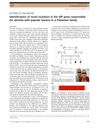
September 2013 in “The Journal of Dermatology” Researchers found a new mutation in the HR gene causing hair loss and skin bumps in a Pakistani family.
January 2026 in “Biomaterials” 4 citations
,
January 2016 in “Methods in molecular biology” HAP stem cells can repair nerves, grow hair follicle nerves, and become heart muscle cells, making them useful for regenerative medicine.
6 citations
,
April 2023 in “Current Issues in Molecular Biology” A specific gene variant may increase the risk of developing Alopecia Areata.