 May 2026 in “Medical Sciences”
 Vesicle-based therapies from stem cells and plants improve burn healing and could be safe, scalable alternatives to cell transplants.

Garlic can help hair grow by activating certain growth pathways, and it works whether you eat it or apply it to your scalp.
 September 2014 in “Hair transplant forum international”
 Caffeine, niacinamide, and panthenol may improve hair growth, fullness, and healing when applied to the scalp.
107 citations
,
October 2014 in “PeerJ” Hair's molecular structure is mostly consistent, but genetic differences affect lipid types, which could help diagnose diseases.
Understanding hair anatomy and growth is key to treating hair loss.
1 citations
,
January 1971 Hormones, especially androgens, affect hair growth and can cause hair loss or excess hair in both men and women.
July 2023 in “Nature Genetics” Researchers identified key cell types and genes involved in hair and skin diseases.
February 2017 in “Faculty Opinions – Post-Publication Peer Review of the Biomedical Literature” Hair cortisol measurement is a promising, non-invasive tool for monitoring cortisol exposure over time.
 January 2015 in “Springer eBooks”
 Hair shedding that lasts more than 6 months may need medical tests, but often just reassurance is enough.
 2 citations
,
April 2012 in “Science-business Exchange”
2 citations
,
April 2012 in “Science-business Exchange” Blocking a protein called prostaglandin D2 might help treat hair loss.
 1 citations
,
April 2024 in “Journal of Autoimmunity”
1 citations
,
April 2024 in “Journal of Autoimmunity” Interleukin-15 can help hair growth and protect hair follicles.
 January 1998 in “Current Therapeutics”
 Different causes of hair loss require specific treatments, and most men and women will experience some form of hair thinning as they age.
March 2026 in “Journal of the mechanical behavior of biomedical materials/Journal of mechanical behavior of biomedical materials” Hair cuticles remain stable and resilient under stress due to strong protein content and crosslinking.
48 citations
,
April 1995 in “PubMed” Testosterone helps beard and axillary hair cells grow by releasing growth factors from dermal papilla cells.
23 citations
,
October 2008 in “Experimental and Clinical Endocrinology & Diabetes” Hair can show increased cortisol levels during late pregnancy.
4 citations
,
July 2006 in “British journal of dermatology/British journal of dermatology, Supplement” Testosterone increases hair follicle cell growth when beard or axillary skin cells are present together.
2 citations
,
November 1992 in “Journal of dermatology” Hair cells grown in a lab showed specific hair proteins.
 92 citations
,
June 2005 in “Journal of Investigative Dermatology”
92 citations
,
June 2005 in “Journal of Investigative Dermatology” All-trans retinoic acid causes hair loss by increasing TGF-β2 in hair follicle cells.
 22 citations
,
June 2012 in “Journal of Investigative Dermatology”
22 citations
,
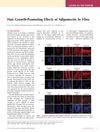
June 2012 in “Journal of Investigative Dermatology” Adiponectin may stimulate hair growth and could be a potential treatment for promoting hair growth.
 April 2026 in “Journal of Dermatological Science”
 Hair organoids are effective for testing hair loss treatments.
 November 2024 in “Journal of Investigative Dermatology”
 Minoxidil rejuvenates hair follicles and reduces aging signs in male pattern baldness.
April 2023 in “Journal of Investigative Dermatology” TGFβ-2 may cause hair loss in androgenetic alopecia.
44 citations
,
April 2021 in “Frontiers in Cell and Developmental Biology” MSC-derived exosomes may help in skin repair and regeneration.
 September 2023 in “Çukurova medical journal (Online)/Çukurova medical journal”
 EZH2 levels decrease as fetuses develop and are higher in adult skin, which may affect skin growth and repair.
 33 citations
,
September 2012 in “Australasian Journal of Dermatology”
33 citations
,
September 2012 in “Australasian Journal of Dermatology” Chemotherapy can cause hair changes similar to alopecia areata, which might lead to misdiagnosis.
 32 citations
,
August 2019 in “Nature Communications”
32 citations
,
August 2019 in “Nature Communications” Chemotherapy causes permanent hair follicle damage by triggering stem cell loss.
 1 citations
,
May 2017 in “InTech eBooks”
1 citations
,
May 2017 in “InTech eBooks” Hair loss in Androgenetic alopecia (AGA) is due to altered cell sensitivity to hormones, not increased hormone levels. Hair growth periods shorten over time, causing hair to become thinner and shorter. This is linked to miscommunication between cell pathways in hair follicles. There's also a change in gene expression related to blood vessels and cell growth in balding hair follicles. The exact molecular causes of AGA are still unclear.

Baldness is often hereditary and linked to male hormones, becoming noticeable when half the hair is lost.
November 2011 in “Journal of Investigative Dermatology” TRH in hair follicles can influence hair color by increasing melanin.
3 citations
,
June 2025 in “Biomedical Reports” Nanotechnology can improve cervical cancer treatment by targeting drugs better and reducing side effects.