 1 citations
,
February 2023 in “International Journal of Molecular Sciences”
1 citations
,
February 2023 in “International Journal of Molecular Sciences” The fascial layer is a promising new target for wound healing treatments using biomaterials.
11 citations
,
January 2025 in “Regenerative Therapy” Tissue-engineered scaffolds help heal difficult wounds by supporting cell growth and repair.
4 citations
,
December 1989 in “The Journal of Dermatology” Human hair proteins have similar cysteine and glycine levels to skin proteins.
June 2024 in “Plastic & Reconstructive Surgery Global Open” JOLT uses fillers to lift and tighten the lower face and neck.
Mechanical stress causes ligament thickening through WISP-1 and Hedgehog signaling.
2 citations
,
April 2019 in “Experimental Dermatology” Hair follicles respond differently to pulling forces in various regions.
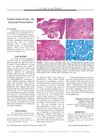 8 citations
,
September 2016 in “The American Journal of Dermatopathology”
8 citations
,
September 2016 in “The American Journal of Dermatopathology” Enlarged sweat gland ducts may indicate scarring hair loss.
13 citations
,
April 2025 in “International Journal of Nanomedicine” The new gallic acid hydrogel speeds up wound healing and reduces scarring.

Human dermal papilla cell vesicles can reduce skin fibrosis in mice.
27 citations
,
July 2013 in “Journal of Investigative Dermatology” Revertant cell therapy shows promise for treating type XVII collagen deficiency, but better cell selection methods are needed.
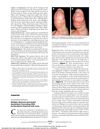 11 citations
,
December 2010 in “Archives of Dermatology”
11 citations
,
December 2010 in “Archives of Dermatology” A man with rare skin changes on his fingers was diagnosed with multiple myeloma-linked amyloidosis.
May 2026 in “International Journal of Biological Macromolecules” 71 citations
,
September 2013 in “Materials Science and Engineering C” Keratin-based hydrogels from human hair and wool are promising for wound dressings and are more eco-friendly.
7 citations
,
January 1992 in “Acta Histochemica” Porcine and human pilosebaceous units are very similar.
 68 citations
,
March 2019 in “Advanced Healthcare Materials”
68 citations
,
March 2019 in “Advanced Healthcare Materials” Advanced hydrogel systems with therapeutic agents could greatly improve acute and chronic wound treatment.
12 citations
,
September 1990 in “The Anatomical Record” Human anagen hair follicles have unique carbohydrate patterns during keratinization.
165 citations
,
May 2023 in “Science Advances” The hydrogel speeds up healing of infected wounds by providing oxygen and fighting bacteria.
4 citations
,
July 2021 in “Journal of dermatology & dermatologic surgery” Microneedling is a simple, affordable treatment that helps with scars, wrinkles, stretch marks, and hair growth by boosting collagen.
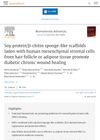 1 citations
,
November 2023 in “Biomaterials advances”
1 citations
,
November 2023 in “Biomaterials advances” Sponges made of soy protein and β-chitin with human cells from hair or fat can speed up healing of chronic wounds.
32 citations
,
December 2015 in “PloS one” P144® improves hypertrophic scars by reducing size and thickness and increasing elasticity.
11 citations
,
January 2005 in “Brazilian Journal of Medical and Biological Research” Hairless USP mice have enlarged skin cysts as they age.
44 citations
,
March 2019 in “Experimental Dermatology” A wide range of proteins are integrated into the skin's protective layer.
 January 2001 in “Biomedical Research”
 THH and PAD type III appear together early in hair growth, but deiminated THH appears later, suggesting another factor is involved.
27 citations
,
December 1999 in “American Journal of Dermatopathology” Necrobiosis lipoidica may need new criteria for accurate diagnosis due to similarities with another condition.
January 2011 in “Shiyong kouqiang yixue zazhi” Dermal papilla cells and bulge stem cells can help reconstruct hair follicles.
3 citations
,
September 2018 in “Journal of Structural Biology” Oxidized trichocyte keratin has a helical dislocation in its structure.
46 citations
,
June 2013 in “Journal of structural biology” High glycine–tyrosine keratin-associated proteins help make hair strong and maintain its shape.
 July 2024 in “Periodontology 2000”
 Autologous platelet concentrates show promise in esthetic treatments but need more standardized research.
2 citations
,
May 2022 in “bioRxiv (Cold Spring Harbor Laboratory)” Rare Gli1+ fibroblasts are crucial for skin wound healing.
27 citations
,
December 2005 in “Journal of Cutaneous Pathology” The malignant pilomatricoma showed strong epithelial keratin expression, suggesting it may not calcify.