30 citations
,
March 1980 in “European Journal of Endocrinology” Adrenal androgens are important for puberty and are influenced by genetics.
 22 citations
,
June 2004 in “Journal of The European Academy of Dermatology and Venereology”
22 citations
,
June 2004 in “Journal of The European Academy of Dermatology and Venereology” A woman had both Graham Little-Piccardi-Lassueur syndrome, causing hair loss, and complete androgen insensitivity syndrome, making her genetically male but physically female. This suggests androgens don't affect the hair loss condition.
 10 citations
,
December 1996 in “Fertility and Sterility”
10 citations
,
December 1996 in “Fertility and Sterility” Women with acne have lower levels of a specific hormone marker than women without acne.
Mohamed Kandil suggests renaming Polycystic Ovary Syndrome to "Polyfollicular Anovulatory Androgenic Syndrome" to better describe its symptoms, but concerns exist that it may not cover all related issues like obesity and depression.
 July 1996 in “Trends in Endocrinology and Metabolism”
 The book is a valuable reference on androgenic disorders for professionals but not suitable for laypeople or medical students.
 7 citations
,
January 1992 in “Adolescent and pediatric gynecology”
7 citations
,
January 1992 in “Adolescent and pediatric gynecology” Early diagnosis and treatment of PCOS in teenagers can help prevent more severe adult PCOS.
55 citations
,
July 1997 in “Clinical Endocrinology” Growth hormone therapy boosts androgen effects on skin in men.
 305 citations
,
February 2007 in “Hormone and metabolic research”
305 citations
,
February 2007 in “Hormone and metabolic research” Human skin makes sexual hormones that affect hair growth, skin health, and healing; too much can cause acne and hair loss, while treatments can manage these conditions.
 26 citations
,
October 2016 in “Clinics in Dermatology”
26 citations
,
October 2016 in “Clinics in Dermatology” Hormonal treatments can improve acne, but they come with potential side effects and risks.
1 citations
,
August 2015 in “AACE Clinical Case Reports” A new gene mutation causes complete androgen insensitivity in a 16-year-old with a female appearance.
 December 2022 in “Cureus”
 Hormones significantly influence hair growth, with conditions like hirsutism and patterned hair loss linked to hormone levels; more research is needed for full understanding.
5 citations
,
January 2017 in “Dermato-endocrinology” Postmenopausal women with past hirsutism or irregular periods have more heart and lung diseases.
 10 citations
,
January 2011 in “Skin therapy letter”
10 citations
,
January 2011 in “Skin therapy letter” Women with PCOS often have acne because of high androgen levels, and the article reviewed how to treat this type of acne.
19 citations
,
July 2005 in “Steroids” Testosterone increases 3α-androstanediol levels, which can be blocked by finasteride.
2 citations
,
February 2003 in “Obstetrical & Gynecological Survey” Most antiandrogen treatments effectively reduce acne in hyperandrogenic women, but finasteride is the least effective.
Androgenetic alopecia is not linked to higher risks of hypertension or hyperaldosteronism.
 December 2006 in “8th European Congress of Endocrinology incorporating the British Endocrine Societies”
 Men with early hair loss and hormonal changes like PCOS could be the male equivalent of PCOS, not linked to metabolic syndrome.
 21 citations
,
April 2019 in “Endocrinology and Metabolism Clinics of North America”
21 citations
,
April 2019 in “Endocrinology and Metabolism Clinics of North America” Transgender patients need proper skin care, especially when undergoing hormone treatments, to manage issues like acne and hair loss.
More men have androgenic alopecia than women, with stress linked to the condition in both genders.
 October 2023 in “IJEM case reports”
 A 15-year-old girl with no menstrual period was diagnosed with a genetic condition that makes her body unable to respond to male hormones, leading to female characteristics despite having male genetic makeup.
 2 citations
,
June 2022 in “Scientific reports”
2 citations
,
June 2022 in “Scientific reports” Women with PCOS have higher hair cortisol levels, which are linked to worse metabolic and inflammatory conditions.
 9 citations
,
May 2008 in “Journal of Clinical Oncology”
9 citations
,
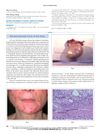
May 2008 in “Journal of Clinical Oncology” A woman's ovarian tumor causing high testosterone was successfully removed, and her symptoms improved.
 80 citations
,
January 1995 in “The American Journal of Medicine”
80 citations
,
January 1995 in “The American Journal of Medicine” Hair loss in androgenetic alopecia is caused by genetic factors and androgen excess, and can be treated with combined therapies.
 7 citations
,
October 2012 in “S. Karger AG eBooks”
7 citations
,
October 2012 in “S. Karger AG eBooks” Some conditions mimic PCOS symptoms and need careful diagnosis to treat potentially serious health issues.
19 citations
,
December 2011 in “PubMed” Inflammation and immunity play a key role in androgenetic alopecia, with better treatment outcomes in certain immune-positive cases.
3 citations
,
January 2022 in “Anais Brasileiros De Dermatologia” Androgenetic alopecia in teens is linked to obesity and other metabolic risks, needing early diagnosis and management.
13 citations
,
August 1991 in “The Journal of the American Osteopathic Association” Inflammation may play a role in causing androgenetic alopecia.
 August 2023 in “The American Journal of the Medical Sciences”
 Men with male pattern baldness have higher uric acid levels, which can decrease with finasteride treatment.
 February 2026 in “Frontiers in Endocrinology”
 Testosterone therapy improved symptoms in a woman with congenital adrenal hyperplasia.
3 citations
,
April 1977 in “PubMed” The treatment improved acne, seborrhoea, and hirsutism, with some side effects like spotting and nervousness.