86 citations
,
May 2002 in “Journal of Investigative Dermatology” A new keratin, hK6irs1, is found in all layers of the hair follicle's inner root sheath.
 18 citations
,
January 2008 in “Journal of The American Academy of Dermatology”
18 citations
,
January 2008 in “Journal of The American Academy of Dermatology” Certain proteins and their receptors are more active during the growth phase of human hair and could be targeted to treat hair disorders.

The human scalp has different types of pigment cells in hair follicles with varying abilities to produce pigment.
56 citations
,
January 1977 1 citations
,
April 2018 in “Journal of Investigative Dermatology” Lower proximal cup cells, not bulge stem cells, regenerate hair follicles after chemotherapy.
 June 2024 in “International journal of biological macromolecules”
 The hydrogel effectively stops bleeding and heals diabetic wounds quickly.
January 2003 in “Zhongguo linchuang jiepouxue zazhi” Human hair keratin may help repair injured spinal cord tissue in rats.
287 citations
,
March 1999 in “The Plant Journal” Microtubules help control the direction and stability of root hair growth in Arabidopsis thaliana.
9 citations
,
April 2022 in “Cell Communication and Signaling” High S100A4 levels worsen glioblastoma by promoting blood vessel growth.
3 citations
,
December 2013 in “Journal of Cell Science” Keratin 79 cells help form and regenerate hair canals.
 9 citations
,
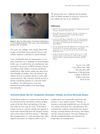
November 2013 in “Dermatologic Surgery”
9 citations
,
November 2013 in “Dermatologic Surgery” Hair transplant complications were likely due to deep graft placement and rough handling.
32 citations
,
January 2000 in “Human Heredity” Monilethrix severity varies and may be influenced by other genetic or environmental factors.
 27 citations
,
January 2006 in “Colloids and Surfaces B: Biointerfaces”
27 citations
,
January 2006 in “Colloids and Surfaces B: Biointerfaces” Researchers found that bulge cells from human hair can grow quickly in culture and have properties of hair follicle stem cells, which could be useful for skin treatments.
 September 1998 in “JEADV. Journal of the European Academy of Dermatology and Venereology/Journal of the European Academy of Dermatology and Venereology”
 Hair changes could indicate neurological diseases and help monitor treatment.
33 citations
,
March 2015 in “Experimental Dermatology” LHX2 and SOX9 identify unique hair follicle cell groups, crucial for hair maintenance.
2 citations
,
January 1998 in “Neurourology and Urodynamics” AMN can cause bladder problems due to nerve damage.
 43 citations
,
August 2018 in “Cell Stem Cell”
43 citations
,
August 2018 in “Cell Stem Cell” Hoxc genes control hair growth through Wnt signaling.
44 citations
,
July 1993 in “Journal of Investigative Dermatology” May 2000 in “Journal of Investigative Dermatology” Hedgehog signaling is crucial for hair development, cadherins affect cell adhesion, neutrophils play a role in skin lesions, and BP230 autoantibodies impact skin stability.
6 citations
,
June 2016 in “The anatomical record” Dogs have varying numbers of touch-sensitive Merkel cells in different skin areas, with most in the oral mucosa and facial skin, unrelated to age, sex, breed, or color.
July 2016 in “Cancer research” Mutant cells in hair follicles are influenced by their location and interactions with surrounding cells.
 September 2013 in “Science”
 Special astrocytes improved learning and memory in rats after a stroke.
 64 citations
,
March 2005 in “Journal of Investigative Dermatology”
64 citations
,
March 2005 in “Journal of Investigative Dermatology” Brain-Derived Neurotrophic Factor (BDNF) slows down hair growth and promotes hair follicle regression.
42 citations
,
September 1985 in “British Journal of Dermatology” Trichothiodystrophy causes abnormal protein deposits and distortion in hair follicles.
34 citations
,
July 1958 in “Biochimica et Biophysica Acta”  286 citations
,
April 2009 in “The journal of neuroscience/The Journal of neuroscience”
286 citations
,
April 2009 in “The journal of neuroscience/The Journal of neuroscience” TRPA1 is crucial for mechanical sensitivity in skin sensory neurons.
110 citations
,
January 1995 in “European Journal of Neuroscience” Glycine is a key transmitter in rat spinal cord synapses, often alongside GABA.
3 citations
,
August 2024 in “The Journal of Cell Biology” Actin filaments help stabilize and reshape cell membranes.
 165 citations
,
June 2007 in “European Journal of Cell Biology”
165 citations
,
June 2007 in “European Journal of Cell Biology” Hair follicle stem cells are key for hair and skin regeneration, can be reprogrammed, and have potential therapeutic uses, but also carry a risk of cancer.
7 citations
,
July 2021 in “The journal of investigative dermatology/Journal of investigative dermatology” Human skin can be reconnected to nerves using stem cells, which may help with skin health and healing.