 18 citations
,
January 2016 in “Elsevier eBooks”
18 citations
,
January 2016 in “Elsevier eBooks” Nanotechnology improves cosmetics' effectiveness and safety.
 17 citations
,
May 2011 in “Gene Therapy”
17 citations
,
May 2011 in “Gene Therapy” Using polyethylenimine-DNA to deliver the hTERT gene can stimulate hair growth and may be useful in treating hair loss, but there could be potential cancer risks.
 10 citations
,
January 2024 in “Polymer Chemistry”
10 citations
,
January 2024 in “Polymer Chemistry” Lipid–polymer hybrid nanoparticles can improve genome editing delivery and outcomes.
 8 citations
,
January 2021 in “Smart materials in medicine”
8 citations
,
January 2021 in “Smart materials in medicine” The new hydrogel is good for wound dressing because it absorbs water quickly, has high porosity, can release drugs, fights bacteria, and helps wounds heal with less scarring.
 6 citations
,
June 2019 in “Biotechnology Letters”
6 citations
,
June 2019 in “Biotechnology Letters” Gene therapy shows promise for improving wound healing, but more research is needed for human use.
 4 citations
,
July 2025 in “International Journal of Nanomedicine”
4 citations
,
July 2025 in “International Journal of Nanomedicine” Nano-quercetin improves quercetin's effectiveness in treating diseases but faces challenges in safety and production.
 1 citations
,
June 2021 in “bioRxiv (Cold Spring Harbor Laboratory)”
1 citations
,
June 2021 in “bioRxiv (Cold Spring Harbor Laboratory)” Activating β-catenin in mammary cells leads to changes that cause early-stage abnormal growths similar to skin structures.
 August 2025 in “MedScien”
 Tumor-targeted drug carriers can improve chemotherapy precision and reduce side effects.
 June 2025 in “Medical academic journal”
 Modified liposomes with exosomes effectively deliver RNA to stem cells.
 April 2025 in “Indian Journal of Pharmaceutical Education and Research”
 Nanofibers improve skincare products by enhancing drug delivery and hydration.
 November 2023 in “Regenerative Biomaterials”
 The new adhesive seals wounds quickly, works well in wet conditions, and helps with healing.
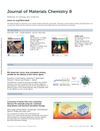 January 2016 in “Journal of Materials Chemistry B”
 Advancements in biomaterials and nanotechnology are improving medical applications like hair growth, bone regeneration, and cancer treatment.
 January 2016 in “Springer eBooks”
 New materials and methods could improve skin healing and reduce scarring.
 December 2013 in “Biomedical and biopharmaceutical research”
 Nanotechnology shows promise for better drug delivery and cancer treatment.
 April 2013 in “Developmental Cell”
 Brg1 is crucial for keeping hair follicle stem cells and repairing skin, working with the Sonic Hedgehog pathway to promote hair growth.
1 citations
,
June 2009 in “WakeSpace (Wake Forest University)” Keratin biomaterials can effectively aid peripheral nerve regeneration and improve recovery.
 46 citations
,
July 2007 in “Journal of comparative neurology”
46 citations
,
July 2007 in “Journal of comparative neurology” Manatee whiskers are specially adapted for touch in water.
1 citations
,
October 2015 in “OakTrust (Texas A&M University Libraries)” Harp seals have different innervation patterns in their whiskers, with lateral whiskers having more axons than medial ones.
 11 citations
,
August 2014 in “PLoS ONE”
11 citations
,
August 2014 in “PLoS ONE” GFRα2 is essential for controlling neuron size but not for target innervation in certain sensory neurons.
 January 1995 in “Skin Cancer”
 The outer root sheath in hair follicles changes during growth, with different keratinization processes in its layers.
August 2025 in “Scientific Reports” Itchy keloids on the chest are linked to more nerve fibers and substance P.
8 citations
,
October 2024 in “Developmental Cell” 2 citations
,
April 2014 in “PubMed” Epidermal neural crest stem cells from hair follicles can help repair nerve injuries.
January 2003 in “Linchuang pifuke zazhi” Melanin granules can be expelled by exocytosis.
 4 citations
,
January 2015 in “Sen'i Gakkaishi”
4 citations
,
January 2015 in “Sen'i Gakkaishi” Hair and wool strength is affected by the number and type of bonds in their protein structures, with hair having more protein aggregates than wool.
1 citations
,
July 2025 in “Genetics Selection Evolution” Nerve cells and other cell types work together to start horn growth in dairy goats.
 November 2022 in “The journal of investigative dermatology/Journal of investigative dermatology”
 Deleting the CD271 gene in mouse skin cells leads to disorganized skin and increased hair growth, suggesting CD271 is important for skin health.
104 citations
,
December 2004 in “Journal of Neurochemistry” Androgens help motor neurons grow by increasing neuritin.
4 citations
,
July 2010 in “International Journal of Cosmetic Science” Curved human hair has different structures on its convex and concave sides.
Reducing nerve growth can help skin regenerate after birth.