 October 2022 in “International journal of dermatology and venereology”
 A woman's sudden hair loss was linked to azathioprine use despite normal enzyme levels, and improved after stopping the drug and starting treatment.
September 2022 in “Scientific Reports” Scalp melanoma is more common and easier to diagnose early in people with androgenetic alopecia due to sun damage.
 1 citations
,
February 2015 in “Clinical and Experimental Dermatology”
1 citations
,
February 2015 in “Clinical and Experimental Dermatology” A man got six skin cancers within a year after a cell transplant for leukemia but was cancer-free 32 months later; skin checks are important post-transplant.
 6 citations
,
September 2022 in “Frontiers in pharmacology”
6 citations
,
September 2022 in “Frontiers in pharmacology” Epimedium extract helps increase skin pigmentation and could be a new treatment for conditions with reduced pigmentation.
10 citations
,
May 2017 in “Clinical and experimental dermatology” 
Recognizing and fully removing giant pilomatrixomas is crucial to prevent them from becoming cancerous.
 May 2024 in “Pigment International”
 Several treatments are effective for pigmentary disorders like vitiligo and melasma.
 10 citations
,
November 2010 in “Pigment Cell & Melanoma Research”
10 citations
,
November 2010 in “Pigment Cell & Melanoma Research” Only skin melanocytes, not other types, can color hair in mice.
8 citations
,
August 2018 in “BMJ Case Reports” Pazopanib treatment caused rapid hair color loss, possibly indicating its effectiveness.
8 citations
,
April 2016 in “Experimental dermatology” B6.Cg-Tyr c−2J Hr hr /J mice have a stronger delayed sunburn reaction and are good for UV research.
 1 citations
,
October 2024 in “Dermatology Practical & Conceptual”
1 citations
,
October 2024 in “Dermatology Practical & Conceptual” Reflectance confocal microscopy is a promising non-invasive tool for diagnosing alopecia areata incognita.
 4 citations
,
January 2019 in “Dermatologic Therapy”
4 citations
,
January 2019 in “Dermatologic Therapy” Scalp basal cell carcinoma may be more aggressive and harder to treat than other types, requiring special attention and further research.
 May 2025 in “The Journal of Rheumatology”
 Purpura fulminans can signal underlying autoimmune disorders, not just infections.
 6 citations
,
August 1993 in “Archives of Dermatology”
6 citations
,
August 1993 in “Archives of Dermatology” The study found that polymorphous light eruption varies among patients and can be distinguished from benign summer light eruption by the time it takes for symptoms to appear after sun exposure.
August 2021 in “Indian dermatology online journal” A young boy with a rare skin and nail condition improved significantly with simple topical treatments.
 5 citations
,
September 1986 in “Pediatric Dermatology”
5 citations
,
September 1986 in “Pediatric Dermatology” A family showed a new condition with inherited hair loss and skin changes, possibly due to one genetic disorder.
 4 citations
,
November 2016 in “Journal of Cutaneous Pathology”
4 citations
,
November 2016 in “Journal of Cutaneous Pathology” Three characteristics of plasmacytoid dendritic cells help tell apart lupus-related hair loss from LPP.
 April 2016 in “Journal of The American Academy of Dermatology”
 A woman's skin symptoms led to a diagnosis of systemic AL amyloidosis, but she died from sepsis shortly after.
A 2-year-old boy with a rare type of lupus causing hair loss improved with oral steroids.
14 citations
,
January 2014 in “Annals of Dermatology” Some cases of folliculotropic mycosis fungoides may progress slowly and not need aggressive treatment.

Microneedling for hair loss may cause skin cancer.
29 citations
,
July 2008 in “British Journal of Dermatology” The patient had paraneoplastic pemphigus without mucosal involvement.

Surgical repigmentation can permanently restore color to white hair in vitiligo patients.
 May 2014 in “Clinical and Experimental Dermatology”
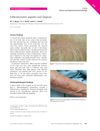
 A 70-year-old woman with a rare skin condition improved after treatment with topical steroids and acitretin.
 August 2023 in “Gastroenterology”
 A 78-year-old man with Cronkhite-Canada syndrome improved significantly after treatment and remains symptom-free.
 1 citations
,
July 2020 in “Journal of cosmetic dermatology”
1 citations
,
July 2020 in “Journal of cosmetic dermatology” A woman on immunosuppressants developed two rare scalp conditions, which improved with specific treatments.
June 2025 in “British Journal of Dermatology” Premature canities is linked to low vitamin D and B12, family history, and higher MHR.
2 citations
,
August 1987 in “Archives of Dermatology” Langerhans' cells are not responsible for depigmentation in this mouse model.
May 2020 in “International Journal of Dermatology and Venereology” Calcified epidermal cysts are rare, hard skin nodules that are best treated with surgical removal.