 February 2013 in “Journal of the American Academy of Dermatology”
 Iron supplements may reverse premature hair graying caused by iron deficiency.
 July 2021 in “Clinical Medicine”
 Iron deficiency without anemia can cause itching and other skin-related symptoms, and iron supplements may help.
1 citations
,
April 2020 in “Indian Journal of Rheumatology” 42% of SLE patients had thyroid issues, mostly hypothyroidism.
 November 2023 in “Gastroenterology”
 A woman with Budd-Chiari syndrome improved after treatment and needs a liver transplant, highlighting the importance of considering non-criteria antiphospholipid syndrome in similar cases.
June 2026 in “The Russian Archives of Internal Medicine” Thallium poisoning can be treated successfully with the right antidote.
60 citations
,
September 2004 in “Pediatric Dermatology” A girl developed vitiligo and psoriasis after hepatitis B treatment, and stopping the treatment didn't help.
 June 2026 in “International Journal of Homoeopathic Sciences”
 Homeopathic treatment led to significant hair regrowth in 8 months for a woman with alopecia areata.
26 citations
,
January 1993 in “Dermatology” A rare case of isolated trichothiodystrophy was identified, marked by brittle hair with low sulfur content.
April 2019 in “Journal of the Endocrine Society” Bilateral ovarian hyperthecosis is a rare but treatable cause of increased facial hair in postmenopausal women.
 12 citations
,
February 2010 in “Journal of the European Academy of Dermatology and Venereology”
12 citations
,
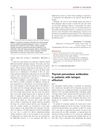
February 2010 in “Journal of the European Academy of Dermatology and Venereology” Some people with chronic hair loss may have thyroid autoimmunity.
May 2014 in “The Journal of Alternative and Complementary Medicine” Higher levels of chromium, selenium, and copper in hair are linked to increased insulin resistance in visceral-obese adults.
 3 citations
,
November 2020 in “Cleveland Clinic Journal of Medicine”
3 citations
,
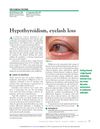
November 2020 in “Cleveland Clinic Journal of Medicine” Eyelash loss can be a sign of thyroid problems.
1 citations
,
July 2022 in “BMC Women s Health” An ovarian tumor can cause high male hormones in postmenopausal women.
 10 citations
,
June 2001 in “Annals of neurology”
10 citations
,
June 2001 in “Annals of neurology” Alzheimer's patients have higher levels of certain chemicals in their hair.
 March 2025 in “Journal of Pediatric Endocrinology and Metabolism”
 Elevated testosterone, DHEA-S, and FAI help identify PCOS risk in menstrual irregularities.
 July 1999 in “Journal of The European Academy of Dermatology and Venereology”
 Bath PUVA therapy works well for a skin condition without as many cancer risks and is cheaper, and iron deficiency might not cause female hair loss.
97 citations
,
March 2006 in “Journal of Investigative Dermatology” Mutations in the DSG4 gene cause a severe form of brittle hair and skin issues.
 April 2020 in “Journal of the Endocrine Society”
 A rare ovarian tumor that produced testosterone caused a blood clot in the lungs and increased red blood cells in a woman.
Imbalances in metals and proteins may help understand and treat bipolar disorder and schizophrenia.
38 citations
,
June 2005 in “Acta Biochimica Polonica” Splenic eumelanin in C57BL/6 mice is different from hair eumelanin.
9 citations
,
October 2010 in “Journal of the American Academy of Dermatology” Iron deficiency might cause hair loss, but better testing is needed.
October 2024 in “Journal of the Endocrine Society” Clinicians should be aware of alternating thyroid conditions and their treatment.
1 citations
,
December 2021 in “Animals” Low zinc and selenium levels in sheep are linked to hair loss and thyroid problems.
1 citations
,
October 2018 in “The American journal of gastroenterology” Relapsing hepatitis A can cause prolonged abnormal liver tests even without symptoms.
 1 citations
,
February 1977 in “Archives of Dermatology”
1 citations
,
February 1977 in “Archives of Dermatology” Fresh plasma transfusions did not help treat Leiner disease in an infant.
January 2026 in “JCEM Case Reports” Benign conditions can mimic serious ones in postmenopausal hyperandrogenism, requiring careful diagnosis.
38 citations
,
October 2013 in “Gynecologic and Obstetric Investigation” Severe iron deficiency lowers fertility in female rats.
25 citations
,
April 2008 in “Clinical and experimental dermatology” EFFC might be common but underreported.
 9 citations
,
October 2012 in “PubMed”
9 citations
,
October 2012 in “PubMed” Most women in the study lost hair due to stress, fever, childbirth, surgery, or thyroid issues, with low hemoglobin levels also common.
7 citations
,
March 1931 in “Experimental Biology and Medicine” Iron deficiency causes hair loss in white rats and mice.