49 citations
,
August 1999 in “Journal of Investigative Dermatology” Overexpressing the MSX-2 gene in mice causes skin and hair growth issues.
30 citations
,
October 2010 in “Biochemical and biophysical research communications” The Gsdma3 gene is essential for normal hair development in mice.
4 citations
,
January 2019 in “Indian Dermatology Online Journal” The term "Porokeratotic Adnexal Ostial Nevus" is suggested as a more appropriate name.
 1 citations
,
October 2022 in “JCI insight”
1 citations
,
October 2022 in “JCI insight” Deleting the BRD4 protein in certain skin cells causes hair loss and skin inflammation.
63 citations
,
April 2005 in “Mechanisms of development” Mice with too much Claudin-6 have skin barrier problems and abnormal hair growth.
7 citations
,
February 2005 in “Veterinary Dermatology” Horses with skin disease have more surface bacteria than healthy horses.
January 2016 in “Lithuanian University of Health Sciences” Different diseases cause specific skin and hair follicle changes in dogs with alopecia.
 January 2008 in “Journal of The American Academy of Dermatology”
 Trichoscopy is a helpful and quick method to identify different types of hair loss in women.
8 citations
,
October 2012 in “Transgenic Research” Overexpressing the human H-ferritin gene in mice causes mild growth delay and temporary hair loss.
 August 2023 in “British journal of dermatology/British journal of dermatology, Supplement”
 Rubbing or pressing on the face can cause small bumps, and changing posture along with certain creams can improve them.
The extract combination can promote hair growth and act as a natural hair dye.
 1 citations
,
November 2017 in “International Journal of Research in Medical Sciences”
1 citations
,
November 2017 in “International Journal of Research in Medical Sciences” Dermoscopy helps distinguish between scarring and non-scarring hair loss and accurately diagnoses hair and scalp conditions without needing hair plucking.
9 citations
,
September 2009 in “PubMed” Antigen presenting cells around hair follicles are crucial in SLE-related hair loss.
 April 2023 in “The journal of investigative dermatology/Journal of investigative dermatology”
 The TRPV3 channel structure changes linked to severe itch and hyperkeratosis were identified using cryo-EM.
1 citations
,
June 2006 in “Experimental dermatology” The conclusion suggests that early signs of hidradenitis suppurativa may start in the hair follicle, with genetic and immune factors playing a role, highlighting the need for more research on the hair follicle's immune system.
66 citations
,
October 2002 in “Human molecular genetics online/Human molecular genetics” A gene mutation in mice causes skin defects and early death.
18 citations
,
July 2001 in “International Journal of Dermatology” A 12-year-old boy's hair loss and skin issues improved significantly with medication.
 September 2016 in “Journal of Dermatology and Dermatologic Surgery”
 A woman's severe hair loss was caused by scalp psoriasis, not the initially thought condition, and treatment improved her psoriasis but couldn't restore her lost hair.
 108 citations
,
July 2002 in “Molecular and cellular biology”
108 citations
,
July 2002 in “Molecular and cellular biology” Overexpressing Dsg3 in mice skin causes excessive cell growth and abnormal skin development.
16 citations
,
February 2005 in “British journal of dermatology/British journal of dermatology, Supplement” Lack of Vitamin D receptor changes skin structure and increases certain immune cells in the skin.
1 citations
,
November 2003 in “Annals of saudi medicine/Annals of Saudi medicine” A 17-year-old in Saudi Arabia was diagnosed with a rare skin condition causing red-brown facial patches.

Cattle with dermatophytosis in Diyala show severe skin damage and abnormalities.
June 2008 in “The Knowledge Bank (The Ohio State University)” Smad2 and Smad3 are essential for normal skin development, and their absence causes severe skin issues and cancer.
87 citations
,
March 2017 in “Journal of Clinical Investigation” PSENEN gene mutations can cause both Dowling-Degos disease and acne inversa.
 January 2011 in “Reactions Weekly”
 Long-term use of minoxidil may cause hair follicles to transform into noticeable terminal hairs, leading to trichostasis spinulosa.
November 2019 in “BMC veterinary research” The hair loss in Belgian Blue crossbred calves was caused by a diet issue, not by disease or infection.
 December 2023 in “Journal of dermatology”
 The study concluded that key signs of Keratosis follicularis spinulosa decalvans are changes in terminal hair and vellus hair follicles, which likely start the inflammation and damage to hair follicles.

Laser hair removal may cause skin changes that prevent hair regrowth.
2 citations
,
April 2019 in “PubMed” Hidradenitis suppurativa is a chronic skin condition causing painful lumps and scarring, often triggered by smoking and obesity, and requires varying treatments based on severity.
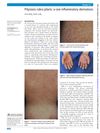 February 2018 in “BMJ case reports”
 An 18-year-old woman was diagnosed with a rare skin condition called Pityriasis rubra pilaris.